Last updated 2026-07-23
TL;DR
Assisted living apartments are state-licensed residences with private, apartment-style units (often a kitchenette and bathroom) plus staff who help with bathing, medication, and meals. They're not nursing homes, and Medicare doesn't pay the room and board. National costs run roughly $4,500 to $5,900 a month depending on the survey year, and opening one requires a state license, not a federal one.
What is assisted living?
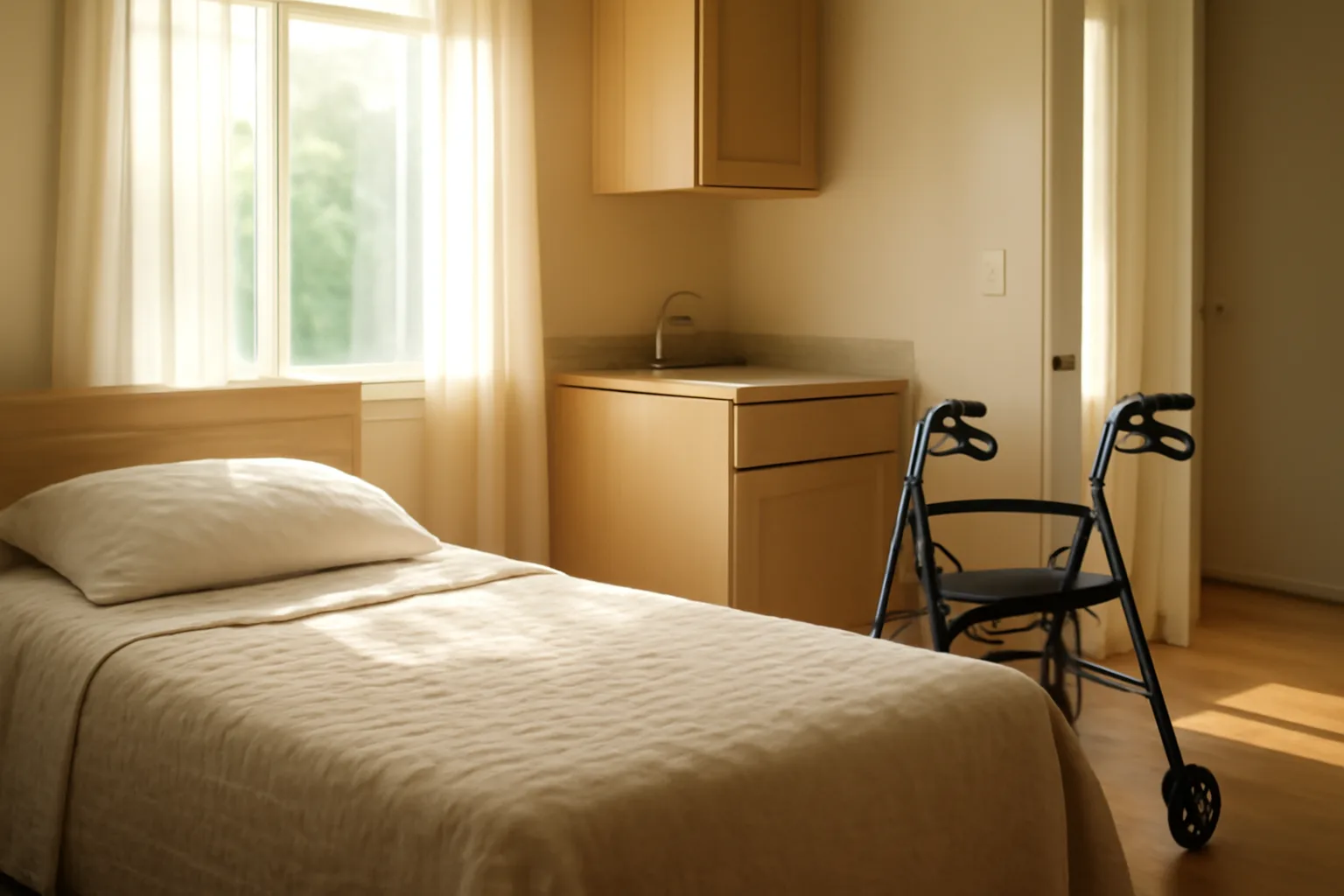
Assisted living is a residential option for adults, usually older adults, who need help with daily activities like bathing, dressing, or medication reminders but don't need round-the-clock skilled nursing. It combines a private or semi-private living space with staff on site and a set of support services built into the monthly rate. Here's the part almost nobody explains clearly: there is no single federal definition of assisted living. Each state writes its own licensing statute and picks its own name for the category, so you'll see "assisted living residence," "personal care home," "residential care facility," or similar terms depending on where you are. The National Center for Assisted Living notes that assisted living is regulated entirely at the state level, with wide variation in what's required for staffing, unit size, and services covered. The National Institute on Aging describes it plainly as housing for people "who need help with daily activities like meals, bathing, dressing, and medication" but who don't require the intensive medical care of a nursing home. That's the practical dividing line consumers and operators both use, even where the legal language differs by state. When people search "assisted living apartments," they usually mean a specific building style within that broader category: private, self-contained units that look and function more like a small apartment than a bedroom in a shared house. More on that distinction below, and you can compare general options through assisted living as a starting reference point.
What is a group home, and how is it different from assisted living?
A group home is typically a smaller residential setting, often a single-family house, licensed to serve a specific population such as people with intellectual or developmental disabilities, mental health needs, substance use recovery, or a small number of seniors. Group homes usually have shared common areas (living room, kitchen, sometimes bathrooms) and a lower resident count than a typical assisted living building. Assisted living apartments, by contrast, tend to be larger, multi-unit buildings built specifically for the assisted living population, usually seniors, with private units and centralized dining, activities, and staffing. Some states license both under the same statute (a "residential care facility" chapter that covers a 6-bed house and a 60-unit apartment building alike), while other states split them into entirely separate license categories with different staffing and building codes. That variation matters more than people expect. A building with private apartment-style units in one state might be licensed as "assisted living," while the identical floor plan in a neighboring state gets licensed as a "residential care home" simply because of unit count or resident acuity thresholds. Before you draw floor plans or sign a lease, confirm with your state licensing agency which category actually applies to your project. Getting the category wrong early is the single most expensive mistake operators make, because it changes your fire code, staffing plan, and application fee before you've opened a door. For a side-by-side look at how these categories differ once you're deep in application paperwork, see assisted living facility and facility assisted living.
What is an assisted living facility (and what makes an "assisted living apartment" different)?
An assisted living facility is a licensed building or campus that provides housing, meals, help with activities of daily living, medication management, and staff availability, without providing ongoing skilled nursing care. That's the working definition regulators use, even though the exact statutory wording differs state by state. An assisted living apartment is a design choice within that license category. Instead of a private or shared bedroom with a shared bathroom down the hall, the resident gets a self-contained unit, usually a studio or one-bedroom, with a private bathroom, a kitchenette, and sometimes washer and dryer hookups. It's marketed toward more independent residents who still want the safety net of on-site staff and a call system. The apartment layout doesn't exempt the building from personal care licensing. Regulators still apply the same rules on staffing, medication management, resident assessments, and life safety, regardless of whether the unit has a kitchenette or not. What changes is the building code and fire code analysis: multi-story, multi-unit apartment-style construction usually triggers different sprinkler, egress, and occupancy classification requirements than a single-story house with a handful of bedrooms. Many states also set a minimum square footage per resident (commonly somewhere in the range of 80 to 200 square feet depending on the state and whether the unit is private or shared), so confirm the exact figure with your state licensing agency before you finalize architectural plans. If you're comparing options for a family member, senior assisted living facilities near me is a useful next stop, and operators evaluating multiple state markets may want to review assisted living facilities as well.
What is the difference between assisted living and a nursing home?
| Federal certification | None (state license only) | Yes, under 42 CFR Part 483 [1] |
|---|---|---|
| Typical staffing | State-set ratios, varies widely | Licensed nursing coverage required, reported via CMS |
| Level of care | Help with daily activities | Skilled medical/nursing care |
| Typical unit | Private apartment or room | Semi-private or private room |
| Medicare room-and-board coverage | No | Limited, short-term only after qualifying hospital stay [2] |
Assisted living and nursing homes sit at different points on the care spectrum, and the difference is regulatory, more than a matter of degree. Nursing homes (also called skilled nursing facilities) are certified under federal Medicare and Medicaid rules and must meet the Requirements of Participation in 42 CFR Part 483, which cover everything from nursing staff hours to resident rights to quality reporting [1]. Assisted living has no equivalent federal certification; it's a state license only. Staffing is the clearest practical difference. Nursing homes must provide licensed nursing coverage and report staffing data publicly through CMS Care Compare. Assisted living staffing ratios, training requirements, and whether an RN or LPN needs to be on staff at all are set entirely by the state, and they vary a lot, some states require very little clinical staffing, others require much more. Level of care is the other big split. Nursing homes handle things assisted living generally can't: IV therapy, wound care beyond basic first aid, ventilator support, post-surgical rehab, and residents who need help transferring or repositioning around the clock. Assisted living, including assisted living apartments, is built for people who need support with daily tasks but not ongoing medical treatment. | Feature | Assisted living | Nursing home |
What does assisted living provide, day to day?
On a normal day, assisted living covers the basics of independent life that have become hard to manage alone: help with bathing, dressing, grooming, toileting, and mobility; medication management or reminders; three meals a day plus snacks; housekeeping and laundry; and a 24-hour staff presence with an emergency call system in each unit. Most communities also run some kind of activities or social programming, and many coordinate transportation to medical appointments. Assisted living apartments usually add a kitchenette so residents who still want to make their own coffee or a light meal can do that, even though the community dining room covers the main meals. What assisted living does not routinely include is skilled nursing care, physical therapy, or wound care as a built-in service. When a resident needs those, they're typically delivered by an outside home health agency or hospice provider billing Medicare Part A or B separately, coordinated with (but not paid for by) the assisted living community. That distinction trips up a lot of families comparing monthly rate sheets, because the base rate covers custodial support, not medical treatment.
How much do assisted living apartments cost compared to nursing homes and in-home care?
| Homemaker services (in-home, non-medical) | $4,957 | |
|---|---|---|
| Home health aide (in-home, hands-on care) | $5,148 | |
| Adult day health care | $1,690 | |
| Assisted living facility (private, one bedroom) | $4,500 | |
| Nursing home, semi-private room | $7,908 | |
| Nursing home, private room | $9,034 | Source: Genworth, 2021 Cost of Care Survey. Assisted living apartments with a full kitchenette, private bath, and more square footage typically sit at the higher end of the assisted living range, closer to what a small independent living unit costs, since they're built for a more independent resident who's paying partly for space and privacy on top of care services. |
National cost data on long-term care is a moving target, and honestly, the most recent broadly cited survey year is 2021, since Genworth's methodology changed after that. In the 2021 Genworth Cost of Care Survey, the national median monthly cost for an assisted living facility (private, one-bedroom) was $4,500, compared to $7,908 for a semi-private nursing home room and $9,034 for a private nursing home room. More recent industry estimates put assisted living somewhere between roughly $5,000 and $5,900 a month nationally, but exact current figures depend heavily on your state, region, and unit type, so treat any national number as a rough anchor, not a quote for your market. | Care setting | 2021 national median monthly cost |
Does Medicare cover assisted living facilities?
No. Medicare does not cover the room and board or personal care costs of assisted living, including assisted living apartments. Medicare Part A does pay for a limited stay in a skilled nursing facility, but only after a qualifying inpatient hospital stay, and Medicare.gov is direct about the trigger: coverage generally requires "a 3-day minimum inpatient hospital stay for a related illness or injury" before the skilled nursing facility benefit kicks in [2]. That SNF benefit is also short-term and tied to a plan of skilled care, not a substitute for long-term assisted living. What Medicare will still pay for, even while someone lives in assisted living, is Medicare-covered medical care delivered there or elsewhere: doctor visits, outpatient therapy, home health visits when medically necessary, and hospice. The assisted living community itself just isn't a Medicare benefit category, and no state's assisted living or apartment-style license changes that federal rule.
Does Medicaid pay for assisted living apartments?
Sometimes, for the care portion, rarely for the rent. Federal Medicaid rules generally treat room and board in assisted living as the resident's own responsibility, not something Medicaid picks up directly. Many states help residents cover that room-and-board piece indirectly through a Supplemental Security Income state supplement, administered alongside SSI, but availability and amounts vary enormously by state. What Medicaid can pay for is the personal care and supportive services portion, through a Home and Community-Based Services waiver (commonly a 1915(c) waiver) or a state plan option. CMS describes HCBS as a way to let Medicaid beneficiaries "receive services in their own home or community rather than institutions," and many states extend that framework to cover services delivered inside licensed assisted living or assisted living apartment settings [3]. Whether your state's waiver reaches assisted living apartments specifically, what the waitlist looks like, and how the room-and-board split works is genuinely different in every state. Confirm the current waiver name, eligibility rules, and covered service list with your state Medicaid agency and your state licensing agency before you build a business model around Medicaid residents.
How do you start a group home or assisted living apartment community?
Whether you're opening a small group home or a full assisted living apartment building, the bones of the process are similar, though scale changes the details. Here's the realistic sequence: 1. Pick your population and confirm your license category. Call your state licensing agency directly and ask which chapter covers apartment-style units versus a traditional group home for your intended resident group and unit count. Don't assume based on what a neighboring state calls it. 2. Set up your business entity and required insurance, including general liability and, in many states, a surety bond tied to your license. 3. Secure and prep the physical plant. Fire marshal review and building code compliance depend heavily on occupancy type, resident mobility, and unit count, and apartment-style, multi-unit buildings almost always face stricter life safety review than a single-family group home. 4. Write your policies and procedures manual: medication management, emergency preparedness, resident rights, abuse and neglect reporting, admission and discharge criteria. Inspectors will ask for this before, not after, they walk the building. 5. Build a staffing plan that meets your state's ratio and training requirements, including background check and registry clearances for every direct care worker. 6. Submit your license application with floor plans and the application fee. Fees range widely by state, commonly from a few hundred dollars up into the low thousands, so get the exact number from your state agency rather than guessing. 7. Pass your pre-licensing inspection, covering fire safety, health, and life safety. 8. Get licensed, then decide whether to pursue Medicaid provider or waiver enrollment if you plan to serve Medicaid-eligible residents. Assembling the application, the policy manual, and the staffing plan from scratch is where most first-time operators lose weeks, sometimes months. The $299 State Group Home Licensing Kit at /licensing-kit-builder gives you state-specific starting templates for that paperwork, but you still submit everything directly through your own state licensing agency and go through their actual review and inspection process.
Assisted living apartments vs. group homes: a quick licensing comparison
| Typical building | Multi-unit apartment-style building | Single-family house or small residence | |
|---|---|---|---|
| Typical resident count | Dozens to a few hundred | Often 4 to 16, varies by state | |
| Unit style | Private studio/1-bedroom, kitchenette, private bath | Private or shared bedroom, shared common areas | |
| Common population | Seniors needing personal care support | IDD, mental health, recovery, or small senior groups | |
| Staffing model | Larger team, shift-based, on-site 24/7 | Smaller team, sometimes live-in staff | |
| Funding | Private pay, HCBS waiver services, SSI supplement | Private pay, Medicaid HCBS waiver, state program funding | Remember that some states fold both models into one license category, and others split them entirely. Always confirm with your state licensing agency, and treat any national comparison, including this one, as a starting frame rather than a substitute for your state's actual statute. |
Here's a side-by-side to keep straight while you're reading state statutes and building plans, since the terminology overlaps more than most people expect. | Feature | Assisted living apartment | Group home |
Frequently asked questions
What is assisted living?
Assisted living is a state-licensed residential option for adults who need help with daily activities like bathing, dressing, or medication, but who don't need full-time skilled nursing care. There's no single federal definition; each state sets its own licensing rules and often uses a different name for the category, such as personal care home or residential care facility.
What is a group home?
A group home is typically a smaller residential setting, often a single-family house, licensed to serve a specific population such as people with intellectual or developmental disabilities, mental health needs, recovery needs, or a small number of seniors. It usually has fewer residents and more shared common space than a larger assisted living apartment building.
What is an assisted living facility?
An assisted living facility is a licensed building that provides housing, meals, help with daily activities, medication management, and on-site staff, without providing ongoing skilled nursing. An assisted living apartment is one design version of this, with private, self-contained units instead of shared bedrooms.
What is the difference between assisted living and a nursing home?
Assisted living is state-licensed and covers help with daily activities like bathing and medication. Nursing homes are federally certified under 42 CFR Part 483, require licensed nursing staff, and handle skilled medical care like IV therapy and post-surgical rehab. Nursing homes also cost significantly more nationally, per Genworth's 2021 Cost of Care Survey.
What does assisted living provide?
Assisted living typically provides help with bathing, dressing, grooming, and mobility, medication management, three meals a day, housekeeping, laundry, 24-hour staff presence, and an emergency call system. It generally does not include skilled nursing, physical therapy, or wound care as a built-in service; those come through outside home health or hospice providers.
Does Medicare cover assisted living facilities?
No, Medicare does not cover assisted living room and board or personal care. It only covers a short skilled nursing facility stay after a qualifying 3-day inpatient hospital stay, and even then it's for skilled medical recovery, not long-term custodial care. Medicare can still pay for covered medical services delivered to someone living in assisted living.
How do I start a group home?
Start by confirming your license category with your state licensing agency, since group home rules vary by population served. Then set up your business entity, prep your physical plant for fire and building code review, write your policies and staffing plan, submit your application with the required fee, and pass your pre-licensing inspection before opening.
Does Medicaid cover assisted living apartments?
Sometimes, for services, rarely for rent. Medicaid Home and Community-Based Services waivers can pay for the personal care and support services delivered in assisted living, but room and board is usually the resident's responsibility, sometimes offset by an SSI state supplement. Coverage and waiver names differ by state; confirm with your state Medicaid agency.
What's the difference between an assisted living apartment and a regular apartment?
A regular apartment has no built-in care services and no state license tied to personal care. An assisted living apartment is licensed by the state specifically to provide help with daily activities, medication management, meals, and 24-hour staff access, in addition to the private living space.
How much do assisted living apartments cost?
National medians hovered around $4,500 a month in Genworth's 2021 Cost of Care Survey, with more recent industry estimates closer to $5,000 to $5,900 depending on the region and unit size. Costs vary a lot by state, city, and whether the unit includes a private bath and kitchenette, so local pricing is the only reliable number.
Do assisted living apartments require a special license?
Yes. They fall under whatever assisted living or residential care license category your state uses, which sets rules for staffing, medication management, resident assessments, and building safety. The specific category name and requirements vary by state, so confirm the exact chapter and fee with your state licensing agency.
Can a group home operator convert a house into assisted living apartments?
Sometimes, but it usually means a different license category, more than a renovation. Converting to apartment-style units with kitchenettes can trigger different building code, fire code, and occupancy classification requirements, especially if unit or resident counts increase. Check with your state licensing agency and local fire marshal before committing to construction plans.
What's the difference between independent living and assisted living apartments?
Independent living is generally unlicensed housing for seniors who don't need regular help with daily activities; it's closer to a regular apartment with some amenities. Assisted living apartments are state-licensed and include staff support for bathing, dressing, medication management, and similar personal care needs built into the monthly cost.
Do assisted living apartments have kitchens?
Most have a kitchenette, a small setup with a mini-fridge, microwave, or small stovetop, rather than a full kitchen, since main meals are usually provided in a community dining room. Exact features depend on the building and state licensing rules around food safety and shared meal service.
Sources
- Medicare.gov, Skilled Nursing Facility (SNF) Care coverage page: Medicare requires a 3-day qualifying inpatient hospital stay for SNF coverage and does not cover assisted living room and board.
- Medicaid.gov, Home & Community-Based Services: HCBS waivers let Medicaid beneficiaries receive services in the community rather than institutions, sometimes extending to assisted living settings.
- eCFR, Title 42 (Public Health), Part 483 Requirements for Long-Term Care Facilities: Nursing homes must meet federal Requirements of Participation under 42 CFR Part 483, unlike assisted living.
- Medicaid.gov: Medicaid coverage rules for nursing facility care differ from coverage of assisted living apartments
- Medicare.gov: Medicare does not cover long-term custodial care such as assisted living
- eCFR: Federal requirements for nursing homes (42 CFR Part 483) that distinguish them from assisted living facilities
- Medicaid.gov: Medicaid HCBS waiver authorities that may fund services in assisted living settings