Last updated 2026-07-25
TL;DR
Assisted living and small group homes can legally operate in residential neighborhoods because federal fair housing law treats them as a family use, not a commercial one, in most single-family zones. States still license the care side separately from zoning. You need both a local zoning clearance (or none, if it's a protected small home) and a state license before you open.
what is assisted living?
Assisted living is a licensed residential care setting for adults, usually seniors, who need help with daily activities like bathing, dressing, medication management, and meals, but who don't need the round-the-clock skilled nursing care a nursing home provides. It sits in the middle of the care spectrum: more support than independent living, less medical intensity than a nursing facility. The federal government doesn't run one national assisted living license. Each state writes its own rules, sets its own name for the license ("assisted living facility," "residential care facility for the elderly," "personal care home," and similar terms are all common), and inspects under its own agency. The Centers for Medicare & Medicaid Services (CMS) explicitly says assisted living is "not paid for by Medicare" and is regulated at the state level [1]. Most assisted living residents pay privately or use long-term care insurance. Some states allow Medicaid to help through home and community-based services (HCBS) waivers, which is different from Medicaid paying room and board directly. More on that below.
what is a group home?
A group home is a small residential setting, usually a single-family style house, where a handful of unrelated people live together and receive support from staff. The population varies by state and license type: seniors needing assisted living-level care, adults with intellectual or developmental disabilities (IDD), people in mental health recovery, or people in substance use recovery. Group homes are almost always smaller than assisted living facilities. Many states define a "small" or "family" group home as six or fewer residents, which matters a lot for zoning purposes (see the section on zoning below). Larger group homes, sometimes 7 to 16 residents, may fall into a different license tier with different staffing and building code requirements. Confirm your state's resident-count thresholds with your state licensing agency, because they change the zoning analysis entirely. The practical difference between a group home and an assisted living facility is often just scale and branding. A six-bed adult foster care home and a six-bed assisted living home may look almost identical on paper. What changes is the specific state chapter you're licensed under, the resident population you're approved to serve, and the staffing ratios tied to that license type.
what is an assisted living facility (and what does 'facility' really mean here)?
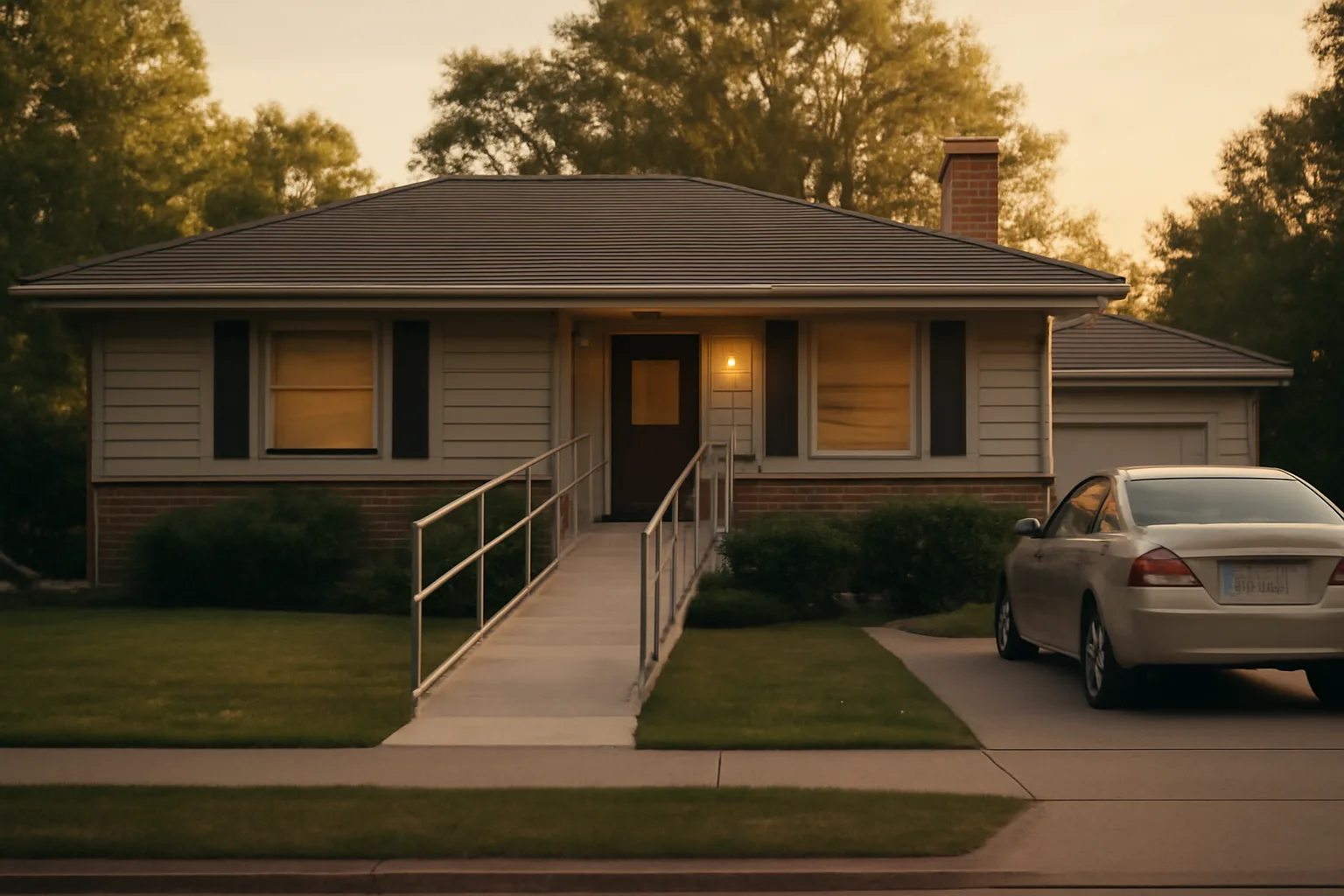
An assisted living facility is the licensed building and business entity approved by the state to provide personal care services to residents in a residential (not hospital-like) setting. The word "facility" in state statutes usually just means the licensed physical location, whether that's a converted single-family home with 6 beds or a purpose-built 120-unit building with a commercial kitchen and elevator. Size and design vary enormously by state and by operator model. California's Residential Care Facilities for the Elderly program, for example, licenses everything from small family-style homes to larger campuses under one regulatory umbrella (Health and Safety Code Chapter 3.2, administered by the California Department of Social Services) [2]. Florida licenses assisted living facilities under Chapter 429, Florida Statutes, through the Agency for Health Care Administration [3]. Because the term covers so many different physical building types, don't assume "assisted living facility" always means a big institutional building. In a residential neighborhood, the license usually attaches to a house that looks like every other house on the block, which is exactly the point of the fair housing protections discussed next.
can assisted living or a group home legally operate in a residential neighborhood?
Yes, in most cases, and federal law is a big part of why. The Fair Housing Act (as amended in 1988) prohibits housing discrimination based on disability, and courts and HUD have applied that to zoning ordinances that try to single out group homes for people with disabilities or seniors needing care [4]. Many states go further and pass their own "family definition" or "fair housing group home" statutes that require small residential care homes (commonly homes serving six or fewer unrelated residents) to be treated as a single-family residential use, permitted by right in any zone where a single family could live. California's Health and Safety Code Section 1566.3, for instance, states that a residential facility serving six or fewer persons "shall be considered a residential use of property for the purposes of zoning" and cannot be subject to a conditional use permit, zoning variance, or other zoning clearance not required of a similar family dwelling [5]. That's the general rule, but it's not universal and it's not unconditional. Some states set the protected threshold at a different number, some require notice to neighbors, and some allow spacing requirements between homes (so you can't cluster five group homes on one block). Homeowners associations (HOAs) with deed restrictions are a separate legal layer entirely and can sometimes still restrict use, though courts have struck down HOA restrictions that conflict with fair housing protections in specific cases. Always confirm the current threshold and any spacing or notice rules with your state licensing agency and your local zoning or planning department before signing a lease or purchase agreement.
what does assisted living provide? (services, staffing, and daily supports)
Assisted living typically provides help with activities of daily living (ADLs) like bathing, dressing, toileting, mobility, and eating; medication management or reminders; three meals a day plus snacks; housekeeping and laundry; 24-hour staff availability for safety and emergencies; and social or recreational programming. It does not typically provide skilled nursing care, ventilator support, or complex wound care, though some states have a higher "level of care" or specialized license tier that allows more medical services. Staffing requirements vary sharply by state. Some states require a licensed administrator on-site, direct care staff awake and available 24 hours a day, and minimum staff-to-resident ratios during waking and sleeping hours. Others set staffing requirements only in general terms ("sufficient staff to meet resident needs") and leave the specifics to the facility's own staffing plan, which inspectors then check against actual resident acuity during a survey. Medication management is one of the most commonly cited deficiency areas in state inspections, along with staffing documentation and background check paperwork. If you're building your staffing plan, get the exact ratio and training-hour requirements from your state licensing agency's assisted living or residential care regulations before you write job descriptions or a budget, not after.
what is assisted living vs nursing home? (and the difference between assisted living and nursing home, explained)
| Primary need met | Help with ADLs, medication reminders | Medical/nursing care, rehab, complex conditions | |
|---|---|---|---|
| Licensed nurse on-site 24/7 | Not usually required | Required | |
| Medicare coverage | Not covered [1] | Short-term rehab stays may be covered under Part A | |
| Typical setting | Apartment-style or house-style, home-like | Hospital-like, medical equipment visible | |
| Regulation | State-specific residential care statutes | State licensure plus federal 42 CFR Part 483 for Medicare/Medicaid certified facilities | |
| Zoning treatment | Often treated as residential use if small | Often treated as institutional/commercial use | The zoning treatment difference matters a lot for this article's topic. A small assisted living or group home is frequently protected as a residential use under state family-definition statutes (see above). A nursing home, because of its scale, medical equipment, and institutional character, is almost never treated as a residential use and instead needs commercial or institutional zoning, a certificate of need in some states, and a much heavier building code review. |
The core difference is medical intensity and licensure category. Assisted living is a residential, non-medical (or limited-medical) model built around help with daily living and a home-like environment. A nursing home (skilled nursing facility) is a medical facility licensed to provide 24-hour nursing care, rehabilitation, and treatment for people with significant medical needs, and it's regulated under a different federal framework that includes Medicare and Medicaid certification requirements under 42 CFR Part 483 [6]. | Feature | Assisted living | Nursing home (skilled nursing facility) |
does Medicare cover assisted living facilities?
No. Medicare does not pay for the room and board or personal care costs of assisted living. CMS states plainly that assisted living facilities are "licensed and regulated by the state" and that Medicare "doesn't cover the cost" of this kind of long-term custodial care [1]. Medicare Part A may cover a short-term skilled nursing facility stay after a qualifying hospital stay, and Medicare Part B may cover doctor visits or specific medical services a resident receives while living in assisted living, but the assisted living monthly fee itself is not a covered Medicare benefit. Medicaid is a different program with different rules, and it can help, though usually not by paying the room and board directly. Medicaid.gov explains that home and community-based services (HCBS) waivers let states pay for personal care, case management, and similar services delivered in a residential setting like assisted living, while room and board generally remains the resident's responsibility, often paid through the resident's own income (including Supplemental Security Income) . Every state runs its own waiver programs with its own income and asset limits, so eligibility and covered services vary widely. If Medicaid funding is part of your business model, get the current waiver name, income limits, and covered service list from your state Medicaid agency before you build pricing or your admissions criteria.
how zoning actually works for a home in a residential district
Zoning and licensing are two separate approval tracks, and mixing them up is one of the most common mistakes new operators make. Your state health or social services agency licenses the care operation (staffing, training, resident rights, medication handling). Your city or county zoning or planning department controls whether that use is allowed at that address, in that zone, in that structure. For a small home (commonly six or fewer residents, though the exact number is state-specific), many states require the local government to treat it exactly like a single-family residence for zoning purposes, meaning no special permit, no public hearing, and no different setback or parking rules than any other house on the street [5]. For a larger group home or a purpose-built assisted living building, you're much more likely to need a conditional use permit, a site plan review, fire marshal sign-off on egress and sprinklers, and possibly a public hearing where neighbors can comment. Before you sign a lease or make an offer on a house, call your local zoning or planning department directly and ask two things: (1) is this a by-right residential use at this resident count under state law, and (2) are there any overlay districts, HOA covenants, or spacing/distance requirements from other licensed homes that apply. Get the answer in writing if you can. Confirm parking, fire code, and building occupancy classification questions with your local fire marshal and building department too, since those requirements exist independent of your state care license. For more on this step specifically, see our guide to assisted living.
how to start a group home (the step-by-step version)
Starting a group home is a licensing project and a real estate project running at the same time, and they have to land together. Here's the realistic sequence, though your state's exact order and document names will vary. 1. Pick your population and license type. Adult foster care, IDD group home, mental health residential, substance use recovery residence, and senior assisted living/RCFE are all different licenses with different rules, even in the same state. Decide this first because it drives everything else. 2. Read your state's specific statute and regulations for that license type, in full, before you spend money. Every state licensing agency publishes these; find the specific chapter, more than the agency's homepage. 3. Confirm zoning at a specific address before signing anything. Use the small-home fair housing protection if it applies, but verify the resident-count threshold and any spacing rules with your local planning department. 4. Draft your policy and procedure manual: admissions criteria, medication management, staffing plan, emergency and evacuation procedures, resident rights, grievance process, incident reporting. Most states require this manual as part of the application, and inspectors will check your practice against it later. 5. Line up staffing: administrator qualifications, direct care staff training hours, background check and registry clearance requirements, and CPR/first aid certification, all set by your state. 6. Complete the building requirements: fire marshal inspection, health department kitchen/food safety review if you'll serve meals, and any building occupancy classification change if the structure wasn't previously licensed for residential care use. 7. Submit your license application with the required fee (fees vary by state and license type; confirm the current amount with your state licensing agency), and schedule your pre-licensing inspection. 8. Pass the initial inspection, get your license, and start operating under your approved capacity. Expect a follow-up inspection cycle after that, typically annual or biennial depending on the state. If you want a structured way to organize the policy manual, staffing plan, and application checklist pieces of this process so you're not building every document from a blank page, that's exactly what our $299 State Group Home Licensing Kit is built for. It doesn't replace reading your state's actual regulations or waiting on your state's approval decision, but it gives you a starting framework instead of starting cold.
how do I start a group home if I've never run a business before? (the honest version)
You can do it, but budget more time than you expect for the licensing and inspection cycle, and don't sign a property lease before you've confirmed zoning in writing. The single biggest mistake new operators make is falling in love with a house before checking whether the local zoning office will allow the specific license type and resident count at that address. The second biggest mistake is underestimating the policy manual. States don't just want to know that you have a fire evacuation plan, they want to see the written plan, staff trained on it, and evidence during inspection that staff can actually execute it. The same goes for medication management, incident reporting, and resident rights documentation. These aren't formalities; they're the specific things state surveyors check line by line during your licensing inspection and every renewal inspection after that. Third, staffing is not a one-time hire. Direct care staff turnover in residential care settings is a known industry challenge, and your state license depends on maintaining minimum staffing ratios and required training hours continuously, more than on your opening day roster. Build your staffing plan with turnover assumed, not as an edge case. For background on the licensing side of this decision specifically, see our overview on assisted living facilities and on how a facility assisted living license differs from a smaller adult foster care or group home license in most states.
what neighbors and HOAs can (and can't) do about a licensed home nearby
Neighbors and HOAs cannot use zoning or covenant enforcement to block a licensed small group home or assisted living home solely because of the disability, age, or recovery status of the residents. That's the core protection under the Fair Housing Act [4], and HUD has published specific guidance on how zoning and land use decisions can violate the Act when they treat group homes for people with disabilities more restrictively than similar uses [4]. What neighbors and HOAs can generally still do: enforce genuinely neutral rules that apply to every house on the street equally, like noise ordinances, parking rules, trash pickup schedules, and exterior maintenance standards. They can also raise legitimate zoning questions that apply to any use over the protected small-home threshold, like whether a large facility needs a conditional use permit. If a neighbor or HOA challenges your home, the first move is confirming your resident count and license type against your state's specific fair housing/family definition statute, in writing, ideally with a letter from your state licensing agency or a real estate attorney familiar with fair housing law in your state. Don't rely on informal assurances from a city planner over the phone; get the applicable statute section and your specific compliance confirmed in writing before a dispute escalates.
Frequently asked questions
What is assisted living?
Assisted living is a licensed residential care setting, usually for seniors, that provides help with daily activities like bathing, dressing, and medication management, along with meals and 24-hour staff availability, without the intensive skilled nursing care of a nursing home. Each state licenses and regulates it separately under its own statute.
What is a group home?
A group home is a small residential home, often licensed for six or fewer unrelated residents, where staff provide support to people with shared needs, such as seniors, adults with developmental disabilities, or people in mental health or substance use recovery. The specific license type and resident population depend on state law.
What is an assisted living facility?
An assisted living facility is the state-licensed building and business approved to provide personal care services in a residential setting. It can be a small house-style home with a handful of residents or a large purpose-built building, depending on the state and the operator's chosen scale.
What is the difference between assisted living and a nursing home?
Assisted living provides help with daily living activities in a home-like, largely non-medical setting, while a nursing home (skilled nursing facility) provides 24-hour licensed nursing care for people with significant medical or rehabilitation needs, and is regulated under a separate federal framework, 42 CFR Part 483.
Does Medicare cover assisted living facilities?
No. CMS states that assisted living is state-regulated and that Medicare does not cover its costs. Medicare may cover short-term skilled nursing stays after a qualifying hospitalization, and may cover specific medical services a resident receives, but not the assisted living room and board fee itself.
How do I start a group home?
Pick your license type and population, confirm zoning at a specific address before signing a lease, write your policy and staffing manuals, meet building and fire code requirements, submit your state application and fee, and pass your pre-licensing inspection. Requirements and fees vary by state; confirm current details with your state licensing agency.
Can an assisted living home operate in a residential neighborhood without a special zoning permit?
Often yes, if it's a small home under your state's protected resident-count threshold (commonly six or fewer). Many states require these homes to be treated as a single-family residential use under fair housing and family-definition statutes, meaning no conditional use permit is required. Confirm your state's threshold with your local zoning department.
Can a homeowners association block a group home?
An HOA generally cannot block a licensed small group home based on residents' disability or age under the Fair Housing Act, but it can still enforce neutral rules like parking, noise, and maintenance standards that apply to every home in the neighborhood equally.
What does assisted living provide that independent living doesn't?
Assisted living adds staff-supported help with daily activities like bathing, dressing, and medication management, plus meals and 24-hour staff availability, none of which independent living communities are required to provide since residents there are expected to live largely on their own.
Is a group home the same thing as an assisted living facility?
They overlap but aren't identical terms. Group home usually refers to a smaller home serving a specific population (IDD, mental health, recovery, or seniors), while assisted living facility usually refers specifically to the senior-focused personal care license, which can range from a small home to a large building.
How many residents can a group home have before zoning rules change?
It varies by state, but six or fewer residents is a common threshold that many states protect as a residential (not institutional) use under fair housing and family-definition statutes. Above that number, cities more often require a conditional use permit or special zoning review. Confirm the exact number with your state licensing agency.
Does Medicaid pay for assisted living?
Medicaid can help fund services like personal care and case management inside assisted living through state home and community-based services waivers, but it generally does not pay the room and board portion directly. Coverage, income limits, and waiver names differ by state; check with your state Medicaid agency.
Sources
- Medicare.gov, Assisted living facilities: Medicare does not cover the cost of assisted living, which is regulated by the state
- California Health and Safety Code, Chapter 3.2: California licenses Residential Care Facilities for the Elderly under Health and Safety Code Chapter 3.2
- Florida Statutes, Chapter 429: Florida licenses assisted living facilities under Chapter 429, administered by the Agency for Health Care Administration
- California Health and Safety Code Section 1566.3: A residential facility serving six or fewer persons must be treated as a residential use of property for zoning purposes in California
- eCFR, 42 CFR Part 483: Skilled nursing facilities that participate in Medicare/Medicaid are regulated under 42 CFR Part 483
- Medicaid.gov, Home & Community-Based Services: Medicaid HCBS waivers can fund personal care and related services in residential settings like assisted living, generally excluding room and board