Last updated 2026-07-25
TL;DR
Michigan licenses group homes for adults with disabilities and mental illness through LARA's Bureau of Community and Health Systems as Adult Foster Care facilities, and licenses assisted living-type senior care separately as Homes for the Aged. Zoning is protected under Michigan's Adult Foster Care Facility Licensing Act, which lets small AFC homes (6 or fewer residents) locate in single-family residential zones as a matter of right.
What is a group home in Michigan?
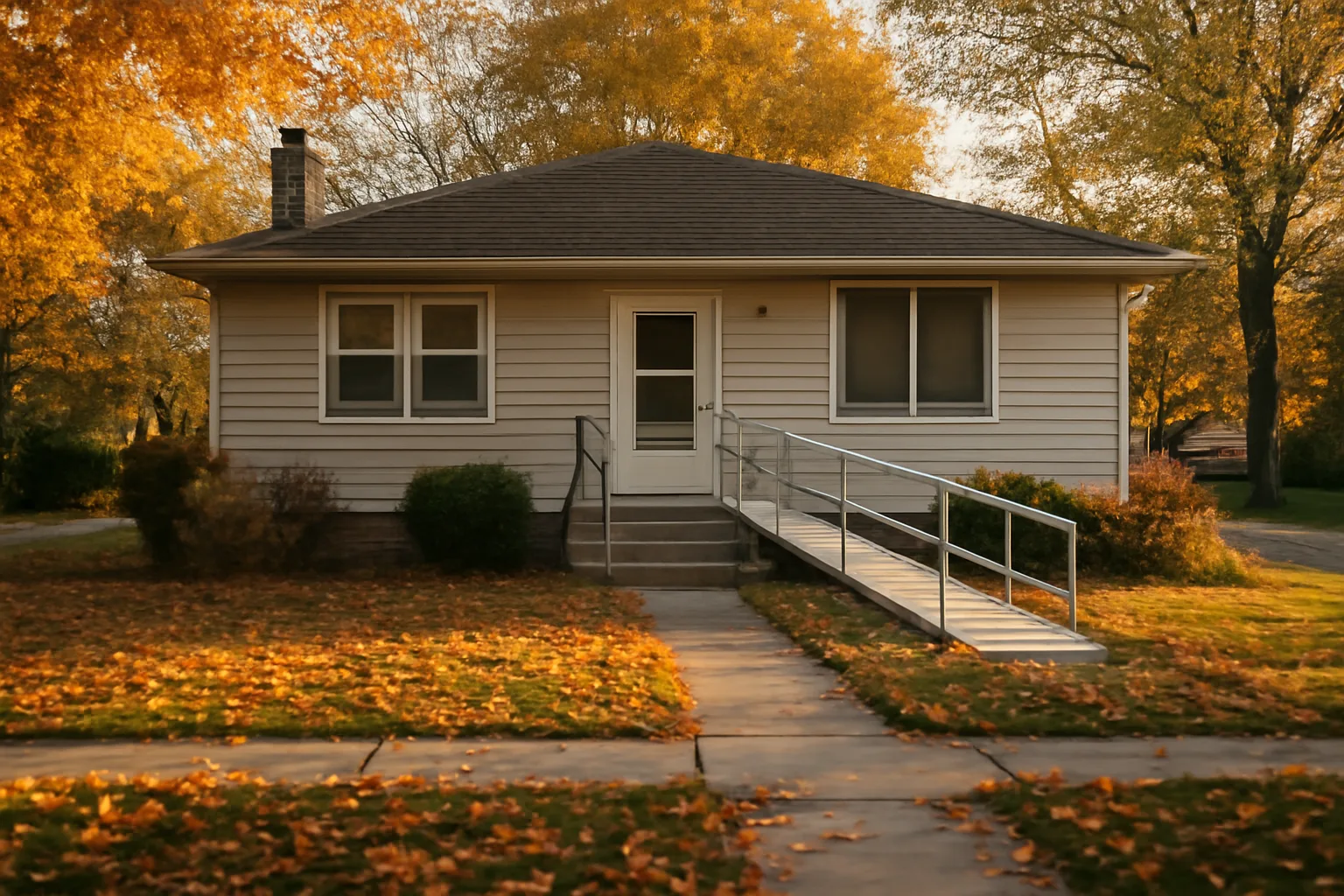
In Michigan, "group home" almost always means an Adult Foster Care (AFC) small group home, a licensed residential setting for 6 or fewer adults who need supervision, personal care, or protection but not hospital-level nursing care. Michigan's Adult Foster Care Facility Licensing Act (Act 218 of 1979, MCL 400.701 et seq.) defines the category and gives the Department of Licensing and Regulatory Affairs (LARA) authority to license and inspect these homes. AFC covers a wider range than people expect. The same statute and licensing structure covers homes serving adults with intellectual or developmental disabilities (IDD), adults with mental illness, and some adults recovering from substance use disorder, alongside elderly residents who don't need nursing care. LARA's Bureau of Community and Health Systems licenses several AFC subtypes: Family Homes (1 to 6 residents, licensee lives in the home), Small Group Homes (1 to 6 residents), Large Group Homes (7 to 12 residents), and Congregate Facilities (13 or more) [1]. If you're picturing a ranch house on a quiet street with 4 to 6 residents and round-the-clock staff, that's the classic Michigan small group home. It's the model most new operators start with because the licensing bar, staffing math, and zoning protections are friendliest at that size.
What is assisted living, and how is it different in Michigan?
"Assisted living" is not a distinct license category under Michigan law. Michigan uses two licenses that cover what other states call assisted living: Adult Foster Care (AFC) and Homes for the Aged (HFA). Both are regulated by LARA's Bureau of Community and Health Systems [1]. Homes for the Aged serve 21 or more residents (in most cases) age 55 and older, providing supervised personal care and room and board in a more institutional, campus-style setting, licensed under the Public Health Code provisions covering HFA. AFC group homes, by contrast, are smaller, more residential in feel, and serve a broader age range and disability profile, more than seniors. So when someone searches "assisted living facility" hoping to find licensing rules for Michigan, they usually need one of two answers depending on who they're serving: seniors needing personal care in a larger facility (Homes for the Aged), or a smaller residential setting for adults with disabilities, mental illness, or frailty (Adult Foster Care). Confirm with your state licensing agency which category fits your planned resident population and building size before you file anything, because the wrong license type means starting the paperwork over.
What does assisted living / AFC provide day to day?
An AFC-licensed group home provides room and board, supervision, and personal care (help with bathing, dressing, medication reminders, mobility) but does not provide the level of skilled nursing care a nursing home does. Michigan's licensing rules require homes to meet residents' "protection, care and maintenance" needs consistent with the resident's assessed needs, not to replace hospital or skilled nursing services. Daily operations in a typical Michigan small group home include several recurring pieces: staff-supervised meals, medication administration or reminders per a resident's care plan, assistance with activities of daily living, house rules and a written resident care agreement, and coordination with outside providers (home health, hospice, physicians) when a resident's needs increase. Homes cannot admit or retain residents whose care needs exceed what the license authorizes. A resident who becomes bed-bound or needs constant skilled nursing generally has to transfer to a nursing facility. Staffing has to be sufficient for the home to meet those needs around the clock. LARA's licensing rules require a home to maintain adequate direct care staff based on resident count and assessed needs, awake overnight staff in most homes with residents who cannot self-evacuate or need overnight supervision, and a designated responsible party available at all times [1]. Exact staff-to-resident ratios are not set as one fixed number in statute. They're driven by each home's resident assessment plans and LARA's determination of adequacy during licensing review and inspection, so build your staffing plan around actual assessed needs, not a guess.
How is assisted living different from a nursing home in Michigan?
The core difference is the level of medical care and the license authority. Nursing homes in Michigan are licensed under the Public Health Code as long-term care facilities providing skilled nursing, 24-hour licensed nursing supervision, and medically complex care. AFC group homes and Homes for the Aged are licensed for supervision and personal care, not skilled nursing. Practically, that means nursing homes have registered nurses and licensed practical nurses on staff around the clock, handle wound care, IV therapy, ventilator care, and complex medication regimens, and accept residents discharged from hospitals who still need clinical monitoring. AFC group homes and HFA facilities serve residents who are more stable, need help with daily living rather than clinical treatment, and who don't require a nurse in the building at all times (though many homes do contract nursing oversight for medication administration training and delegation). Cost and payer mix differ too. Nursing home care is far more likely to be paid through Medicaid's nursing facility benefit or Medicare's limited short-term skilled nursing benefit; AFC and HFA are typically private-pay, supplemented in some cases by Michigan's Medicaid waiver programs (like MI Choice) that help cover home-and-community-based supports, not room and board itself. If you're deciding which one to open, the honest test is simple: are you comfortable managing residents who might need a nurse on-site 24/7 (nursing home), or residents who need daily supervision and help with personal care but not clinical nursing (AFC/HFA)? Most new operators, and most of the demand, sits in the AFC group home space.
Does Medicare cover assisted living or group home care in Michigan?
No. Medicare does not cover room and board at assisted living facilities, Homes for the Aged, or AFC group homes anywhere in the country, including Michigan. Medicare.gov states plainly that Medicare "doesn't cover long-term care (also called custodial care)" if that's the only kind of care a person needs, and assisted living/personal care falls squarely in that custodial category [2]. Medicare will pay for medical services a resident receives while living in a group home (doctor visits, hospital stays, short-term skilled nursing after a qualifying hospital stay, home health under certain conditions), but it will not pay the group home's monthly rate for housing, supervision, or personal care assistance. Medicaid is a different story, and it's where most public funding for this population comes from. Michigan's Medicaid program, through the MI Choice Waiver and MI Health Link programs, can help cover personal care and support services for eligible low-income residents, though it typically does not cover the room-and-board portion of an AFC placement the same way it covers nursing facility care [3]. If you're building a funding model for your home, don't assume Medicaid replaces private pay for room and board. Read assisted living for a broader look at how payer mix works across states, and confirm current Michigan Medicaid waiver coverage details directly with LARA and the Michigan Department of Health and Human Services before you build pro formas.
How do I start a group home in Michigan? (Step by step)
Starting a Michigan AFC group home means working through licensing, staffing, zoning, and inspection requirements in roughly this order, though some steps overlap. 1. Decide your population and home size. Confirm whether you're serving adults with IDD, mental illness, substance use recovery, or frail elderly, and whether you're targeting 1 to 6 residents (Family or Small Group Home) or a larger Large Group Home / Congregate license [1]. This decision drives everything else: building code, staffing, and which LARA licensing consultant handles your file. 2. Secure and prepare the physical building. LARA's licensing rules set physical plant standards covering bedroom size and occupancy limits, bathroom ratios, fire safety, exits, and common space. Your local fire marshal and building/zoning department will also weigh in, and many homes need modifications (grab bars, ramps, fire suppression upgrades) before they'll pass. 3. Apply for the AFC license through LARA's Bureau of Community and Health Systems. Michigan's application requires background checks for the licensee and staff, a floor plan, policies and procedures, staffing plan, and proof of financial capacity to operate [1]. LARA conducts a pre-licensing inspection before issuing the license. 4. Write your policy and procedure manual. Michigan's licensing rules require written policies covering admission and discharge criteria, medication management, resident rights, emergency and disaster planning, staff training, and incident reporting. This is the document inspectors reference most often during annual surveys, so build it around the actual rule citations, not a generic template. See assisted living facility for more on how policy manuals differ by state. 5. Hire and train staff before residents move in. Direct care staff need training on resident rights, first aid/CPR, medication administration (if applicable), abuse and neglect reporting, and fire/emergency procedures, consistent with LARA's licensing rules for AFC staff qualifications [1]. 6. Pass your initial licensing inspection and get your license issued. LARA inspects for physical plant compliance, staffing adequacy, and policy completeness before issuing the first license, and then on a recurring basis (typically annually, more often if there are complaints or corrections needed). 7. Set up your admission and Medicaid/private-pay intake process. Decide your resident agreement terms, rate structure, and whether you'll accept residents whose care is supported by MI Choice Waiver services alongside private pay. A lot of first-time operators underestimate step 2 and step 4. The building retrofit and the policy manual are where most licensing delays happen, not the background checks.
What are Michigan's zoning rules for group homes?
Michigan law gives small AFC group homes (6 or fewer residents) strong zoning protection: they must be treated as a permitted single-family residential use, not a special land use or conditional use requiring a public hearing. This comes from the Adult Foster Care Facility Licensing Act's zoning provision, which states that an AFC family home or small group home of 6 or fewer residents "shall be considered a residential use of property for the purposes of zoning" and must be permitted in any zone allowing single-family dwellings. This is a big deal for operators. It means a city or township generally cannot require a special use permit, rezoning, or neighbor notice process just because your home is licensed for 6 or fewer AFC residents in a residential zone. Municipalities can still enforce generally applicable requirements like building and fire code, parking, and lot maintenance; they just can't single out a small group home for extra zoning hurdles. Larger homes (7 or more residents, i.e., Large Group Homes and Congregate Facilities) don't get the same automatic protection and often do require special land use approval, site plan review, or a public hearing depending on the local zoning ordinance. If you're planning anything above 6 beds, budget extra time (often 60 to 120 days, though this varies heavily by municipality) for local zoning review on top of your state license timeline. Always confirm current local zoning treatment directly with your township or city planning department, since ordinance language and how it's enforced varies.
What does the Michigan group home application and licensing process cost and take?
Costs and timelines vary by home size, population served, and how much building retrofit is needed, so treat these as planning ranges rather than guarantees. Confirm current fee schedules directly with LARA's Bureau of Community and Health Systems before budgeting [1]. Generally, expect these cost categories: state licensing application fees (set by LARA and subject to change; confirm current amounts on LARA's licensing fee schedule), building modifications for fire/life safety and ADA-type accessibility, staff background checks and required training/certification, liability and property insurance, and working capital to cover payroll and overhead before your first residents are admitted and paying. Timeline realistically runs several months from decision to opening: population and site selection (2 to 6 weeks), building prep and zoning confirmation (4 to 12 weeks, longer if renovation or zoning review is needed), LARA application and pre-licensing review (often 60 to 90+ days depending on completeness of your submission and inspection scheduling), and staff hiring/training before intake. Homes that submit incomplete policy manuals or fail the first physical plant inspection often add 30 to 60 days to this timeline waiting on a corrective re-inspection.
What staffing does a Michigan group home need?
Michigan doesn't publish one universal staff-to-resident ratio in statute; instead, LARA requires "sufficient" direct care staff based on each home's resident assessment plans, with the licensing consultant reviewing your staffing plan against actual resident needs during application and inspection [1]. In practice, most small (1 to 6 bed) AFC homes run with at least one direct care staff awake and present at all times, stepping up to two or more during peak hours (meals, morning/evening care routines) depending on resident acuity. Homes serving residents who cannot self-evacuate in an emergency need awake, alert overnight staff, more than an on-call arrangement. If your resident mix includes people with significant behavioral support needs, LARA's review (and honestly, basic safety) will push you toward higher staffing ratios than the legal minimum. Required staff qualifications typically include a criminal background check clearance, orientation and ongoing training hours (first aid/CPR, medication administration if delegated, resident rights, abuse/neglect reporting, fire safety), and, for the home's responsible party/administrator, meeting LARA's specific administrator qualification requirements under the AFC rules. Build your staffing budget around your actual resident acuity and required overnight coverage, not the bare legal floor, because that's where inspections (and, more importantly, resident safety) actually get tested.
What inspections and ongoing compliance does Michigan require?
After initial licensing, LARA's Bureau of Community and Health Systems conducts recurring inspections, generally at least annually, plus complaint-driven inspections whenever a report comes in about resident care, safety, or rights violations [1]. Inspectors review the physical plant, staffing records, resident files, medication logs, incident reports, and policy compliance. Common areas where Michigan AFC homes get cited include incomplete or outdated resident care plans, medication administration records not matching physician orders, staff training documentation gaps, fire drill and emergency preparedness records, and physical plant issues like blocked exits or expired fire extinguisher inspections. A licensing consultant can issue a corrective action plan with a deadline; repeated or serious violations can lead to a provisional license, license suspension, or revocation. Keep your resident files, staff training logs, and incident reports organized and current year-round, more than before a scheduled inspection, since complaint-driven inspections show up unannounced. If you want a structured starting point for building compliant policies, staffing plans, and inspection-ready documentation, GroupHomePath's $299 one-time State Group Home Licensing Kit is built around exactly these state-specific requirements, though it's a reference tool, not a substitute for confirming current rules directly with LARA.
Where should I go next if I'm planning a Michigan group home?
If you're still deciding what type of home fits your goals and population, start with the broader comparison of models: assisted living facilities and facility assisted living cover how states structure licensing tiers differently, which helps you see where Michigan's AFC/HFA split sits relative to other states. If you're weighing a smaller, in-home model versus a freestanding group home, assisted living at home walks through that comparison. And if part of your research is figuring out what's already operating near your target location, senior assisted living facilities near me is a useful lens for market research before you commit to a site. Whatever you do next, don't skip the direct call to LARA's Bureau of Community and Health Systems licensing consultant assigned to your region. Rules, fees, and forms get updated, and a five-minute phone call can save weeks of rework on your application.
Frequently asked questions
What is assisted living?
Assisted living is a residential care model that provides housing, supervision, and help with daily activities (bathing, dressing, medication reminders) for people who need support but not hospital-level nursing care. Michigan doesn't use the term as a formal license category; it licenses this care as Adult Foster Care (for smaller, disability/mental-health-inclusive settings) or Homes for the Aged (larger, senior-focused settings) [2][3].
What is a group home?
A group home is a licensed residential home, usually serving a small number of residents (often 6 or fewer in Michigan), where adults with disabilities, mental illness, or age-related needs live together with staff support for supervision and personal care. In Michigan, this is licensed as Adult Foster Care under MCL 400.701 et seq. [1].
What is an assisted living facility?
An assisted living facility is a licensed building providing housing plus personal care services to residents who need daily living support. In Michigan, the closest equivalent categories are Homes for the Aged (21+ residents, age 55+, licensed under the Public Health Code) and Adult Foster Care group homes (smaller, broader population) [2][3].
What is assisted living facility, exactly, under Michigan law?
Michigan law doesn't define a single "assisted living facility" license. It splits the concept between Homes for the Aged (Public Health Code, larger senior facilities) and Adult Foster Care (Adult Foster Care Facility Licensing Act, smaller homes for elderly, disabled, or mentally ill adults) [1][3]. Confirm with LARA which category fits your planned population before applying.
What is assisted living vs nursing home?
Assisted living (AFC/HFA in Michigan) provides supervision and help with daily activities; nursing homes provide 24-hour skilled nursing care for medically complex residents. Nursing homes are licensed as long-term care facilities under the Public Health Code with licensed nurses on staff around the clock, which AFC and HFA homes are not required to have [3].
What does assisted living provide day to day?
Day to day, it provides room and board, supervision, help with bathing, dressing, mobility and medication reminders, meals, and coordination with outside medical providers when needed. It does not provide skilled nursing, IV therapy, or the kind of 24-hour clinical monitoring a nursing home offers [1][2].
How do I start a group home in Michigan?
Decide your population and home size, secure a compliant building, apply through LARA's Bureau of Community and Health Systems with your floor plan, policies, and staffing plan, pass the pre-licensing inspection, hire and train staff, and set up your intake and payer process. Expect several months from decision to opening, and confirm current fees and forms with LARA [1][2].
What is the difference between assisted living and nursing home care?
The difference is medical acuity and staffing. Assisted living/AFC serves residents who need help with daily living but not skilled nursing; nursing homes serve residents who need 24-hour licensed nursing care, medication management for complex conditions, and clinical treatment like wound care or IV therapy [3].
Does Medicare cover assisted living facilities?
No. Medicare does not cover the room-and-board or personal care costs of assisted living, Homes for the Aged, or AFC group homes anywhere, including Michigan, because these are considered custodial long-term care. Medicare.gov confirms Medicare doesn't cover long-term custodial care when that's the only care needed [4].
How do I start a group home if I have no experience in senior care?
You don't need a clinical background, but you do need to complete LARA's required administrator qualifications, staff training on resident rights and safety, and a workable business and staffing plan. Many first-time Michigan operators partner with an experienced administrator or consultant for the first year while they learn the compliance side.
How many residents can a Michigan group home have without special zoning approval?
Up to 6 residents in an AFC Family Home or Small Group Home is treated as a permitted single-family residential use under Michigan's Adult Foster Care Facility Licensing Act zoning provision, meaning most townships and cities cannot require special zoning approval for it. Homes with 7 or more residents typically need to go through local special land use review [6].
Does Medicaid pay for Michigan group home costs?
Michigan Medicaid, through programs like the MI Choice Waiver, can help cover personal care and support services for eligible low-income residents, but it generally does not cover the room-and-board portion of an AFC placement the way it covers nursing facility care. Confirm current coverage details with the Michigan Department of Health and Human Services [5].
What license do I need for a Michigan senior group home?
If you're serving 21 or more residents age 55 and older in a personal-care setting, you likely need a Home for the Aged license under the Public Health Code. If you're running a smaller home (1 to 12 residents) with a broader population including elderly, disabled, or mentally ill adults, you likely need an Adult Foster Care license instead [2][3].
Sources
- Michigan LARA, Adult Foster Care and Home for the Aged Licensing Rules (R 400.1401 et seq.): Describes AFC subtypes (Family Home, Small Group Home, Large Group Home, Congregate Facility) and licensing/staffing oversight
- Medicare.gov, Long-Term Care coverage page: Medicare does not cover long-term custodial care such as assisted living room and board
- Michigan Department of Health and Human Services, MI Choice Waiver Program overview: MI Choice Waiver helps cover personal care and home/community-based services for eligible Michigan Medicaid recipients
- Michigan Legislature: The Adult Foster Care Facility Licensing Act (Act 218 of 1979) establishes licensing requirements for group homes and adult foster care facilities in Michigan
- Medicaid.gov: Medicaid Home and Community-Based Services (HCBS) waivers, rather than Medicare, are the primary funding source covering assisted living and group home services for eligible individuals
- eCFR: Federal regulations under 42 CFR Part 441 Subpart G govern home and community-based services waivers that can fund assisted living-type care