Last updated 2026-07-25
TL;DR
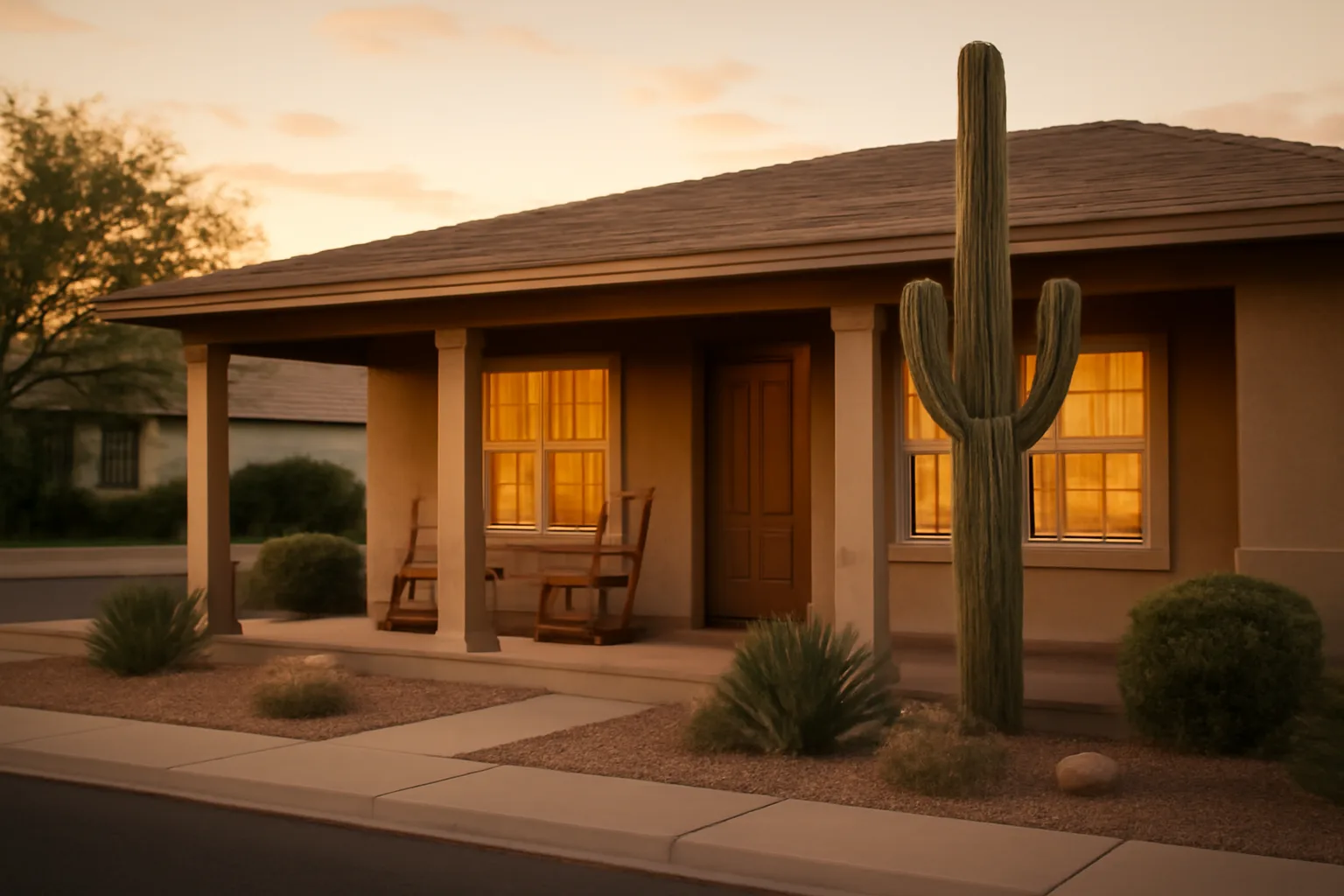
Camelback residential assisted living refers to small, home-like assisted living settings, often named for the Camelback area of Phoenix, Arizona, that provide housing, meals, and help with daily activities for seniors. Medicare does not pay for room and board in these settings. Costs, licensing rules, and staffing requirements vary by state, so confirm specifics with your state licensing agency before opening or choosing one.
What is assisted living?
Assisted living is a category of long-term care that sits between fully independent housing and a nursing home. Residents live in private or semi-private rooms or apartments and get help with things like bathing, dressing, medication reminders, and meals, but they don't typically need the round-the-clock skilled nursing care a nursing home provides. The federal government doesn't run a single national assisted living program. Instead, each state licenses and regulates assisted living under its own rules, which is why you'll see wide differences in staffing ratios, training hours, and what level of care a facility can legally provide from one state to the next. The Centers for Medicare & Medicaid Services (CMS) confirms that assisted living is regulated at the state level, not federally licensed like nursing homes are [1]. A "Camelback residential assisted living" facility is usually a smaller, home-style operation, the kind of name you see attached to a specific street or neighborhood, often in the Camelback corridor of Phoenix, Arizona, which has a dense cluster of senior housing and residential care options. These smaller homes (sometimes called adult foster care or residential care homes depending on the state) tend to house somewhere between 2 and 10 residents in an actual house, versus 50 to 150+ in a large purpose-built assisted living community.
What is a group home?
A group home is a residential setting, usually an actual house in a neighborhood, where a small number of people live together and get support from paid staff. The term gets used across very different populations: seniors who need help with daily living, adults with intellectual or developmental disabilities (IDD), people in mental health recovery, and youth in child welfare systems. What makes something a "group home" versus a big institutional facility mostly comes down to scale and setting. You're talking about a residential building, not a hospital wing or a wing of a nursing facility. Staff live nearby or work shifts, residents share common spaces, and the home is licensed under whatever category your state uses (adult foster care, residential care facility for the elderly, community residential facility, etc). For operators, the licensing category matters enormously because it determines staffing ratios, physical plant requirements, fire code, and what level of resident need you're legally allowed to serve. If you're researching how these categories differ from a straight assisted living facility, start there before you pick a business model.
What is an assisted living facility?
An assisted living facility (ALF) is a licensed residential setting for people, mostly older adults, who need help with activities of daily living (ADLs) like bathing, dressing, toileting, and medication management, but who don't require the intensive medical care a nursing home provides. Facilities are licensed by the state, not the federal government, and license categories, names, and rules vary widely [1]. Most states require an ALF to have a written policy manual covering medication management, emergency procedures, resident rights, staffing plans, and admission/discharge criteria before they'll issue a license. Arizona, for example, licenses assisted living facilities and assisted living homes through the Arizona Department of Health Services, which sets specific requirements for administrators, caregiver training, and resident agreements [2]. A typical ALF, whether it's a 120-bed community or a 6-bed home near Camelback Road, must have: - A licensed administrator or manager (requirements vary by state and facility size)
- Written staffing plans showing coverage for every shift
- Medication management policies, often requiring specific staff training or certification
- Emergency and disaster plans
- Admission agreements spelling out services, costs, and discharge criteria If you're trying to figure out what is assisted living facility rules apply in your state specifically, the fastest path is your state's health or social services licensing division. Names differ (Department of Health, Department of Social Services, Office of Aging), so search your state name plus "assisted living facility licensing."
What does assisted living provide?
Assisted living typically provides a private or shared room, three meals a day, help with ADLs, medication management or reminders, housekeeping, laundry, and some level of social or recreational programming. What's included in a base rate versus billed as an add-on varies a lot by state and by individual community. Most assisted living communities use a tiered pricing model: a base rate covers room, board, and a defined level of care, then additional charges apply as a resident needs more help (two-person transfers, incontinence care, memory care support, etc). This is different from a nursing home, which is licensed to provide skilled nursing and rehabilitative care around the clock. Genworth's Cost of Care Survey, one of the most cited sources on long-term care costs, put the median national monthly cost for assisted living at $5,350 in 2021, though more recent editions show costs continuing to climb and vary heavily by state and by whether the setting is a large community or a small home [3]. Arizona-specific and neighborhood-specific costs (including areas near Camelback) will differ from the national median, sometimes significantly, so get quotes directly from facilities rather than relying on national averages when budgeting for a family member's care.
What is the difference between assisted living and nursing home?
| Regulated by | State only | State + federal (Medicare/Medicaid certified) | |
|---|---|---|---|
| Care level | ADL support, non-medical | Skilled nursing, rehab, medical care | |
| Staffing | Caregivers, medication aides | Licensed nurses, CNAs, on-site medical oversight | |
| Medicare coverage | Room/board not covered | Short-term skilled stays can be covered | |
| Typical setting | Apartment-style or home-style | Hospital-like wings, shared/private rooms | This is the same question people ask as "what is assisted living vs nursing home" and the answer doesn't change: assisted living is about daily living support in a residential setting, nursing homes are about medical and skilled nursing care. |
The core difference is the level of medical care provided and how each is regulated. Assisted living is a residential, non-medical model focused on help with daily living activities. Nursing homes (also called skilled nursing facilities) are licensed to provide 24-hour skilled nursing care, rehabilitation, and medical treatment for people with more significant health needs. Nursing homes are certified under federal Medicare and Medicaid rules and must meet requirements set out in the Social Security Act and CMS regulations, including specific staffing and quality reporting requirements [4]. Assisted living facilities are licensed purely at the state level, with no equivalent federal certification program [1]. | Feature | Assisted Living | Nursing Home |
Does Medicare cover assisted living facilities?
No. Medicare does not cover the cost of room and board in an assisted living facility. Medicare.gov states plainly that Medicare does not pay for "long-term care (also called custodial care)" if that's the only care a person needs, and assisted living room and board falls into that category [5]. What Medicare will cover, even for someone living in assisted living, is medically necessary services delivered under Medicare Part A or Part B, things like doctor visits, physical therapy, durable medical equipment, or a short skilled nursing stay after a qualifying hospital stay. It just won't pay the facility's monthly rent or care fee. Medicaid is a different story, and this is where it gets confusing for families and operators alike. Some states use Medicaid Home and Community-Based Services (HCBS) waivers to help cover the cost of personal care services within an assisted living setting, though Medicaid generally still won't pay for room and board itself [6]. Coverage, waiver availability, and income limits vary enormously by state, so anyone counting on Medicaid to help pay for assisted living needs to check with their state Medicaid agency directly, not assume national rules apply. If you're building a facility that plans to accept Medicaid waiver residents, budget the licensing and compliance timeline separately, because provider enrollment adds real weeks to your open date.
How to start a group home
Starting a group home means working through a specific sequence: pick your licensing category and state, secure a compliant property, write your policy and procedure manuals, hire and train staff, and pass a pre-licensing inspection. Skipping steps or doing them out of order is the single biggest reason applications get delayed. Here's the realistic order of operations: 1. Pick your population and license category. Adult foster care, assisted living home, IDD group home, and behavioral health residential facility are usually separate license types with separate rules. Confirm with your state licensing agency which category matches the residents you plan to serve. 2. Check zoning before you sign a lease. Many jurisdictions treat small group homes as a residential use protected under fair housing law, but rules on home size, spacing between homes, and occupancy still vary. Confirm with your local zoning office and state licensing agency together, because state licensing rules and local zoning rules are not the same thing and both have to be satisfied. 3. Write your policy and procedure manual. Nearly every state requires a written manual covering admissions, medication management, emergency procedures, resident rights, grievance processes, staffing plans, and infection control before they'll approve your application. 4. Build your staffing plan. States set minimum staff-to-resident ratios and training/certification requirements (often including CPR, first aid, medication administration training, and abuse reporting training). Get these numbers directly from your state's licensing rule text, not from a general estimate. 5. Apply for your license. This usually means submitting the application, policy manual, staffing plan, floor plan, background check clearances for owners and staff, and fees to your state licensing agency, followed by a facility inspection. 6. Pass your pre-licensing inspection. Inspectors check life safety code compliance, fire extinguishers and smoke detectors, medication storage, exits, and whether your written policies match what's actually happening on-site. If you're building this from scratch, our $299 State Group Home Licensing Kit gives you a state-specific starting point for the policy manual, staffing plan, and application checklist so you're not drafting all of it from a blank page. It doesn't replace your state's official application or guarantee approval, but it does save the weeks most operators spend hunting down what their state actually requires.
How do I start a group home in my state specifically?
The process is functionally the same everywhere (license category, zoning, manuals, staffing, inspection) but the specific agency name, fee amount, and required forms differ by state, and sometimes by county for zoning. There's no shortcut around confirming these details directly with your state's licensing division. A few things to check state-by-state before you spend money on a property: - Which agency licenses your category. Some states put assisted living and adult foster care licensing under a Department of Health, others under Social Services or Aging.
- Application and license fees. These range widely and change periodically, so pull the current fee schedule from your state agency's own published fee page rather than relying on a number from an old article or forum post.
- Minimum staffing ratios and required certifications. Written into the state's administrative code, more than "guidance."
- Background check requirements for owners, administrators, and direct care staff.
- Fire marshal and life safety inspection requirements, which may involve a separate agency from your health licensing agency. If you're comparing what a straight assisted living facilities license requires versus a smaller adult foster care model, read both license types side by side before committing to a property, because the physical plant requirements (sprinkler systems, hallway widths, number of exits) can differ enough to make one property workable and another a dead end.
How much does it cost to start a group home?
Startup costs vary hugely depending on whether you're buying or leasing a home, renovating to meet fire and life safety code, and how many residents you plan to serve. There's no single honest national number here, and anyone quoting you one flat figure is guessing. Costs to budget for typically include: property acquisition or lease deposit, renovation to meet fire code and accessibility requirements, furniture and equipment, state licensing application fees, background check fees for staff, liability insurance, initial staff wages before you have residents generating any income, and your policy manual and staffing plan development. The biggest variable most first-time operators underestimate is the renovation cost to bring an ordinary house up to fire and life safety code for a licensed care facility, things like fire-rated doors, sprinkler retrofits, or widened doorways for wheelchair access. Get a walkthrough from your local fire marshal before you sign a lease or purchase agreement, not after.
What should a group home policy manual cover?
A compliant policy manual needs to cover admission and discharge criteria, medication management procedures, emergency and disaster response, staffing plans and shift coverage, resident rights and grievance procedures, infection control, incident reporting, and staff training requirements. Most states will not issue a license without a written manual covering these areas in some form. Inspectors don't just check that you have a manual, they check that what's written matches what's actually happening in the home. If your medication policy says double-signature verification for controlled substances but staff aren't doing that in practice, that's a citation waiting to happen. Think of the manual less as paperwork to get through licensing and more as your actual operating system. Staff turnover in this industry is real; a clear manual is what lets a new hire step in and know exactly what to do on day three without someone having to explain it verbally.
What inspections should I expect after I'm licensed?
Expect an initial pre-licensing inspection, then periodic renewal inspections (often annual, though this varies by state and license type), plus the possibility of unannounced complaint-driven inspections if anyone files a concern with your state agency. Fire marshal inspections are usually separate from your health or social services licensing inspection. Common problem areas inspectors flag: expired fire extinguishers, medication stored incorrectly (unlocked, or without proper temperature control for certain medications), missing or outdated staff training documentation, and written policies that don't match actual practice. Keeping a running compliance binder (or digital equivalent) with current staff certifications, fire inspection reports, and medication logs makes renewal inspections dramatically less stressful. Operators who scramble to reconstruct documentation the week before an inspection are the ones who get cited for paperwork gaps that have nothing to do with actual resident care.
Is a small home-style facility better than a large community?
Neither is objectively "better," they serve different needs and cost structures. Small home-style settings (2 to 10 residents) tend to offer more individualized attention and a lower staff-to-resident ratio in practice, while large communities often offer more amenities, more social programming, and sometimes more competitive per-resident staffing costs at scale. For families choosing a facility, the decision usually comes down to the resident's personality and needs: someone who gets overwhelmed by large groups or noise may do noticeably better in a small home setting, while someone who wants an active social calendar might prefer a bigger community. For operators, the small home-style model has a lower barrier to entry (an actual house versus a purpose-built facility) but a lower resident capacity limits how the numbers work at scale. Neither path is a shortcut around licensing, staffing, and inspection requirements, those apply regardless of size.
Frequently asked questions
What is assisted living?
Assisted living is a licensed residential care setting where residents get help with daily living activities like bathing, dressing, and medication management, but don't need the round-the-clock skilled nursing care a nursing home provides. It's regulated at the state level, not federally, so rules and terminology vary by state [1].
What is a group home?
A group home is a residential house where a small number of people live together and receive support from paid staff. The term applies across populations, seniors, people with IDD, mental health recovery residents, and youth, and the specific license category and rules depend on which population the home serves and which state it's in.
What is an assisted living facility?
An assisted living facility is a state-licensed residential setting for people who need help with activities of daily living but not intensive medical care. It typically includes a room, meals, help with ADLs, medication management, and some social programming, with specific requirements set by each state's licensing agency.
What is the difference between assisted living and nursing home?
Assisted living is a residential, non-medical model for help with daily living, licensed only at the state level. Nursing homes provide 24-hour skilled nursing and medical care and are certified under federal Medicare/Medicaid rules in addition to state licensing [4]. Nursing homes serve people with higher medical acuity needs.
Does Medicare cover assisted living facilities?
No. Medicare does not pay for room and board or long-term custodial care in an assisted living facility [5]. It may cover separate medically necessary services like doctor visits or short-term skilled care after a qualifying hospital stay, but not the facility's ongoing housing and care costs.
How do I start a group home?
Pick your license category and state, confirm zoning compatibility, write a compliant policy and staffing manual, hire and train staff to your state's required ratios and certifications, then apply for licensure and pass a pre-licensing inspection. Every step routes back to your specific state licensing agency's current rules.
What does assisted living provide?
Assisted living typically provides a room, three meals a day, help with activities of daily living, medication management or reminders, housekeeping, laundry, and social or recreational activities. Additional care needs (two-person assist, memory care support) are often billed separately on a tiered pricing model.
Does Medicaid pay for assisted living?
Some states use Medicaid Home and Community-Based Services waivers to cover personal care services within assisted living, but Medicaid generally does not cover room and board itself, and availability and income limits vary by state [6]. Check directly with your state Medicaid agency for current waiver programs.
What is a residential care home versus an assisted living facility?
The terms often overlap, and states use different names (residential care home, adult foster care, assisted living home) for what is functionally a small, home-style licensed care setting. The exact license category, capacity limits, and required services depend entirely on your state's specific administrative code.
How much does assisted living cost per month?
Genworth's Cost of Care Survey reported a national median of $5,350 per month for assisted living in 2021, though costs vary significantly by state, region, and facility type [3]. Get current local quotes directly from facilities since national medians don't reflect specific markets.
How many residents can a small group home have?
Resident capacity limits are set by each state's licensing rules and typically range from small homes of 2 to 10 residents up to larger licensed facilities with no practical capacity cap beyond building code. Confirm your state's specific capacity thresholds, since crossing certain resident counts can trigger a different license category entirely.
What training do group home staff need?
Requirements vary by state and license type but commonly include CPR and first aid certification, medication administration training, abuse and neglect reporting training, and orientation to the facility's specific policies. Check your state licensing agency's administrative code for the exact hours and certifications required for your category.
Sources
- CMS, Nursing Home Compare / long-term care regulation background: Assisted living is regulated at the state level, distinct from federally certified nursing facilities
- Arizona Department of Health Services, Assisted Living Facilities licensing: Arizona licenses assisted living facilities and homes through ADHS with specific administrator and caregiver requirements
- Genworth, Cost of Care Survey 2021: Median national monthly cost of assisted living was $5,350 in 2021
- CMS, Nursing Home Requirements and Regulations: Nursing homes are certified under federal Medicare/Medicaid regulations in addition to state licensing
- Medicare.gov, Long-term care coverage: Medicare does not cover long-term custodial care such as assisted living room and board
- Medicaid.gov, Home & Community Based Services: Some states use Medicaid HCBS waivers to cover personal care services in assisted living settings, but not room and board