Last updated 2026-07-25
TL;DR
Starting a group home in Massachusetts means picking a population (DDS, DMH, EOEA, or DPH each license different models), forming a legal entity, meeting facility and staffing rules, applying to the matching state agency, and passing a pre-licensure inspection. There's no single "group home license" in Massachusetts; the agency depends on who you serve.
what is a group home
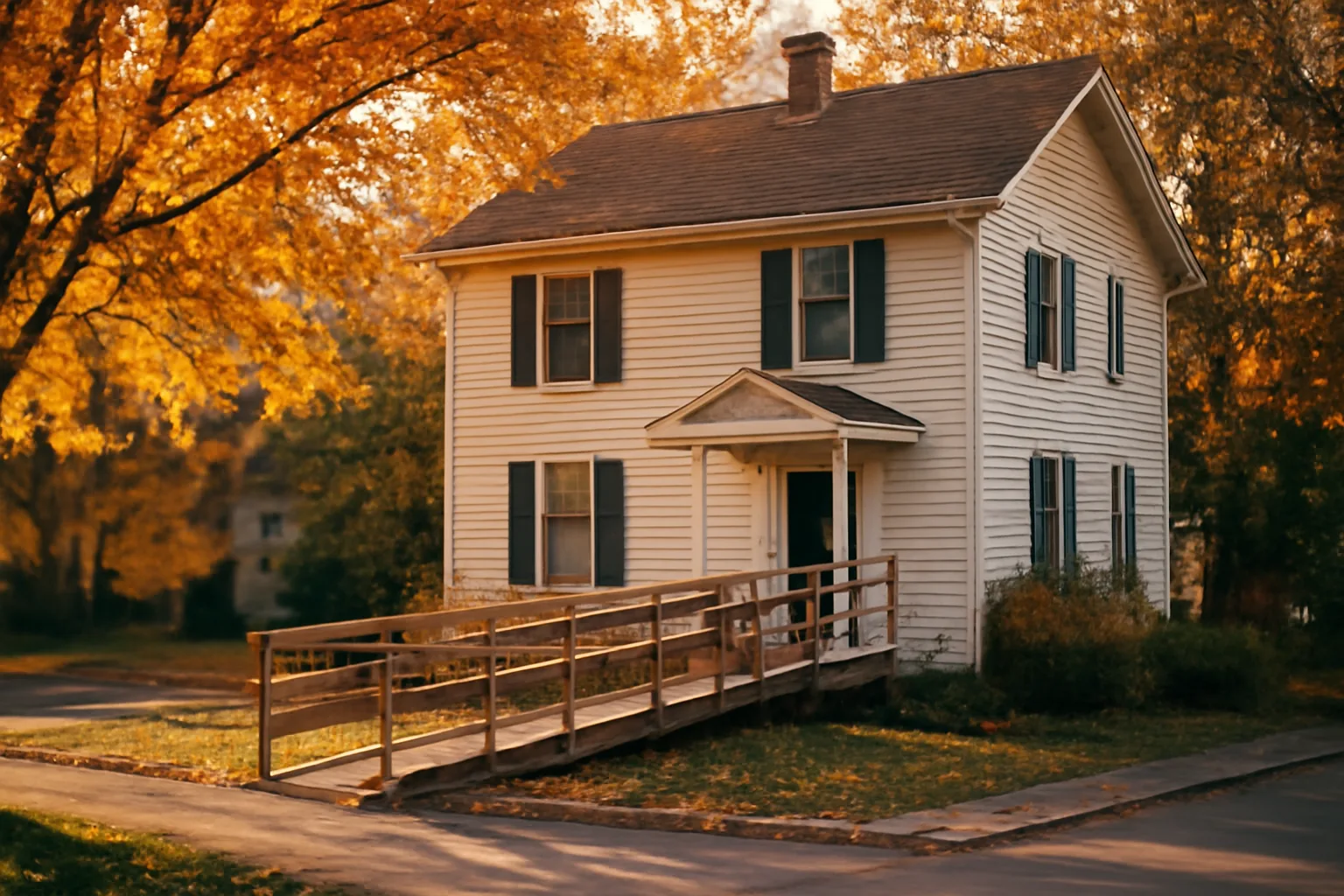
A group home is a licensed residential setting, usually a single-family style house, where a small number of people (often 4 to 10) live together and receive supervision, personal care, or clinical support from paid staff. Group homes serve people with intellectual and developmental disabilities (IDD), mental illness, substance use disorders, or seniors who need help with daily activities but not skilled nursing. In Massachusetts, the term covers a lot of ground legally. A "group home" for someone with a developmental disability is licensed and monitored differently than a group home for someone in mental health recovery, which is different again from a residential program for older adults. There's no one Massachusetts statute called the "Group Home Act." Instead, several agencies each regulate their own slice: the Department of Developmental Services (DDS), the Department of Mental Health (DMH), the Department of Public Health (DPH), and the Executive Office of Elder Affairs (EOEA) for assisted living residences. Before you file any paperwork, decide exactly who you want to serve. That single decision determines your licensing agency, your staffing ratios, your building code category, and your funding sources. Operators who skip this step and try to build something generic often find out mid-project that no single license covers what they built.
how to start a group home in massachusetts (the overall process)
Starting a group home in Massachusetts generally follows this order: identify your population and matching state agency, form a business entity, secure a compliant property, write your policy and procedure manual, hire and train staff to meet minimum ratios, apply for licensure with that agency, pass a pre-opening inspection, and set up billing (MassHealth or private pay) before intake. Here's the condensed sequence most operators follow: 1. Choose your population (IDD, mental health, substance use recovery, or elder/assisted living) and confirm which state agency licenses that model. Call the agency directly; program definitions change and a phone call beats guessing. 2. Register a business entity with the Massachusetts Secretary of the Commonwealth (LLC or nonprofit corporation, depending on your funding path). 3. Check local zoning. Group homes for people with disabilities generally get protection under Massachusetts Chapter 40A, Section 3, which treats them as a single-family use in residential zones under certain conditions [1]. 4. Secure or lease a property that meets fire safety, ADA, and program-specific building code requirements enforced through the State Fire Marshal's office and local fire departments. 5. Write your policy and procedure manual, covering intake, medication management, behavior support, incident reporting, staff training, and emergency planning. Agencies will ask to see this before they schedule a survey. 6. Hire staff that meet minimum qualifications and staffing ratios for your program type, and complete required training (CPR/first aid, medication administration certification where applicable, abuse/neglect reporting). 7. Submit your license or certification application to the matching agency, with your policies, staffing plan, floor plan, and fire safety documentation attached. 8. Pass the pre-licensure inspection (fire safety, health/sanitation, and a program review). 9. Set up a National Provider Identifier (NPI) and MassHealth provider enrollment if you plan to bill Medicaid-funded services [2]. Budget real time for this. Depending on the program type and how ready your paperwork is, expect anywhere from a few months to over a year between deciding to open and getting your first resident in the door. Agencies won't tell you a guaranteed timeline, and neither will we; treat any promise of a fast approval as a red flag.
which massachusetts agency licenses your group home
| Intellectual/developmental disabilities | Department of Developmental Services (DDS) | Residential/group living program, often via a DDS-funded vendor agency | |
|---|---|---|---|
| Serious mental illness | Department of Mental Health (DMH) | Community-based residential program | |
| Substance use disorder / recovery | Department of Public Health, Bureau of Substance Addiction Services (BSAS) | Licensed or certified recovery/residential program | |
| Older adults needing help with ADLs, not skilled nursing | Executive Office of Elder Affairs (EOEA) | Assisted living residence (certified, not "licensed" in the nursing-home sense) | DDS-funded group homes are frequently operated through a private "vendor" agency that contracts with DDS rather than DDS running the home directly; new operators usually need to go through DDS's provider qualification and contracting process before opening a home [3]. DMH works similarly through licensed and contracted vendors for adult mental health residential programs. BSAS licenses or certifies substance use residential programs under 105 CMR 590.000 and related regulations administered by DPH [4]. EOEA certifies assisted living residences under M.G.L. Chapter 19D, and importantly, an assisted living residence in Massachusetts is barred by that statute from providing more than incidental nursing care, which keeps it legally distinct from a nursing home [5]. If you're building a program for seniors and thinking generically about "assisted living," read our companion guide on assisted living and the more detailed breakdown of what counts as an assisted living facility before you file anything with EOEA, since the certification process there is different from DDS or DMH licensure. |
Massachusetts splits group home oversight across four main agencies, and picking the wrong one wastes months. Here's how the split generally works, though you should confirm program definitions with each agency directly since categories and names shift over time. | Population served | Likely licensing/certifying agency | What they call it |
what is assisted living
Assisted living is a residential option for adults, usually older adults, who need help with daily activities like bathing, dressing, or medication reminders but don't need the level of medical care a nursing home provides. In Massachusetts, assisted living residences are certified (not licensed the way nursing homes are) by the Executive Office of Elder Affairs under M.G.L. Chapter 19D [5]. Residents in Massachusetts assisted living typically live in a private or semi-private apartment-style unit and pay for a mix of rent and services. The statute is explicit that these residences are not medical facilities: they can offer only limited, incidental nursing services, which is why people who need daily skilled nursing usually need a nursing home instead [5]. If your business plan involves seniors who need daily help but not medical care, assisted living certification through EOEA, not a DDS or DMH group home license, is almost certainly your path. See our overview of assisted living facilities for how certification differs state to state.
what is an assisted living facility / what is assisted living facility
An assisted living facility (Massachusetts law technically calls it an assisted living residence) is a certified residential building that offers housing plus personal care services, meals, housekeeping, and social activities to adults who need support with daily living but not ongoing medical treatment. It is not a medical or nursing facility under Massachusetts law [5]. The distinction matters for licensing purposes. A nursing home in Massachusetts is licensed by the Department of Public Health as a health care facility and must have 24-hour licensed nursing staff. An assisted living residence is certified by EOEA and, by statute, cannot function as a nursing facility or advertise itself as providing nursing-home-level medical care [5]. If your model depends on daily skilled nursing (wound care, IV therapy, ventilator support), you're building a nursing home or a specialized health facility, not an assisted living residence, and DPH licensing rules apply instead. For a side-by-side comparison of how facility types differ operationally, our facility assisted living guide walks through staffing and service scope in more detail.
what is assisted living vs nursing home / difference between assisted living and nursing home
| Regulator | Executive Office of Elder Affairs (certification) [5] | Department of Public Health (licensure) | |
|---|---|---|---|
| Legal basis | M.G.L. Chapter 19D [5] | Massachusetts health facility licensing statutes and 105 CMR regulations | |
| Nursing care allowed | Only incidental nursing services [5] | 24-hour licensed nursing staff required | |
| Typical resident | Needs help with ADLs, largely mobile | Needs skilled nursing, rehab, or is medically fragile | |
| Payment | Mostly private pay; limited MassHealth options via specific waiver programs | MassHealth (Medicaid) covers nursing home care extensively | If you're not sure which category your planned program fits, call EOEA and DPH before you sign a lease. Building for the wrong regulatory category is one of the most expensive mistakes a new operator can make, because building/fire codes differ between the two categories. |
The core difference is medical intensity. Assisted living is for people who are largely independent but need help with daily tasks; nursing homes are for people who need daily skilled nursing care, rehabilitation, or 24-hour medical monitoring. Here's a practical comparison for Massachusetts: | Feature | Assisted living residence | Nursing home |
what does assisted living provide
Assisted living in Massachusetts typically provides housing (private or shared units), three meals a day, help with activities of daily living like bathing and dressing, medication reminders (not necessarily administration by nursing staff), housekeeping, laundry, transportation coordination, and social or recreational programming. What it generally does not provide, by design, is ongoing skilled nursing care, ventilator management, or complex wound care. Chapter 19D specifically limits assisted living residences to incidental nursing services, meaning nursing care can be provided occasionally but the facility can't function as a de facto nursing home [5]. If you're drafting a services list for a certification application, be precise about what your staff are trained and licensed to do. Overpromising medical services on your application is a common reason EOEA sends applications back for revision.
does medicare cover assisted living facilities
No. Medicare does not cover the room-and-board or personal care costs of assisted living. Medicare.gov states plainly that Medicare does not pay for "custodial care" (help with bathing, dressing, and using the bathroom) if that is the only care needed, which is the bulk of what assisted living provides [6]. Medicare may still pay for specific medical services a resident receives while living in an assisted living residence, like doctor visits, physical therapy after a qualifying hospital stay, or durable medical equipment, but it won't pay the facility's monthly rate. Families typically cover assisted living out of pocket, through long-term care insurance, or in some states through Medicaid waiver programs that pay for services (not room and board) in assisted living settings. Massachusetts' MassHealth program has limited Medicaid-funded support for services in certain assisted living settings through specific waiver arrangements, but this is not the same as blanket Medicaid coverage of the facility. If your business plan relies on MassHealth revenue for an assisted living residence, verify current waiver eligibility and provider enrollment requirements directly with MassHealth before finalizing your budget [2].
how do i start a group home for adults with disabilities (DDS/DMH path)
For adults with intellectual or developmental disabilities, most Massachusetts group homes operate as DDS-funded vendor programs rather than independently licensed businesses. You'll typically need to go through DDS's provider qualification process, which reviews your organization's financial stability, staffing plan, and program model before any contract is offered [3]. For adults with serious mental illness, DMH runs a similar contracted-vendor model for community residential programs. In both cases, expect these common requirements: - A nonprofit or for-profit corporate structure with clean financials
- Detailed staffing plans meeting agency-specific ratios (often based on resident acuity, not a flat number)
- Direct care staff trained in CPR/first aid, medication administration (if applicable), and abuse/neglect mandated reporting
- A physical site that passes fire safety inspection by the State Fire Marshal's office or local fire department, and meets ADA and building code requirements for the resident population
- Written policies covering intake and discharge, behavior support, incident reporting, human rights protections, and emergency planning Because DDS and DMH work through contracts rather than open licensing, timelines can run longer than a straightforward license application. Building a relationship with the regional DDS or DMH office early, before you sign a property lease, saves a lot of rework.
how do i start a group home for substance use recovery (BSAS/DPH path)
Substance use disorder residential programs in Massachusetts are licensed or certified through DPH's Bureau of Substance Addiction Services under 105 CMR 590.000 and related program regulations [4]. This covers a range of models, from medically monitored detox to lower-intensity recovery residences. Sober homes that don't provide clinical treatment (no counseling staff, no medication management beyond self-administration) sometimes fall outside BSAS licensure and instead operate under a voluntary certification through the Massachusetts Alliance for Sober Housing (MASH), which the state recognizes as the standard for non-clinical recovery residences. Confirm with DPH/BSAS directly which category your planned program fits, since offering even limited clinical services (like medication-assisted treatment coordination) can push you into a licensed category with much stricter requirements. If you're planning a clinically staffed program, expect DPH to review your clinical director's credentials, your staffing ratios by shift, your physical plant (fire suppression, room capacity limits, ADA access), and your policies on relapse response and medical emergencies before issuing a license.
zoning: can a city or town block your group home
Massachusetts law gives meaningful protection to group homes for people with disabilities. Chapter 40A, Section 3 of the Massachusetts General Laws states that a residential use of land or structures for a group of persons with disabilities (up to a set number, with the specific number defined in the statute and related case law) is to be treated as a single-family residential use for zoning purposes, effectively preventing towns from using zoning to exclude these homes from residential neighborhoods [1]. That said, zoning protection under Chapter 40A generally applies to programs serving people with disabilities under agencies like DDS and DMH. It does not automatically extend the same way to every model, and local boards sometimes still push back with parking, occupancy, or special-permit arguments. If a municipality challenges your project, this is exactly the kind of dispute where you want a land use attorney familiar with Chapter 40A's group home protections, not a general real estate lawyer. Before buying or leasing property, call the local building and zoning department and ask directly whether they've licensed or permitted a group home before, and what they'll require. Getting this in writing early avoids expensive surprises after you've already signed a lease.
what does it cost to start a group home in massachusetts
There's no single published fee for "a Massachusetts group home license" because the requirement depends on which agency and program type applies to you; confirm current fee schedules directly with DDS, DMH, DPH/BSAS, or EOEA before budgeting. Beyond any application or certification fee, realistic startup costs generally include: property acquisition or lease deposits, renovation to meet fire and building code (sprinklers, egress, ADA bathrooms are common big-ticket items), furnishings, staff wages during a pre-opening training period, background check and training program fees for each hire, liability and property insurance, and a cash reserve to cover the gap between opening and your first reimbursement payments if you're billing MassHealth. Operators consistently underestimate two things: fire and building code retrofits (older homes often need significant electrical and sprinkler work to meet occupancy rules for group living), and the administrative time cost of assembling a compliant policy manual and staffing plan from scratch. Building your own manual from public templates and legal review can take weeks of unpaid work before you ever submit an application; some operators buy a pre-built policy and procedure framework, like GroupHomePath's $299 State Group Home Licensing Kit, specifically to skip that blank-page problem and adapt a state-specific template instead of starting from a blank document.
what should your policy and procedure manual cover
Every Massachusetts licensing or certifying agency wants to see a written policy manual before they'll schedule a facility inspection. At minimum, plan on covering: admission and discharge criteria, medication management and storage, behavior support and crisis intervention, mandated reporting of abuse and neglect (Massachusetts has specific mandated reporter statutes covering both children and adults with disabilities), staff training and supervision requirements, emergency and evacuation planning, resident rights and grievance procedures, infection control, and incident/accident reporting timelines. Agencies differ on exact required sections, so pull the current checklist from your specific regulator (DDS, DMH, DPH/BSAS, or EOEA) rather than assuming a generic template covers everything. A manual built for a DDS group home won't satisfy an EOEA assisted living certification review, and vice versa, because the underlying regulations (and resident rights language) differ. Whichever population you serve, keep the manual as a living document. Inspectors routinely ask for proof that staff were actually trained on the policies on file, more than that the policies exist on paper.
what happens during the licensing inspection
Expect two broad categories of review: a fire and life safety inspection (often by the State Fire Marshal's office or your local fire department) and a program/health inspection by your licensing agency. Fire inspectors check smoke detectors, fire extinguishers, exit signage, egress width, and sprinkler systems where required for the occupancy classification. Program inspectors review staff files (background checks, training certificates), medication logs, resident files, posted resident rights, and physical safety issues like hot water temperature and secured chemicals. Common reasons agencies delay or deny licensure include incomplete staff background check documentation, missing fire suppression equipment required for the specific occupancy class, medication logs that don't match physician orders, and policy manuals that don't match what staff describe when interviewed. None of this is exotic; it's mostly about matching your paperwork to what's actually happening in the building. Build in buffer time before your planned opening date for a re-inspection. First-time operators frequently fail the first inspection on a fixable item (a missing fire extinguisher tag, an unlocked medication cabinet) and need a follow-up visit before they get approved.
Frequently asked questions
What is assisted living?
Assisted living is housing for adults, usually seniors, who need help with daily activities like bathing, dressing, or medication reminders but don't need daily skilled nursing care. In Massachusetts it's certified by the Executive Office of Elder Affairs under M.G.L. Chapter 19D, which limits these residences to only incidental nursing services.
What is a group home?
A group home is a licensed residential setting where a small number of people, often 4 to 10, live together with staff support for supervision, personal care, or clinical needs. In Massachusetts, the specific license or certification you need depends on the population served (IDD, mental health, substance use, or elder care).
What is an assisted living facility?
An assisted living facility (called an assisted living residence under Massachusetts law) is a certified residential building offering housing plus personal care, meals, and activities for adults who need daily support but not medical treatment. Massachusetts law bars these facilities from providing more than incidental nursing care under M.G.L. Chapter 19D.
What is the difference between assisted living and a nursing home?
Assisted living serves people who need help with daily tasks but are largely independent; nursing homes serve people who need 24-hour skilled nursing care. In Massachusetts, EOEA certifies assisted living residences under Chapter 19D, while DPH licenses nursing homes as health care facilities with different building and staffing requirements.
Does Medicare cover assisted living facilities?
No. Medicare.gov states Medicare does not cover custodial care, which is most of what assisted living provides. Medicare may still pay for specific medical services (doctor visits, therapy, equipment) a resident receives while living there, but not the facility's room-and-care rate.
How do I start a group home in Massachusetts?
Pick your population first (IDD, mental health, substance use recovery, or elder/assisted living), because that determines your licensing agency: DDS, DMH, DPH/BSAS, or EOEA. Then form a business entity, secure a compliant property, write policies, hire trained staff, submit your application, and pass the pre-licensure fire and program inspection.
Which agency licenses group homes in Massachusetts?
It depends on who you serve. DDS licenses/contracts programs for intellectual and developmental disabilities, DMH for serious mental illness, DPH's Bureau of Substance Addiction Services for recovery residences, and the Executive Office of Elder Affairs certifies assisted living residences for seniors under M.G.L. Chapter 19D.
Can a town block a group home using zoning laws?
Generally, no, for group homes serving people with disabilities. Massachusetts General Laws Chapter 40A, Section 3 treats a residential group home for people with disabilities as a single-family use for zoning purposes, which limits a municipality's ability to exclude it from residential neighborhoods.
How much does it cost to open a group home in Massachusetts?
There's no single published statewide fee; costs depend heavily on your program type, property condition, and agency. Confirm current application or certification fees directly with DDS, DMH, DPH/BSAS, or EOEA, and budget separately for renovation, staffing, insurance, and cash reserves before your first reimbursement arrives.
Do I need a special building for a group home?
You need a property that meets fire safety and building code requirements for group residential occupancy, which often means upgraded smoke detection, fire suppression, and accessible egress compared to a standard single-family home. Requirements vary by program type and resident count, so check with the State Fire Marshal's office and your local fire department early.
What staff qualifications does Massachusetts require for group homes?
Requirements vary by licensing agency and program acuity, but direct care staff commonly need CPR/first aid certification, training in medication administration (where applicable), and training in mandated reporting of abuse and neglect. Confirm exact ratios and credential requirements with your specific licensing agency (DDS, DMH, DPH/BSAS, or EOEA).
Is a sober home the same as a licensed substance use residential program?
Not necessarily. Sober homes offering only housing and peer support, with no clinical treatment, often operate under voluntary certification through the Massachusetts Alliance for Sober Housing (MASH) rather than a DPH/BSAS license. Programs offering clinical services like counseling or medication-assisted treatment coordination usually need DPH/BSAS licensure under 105 CMR 590.000.
How long does it take to get a group home licensed in Massachusetts?
There's no guaranteed timeline, and it varies widely by agency and how ready your paperwork and property are. Realistically, plan for several months at minimum between deciding to open and getting your first resident, and longer if you need property renovation or a DDS/DMH provider contracting process.
Sources
- Massachusetts General Laws, Chapter 40A, Section 3: Group homes for people with disabilities are treated as a single-family residential use for zoning purposes
- MassHealth Provider Enrollment: Providers must enroll with MassHealth to bill for Medicaid-funded services
- Massachusetts Department of Developmental Services: DDS oversees and contracts with vendor agencies for residential programs serving people with developmental disabilities
- 105 CMR 590.000, Massachusetts Bureau of Substance Addiction Services licensing regulations: Substance use disorder residential programs are licensed under 105 CMR 590.000 through DPH's Bureau of Substance Addiction Services
- Massachusetts General Laws, Chapter 19D: Assisted living residences are certified by the Executive Office of Elder Affairs and are limited to providing only incidental nursing services, distinct from a nursing home
- Medicare.gov, Long-Term Care coverage information: Medicare does not cover custodial care, which makes up the bulk of assisted living services