Last updated 2026-07-26
TL;DR
Gene Guarino is the founder of the Residential Assisted Living Academy, which teaches people to convert single-family homes into small assisted living facilities. His model is a real business strategy, not a license. You still need your state's assisted living or adult foster care license, a zoning review, and a staffing plan built around your state's actual regulations.
Who is Gene Guarino and what does the RAL Academy actually teach?
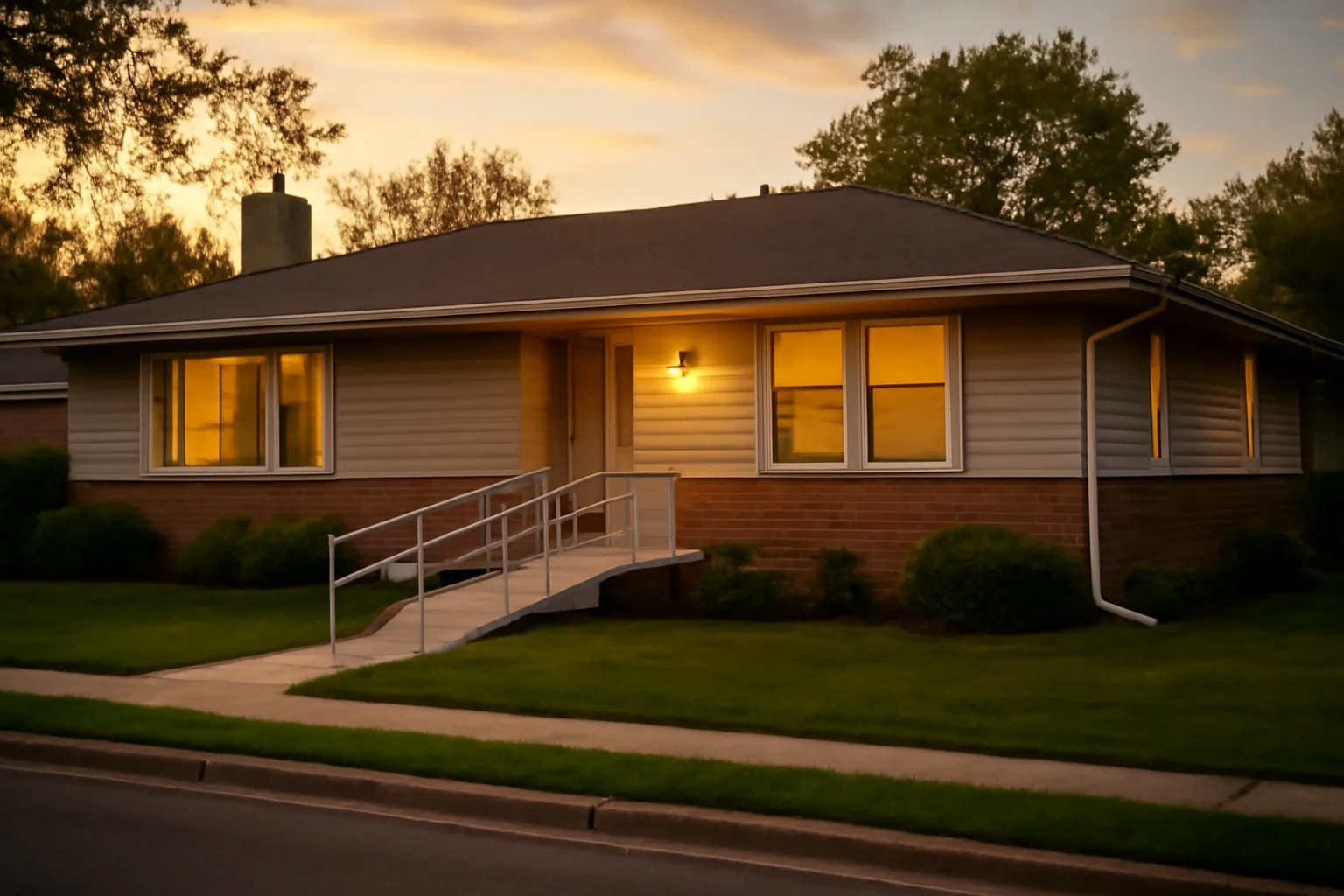
Gene Guarino is a business trainer who built the Residential Assisted Living Academy (RALAcademy.com) around a specific idea: buy or lease a large single-family home in a residential neighborhood, retrofit it to house six to ten seniors who need help with daily activities, and run it as a small assisted living business rather than a big institutional facility. He is not a state licensing agency, not a regulator, and his course does not grant you any kind of license or certification recognized by a state. What he sells is a real estate and operations education product, workshops, mentorship, and a residential assisted living "blueprint" aimed mostly at real estate investors and people looking for a second career. The model itself predates Guarino by decades. States have licensed small, home-based assisted living and adult foster care settings since at least the 1980s and 1990s, usually under names like "adult foster care," "residential care home," "community residential facility," or "assisted living residence" depending on the state. Guarino's contribution is packaging that existing regulatory category into a teachable investment strategy, and he deserves credit for popularizing it among real estate investors who otherwise would not have known small-home assisted living licensing existed. Here's the part his marketing sometimes glosses over: every state runs its own licensing process for these homes, with its own application, fees, staffing ratios, and inspection cycle. No national course substitutes for that. If you take a RAL-style course and skip the actual state application, you cannot legally operate. Full stop.
What is assisted living?
Assisted living is a licensed residential care setting for people, usually older adults, who need help with daily activities like bathing, dressing, medication reminders, and meals but who do not need the round-the-clock skilled nursing care a nursing home provides. The Centers for Medicare & Medicaid Services describes assisted living as a type of "long-term care" that combines housing with personal care and supportive services [1]. Assisted living is licensed at the state level, not the federal level, which is why the name, size limits, and required services vary so much. Some states call the same basic setting "assisted living residence," others call it "residential care facility," "personal care home," or "community-based residential facility." The National Center for Assisted Living, the industry's primary trade association, notes that assisted living residents receive help with an average of roughly 1 to 3 activities of daily living, though this varies widely by state and by the acuity level the state allows in that license category [2]. What assisted living is not: a hospital, a nursing home, or a place with 24-hour physician coverage. It sits in the middle of the care spectrum, between independent living and skilled nursing.
What is a group home?
A group home is a licensed residential setting where a small number of unrelated people, often people with intellectual or developmental disabilities, mental illness, or in some cases seniors, live together and receive supervision or support services from staff. Unlike assisted living, which is almost always tied to aging and personal care, "group home" is used across several very different populations. IDD group homes, mental health group homes, and adult foster care homes for seniors all fall under this general umbrella depending on the state's terminology. Most group homes serve somewhere between three and ten residents, though the exact cap depends on your state's licensing category and local zoning. States regulate group homes under different statutes depending on the population served. For example, a home serving people with developmental disabilities is often licensed under a state's developmental disabilities agency rather than its aging or health department, which means the paperwork, staffing ratios, and inspection standards for a "group home" can look nothing like those for an assisted living home even though both use small residential houses. If you are trying to figure out which category your planned home falls into, start with the population you intend to serve, then find the state agency that licenses that population, not the other way around.
What is an assisted living facility (and how is it different from "assisted living facility" as a generic term)?
An assisted living facility is the licensed building or home itself, the physical structure and the operating license attached to it, as opposed to "assisted living" the general service category. When people ask "what is assisted living facility" they are usually asking about the license type: a facility that has gone through your state's application process, passed a life-safety and health inspection, and received a certificate authorizing it to house a set number of residents at a defined level of care. Facility size varies enormously by state rule. Some states cap small residential assisted living homes at 6 residents, treating anything larger as a different, more heavily regulated "facility" category with different fire code and staffing requirements. Others allow up to 16 or more residents under the same basic license. Confirm the exact resident cap and any tiered licensing thresholds with your state licensing agency, because crossing a resident-count line (often 6, 8, or 16 depending on the state) can trigger a completely different set of building code and staffing rules. For a walkthrough of what these categories look like state by state, see our guide on assisted living facilities licensing categories.
What is assisted living vs nursing home, and what's the real difference?
The core difference is the level of medical care and the staffing that comes with it. Assisted living provides help with daily living activities, medication management, and meals, delivered mostly by trained caregivers, not nurses. A nursing home (also called a skilled nursing facility) provides 24-hour skilled nursing care, is regulated under federal Medicare and Medicaid conditions of participation, and is the appropriate setting for people who need ongoing medical treatment, rehabilitation after a hospital stay, or complex nursing care. Medicare.gov frames the distinction this way: nursing homes provide health and personal care services, typically including skilled nursing care from a nurse and therapies like physical, occupational, or speech therapy, while assisted living communities focus on housing plus help with daily activities [3]. Skilled nursing facilities are certified by CMS and subject to federal inspection standards under 42 CFR Part 483; assisted living facilities are licensed and inspected only at the state level, with no equivalent federal certification [4]. Cost reflects that gap in intensity. Genworth's Cost of Care Survey, one of the most widely cited sources on long-term care pricing, put the 2023 national median monthly cost at $5,350 for assisted living versus $8,669 for a semi-private nursing home room [5]. That gap has held roughly steady in relative terms for years: nursing home care costs more because it includes licensed nursing staff around the clock, not because the buildings are fancier.
What does assisted living provide, day to day?
Assisted living typically provides a private or semi-private room, three meals a day, help with bathing, dressing, toileting, and mobility, medication administration or reminders, housekeeping and laundry, social activities, and 24-hour staff availability for emergencies. It does not typically provide ongoing skilled nursing, IV therapy, ventilator care, or the kind of medical monitoring a hospital or nursing home offers. States spell out required services in the licensing regulations for the specific facility category. Most require at minimum: a written service plan for each resident, medication management procedures, a minimum staffing ratio (often expressed as staff-to-resident ratios during waking and sleeping hours), emergency response capability, and a set number of meals and snacks per day. Some states require a licensed nurse to be available on-call or to conduct periodic health assessments even if day-to-day care is delivered by unlicensed caregivers. If you are building a staffing plan for a license application, don't guess at the ratio. States publish specific minimums, and inspectors check timecards and schedules against them during your survey.
How to start a group home (the actual sequence, not the marketing version)
Starting a group home or small residential assisted living home follows a fairly consistent sequence across states, even though the specific agency, forms, and fees differ. Here's the realistic order of operations: 1. Pick your population and license category first. Seniors needing personal care, adults with IDD, people in mental health recovery, and adults needing foster-care-style supervision are usually licensed under different state statutes and different agencies. This choice drives everything else. 2. Confirm zoning before you sign a lease or a purchase contract. Many residential care homes qualify for "reasonable accommodation" protection under the Fair Housing Act, which can override a local zoning ordinance that tries to treat a group home like a business use in a residential zone, but the mechanics of that protection vary and you should not assume it applies automatically to your project. HUD's Fair Housing Act overview explains the reasonable accommodation standard used in these disputes [6]. See our zoning guidance before you commit to a property. 3. Request the licensing application packet from your state agency. Every state publishes a specific application form, fee schedule, and rule set for its group home or assisted living category. Confirm the exact fee amount, renewal cycle, and required attachments with your state licensing agency, since these change and vary widely (some states charge under $500 for an initial application, others charge well over $1,000 plus per-bed fees). 4. Write your policy and procedure manual. Nearly every state requires a written manual covering admission and discharge criteria, medication management, emergency and disaster planning, staffing plans, resident rights, abuse reporting, and infection control before it will issue a license. 5. Pass your life-safety and building inspection. This usually involves the state fire marshal or local fire authority checking egress, smoke detectors, sprinklers (if required at your resident count), and ADA-type accessibility features. 6. Pass your health and licensing inspection. A state surveyor visits, reviews your files, checks staff qualifications and background checks, and confirms your physical space meets the standard. 7. Hire and train staff to your state's required ratios and training hours, including any state-mandated first aid, CPR, medication administration, or dementia care training. 8. Get your license and set up your ongoing compliance calendar, since most states require annual or biennial renewal plus unannounced inspections. Building out every one of these documents from scratch, state rule by state rule, is the part that eats the most time for new operators. That is the gap our $299 State Group Home Licensing Kit is built to close: state-specific application checklists and policy manual templates so you are not starting from a blank page.
How do I start a group home if I have no healthcare background?
You do not need a nursing or medical license to open most small residential care or assisted living homes; you need a facility administrator or operator qualification, which is a different and lower bar in most states. Many states require the administrator to complete a state-approved training course (commonly 40 to 100 hours depending on the state) and pass a competency exam, but do not require a nursing degree. What you do need, regardless of clinical background, is a workable business plan, enough capital to cover the property, buildout, licensing fees, and roughly 3 to 6 months of operating costs before you reach stable occupancy, and a genuine willingness to learn the regulatory side, because inspectors will not give you a pass for good intentions. If you lack a healthcare background, plan to either hire an experienced administrator or invest real time in your state's administrator training program before you submit your application. Skipping this step is the single most common reason new operators get stuck in the licensing process.
What is the difference between assisted living and nursing home in terms of who qualifies for each?
Assisted living generally serves people who are largely mobile or need only moderate help, who do not require daily skilled nursing intervention, and who can direct their own care decisions or have a family member/agent who can. Nursing homes serve people who need daily skilled nursing care, post-hospital rehabilitation, or complex medical management that unlicensed caregivers cannot legally provide. The practical dividing line often comes down to a resident assessment. States typically require assisted living residents to be assessed against specific admission and "negotiated risk" or discharge criteria; residents who decline below a certain functional threshold, for example needing two-person transfers, having unmanaged wound care needs, or developing certain behavioral health crises, may be required to move to a higher level of care. Your policy manual needs to spell out these admission and discharge triggers clearly, because state surveyors check them during inspections, and getting this wrong (keeping someone in the home who legally needs skilled nursing) is a common citation. For comparison of licensing paths across care types, our assisted living and assisted living at home guides break down category differences state by state.
Does Medicare cover assisted living facilities?
No. Medicare does not cover the cost of room and board in an assisted living facility, and this is one of the most persistent points of confusion for new residents and their families. Medicare.gov states plainly that Medicare doesn't cover room and board costs when the primary need is custodial or long-term care rather than medical treatment [3]. Medicare will cover specific medical services delivered to a person who happens to live in assisted living, such as doctor visits, physical therapy following an injury, or home health services if the person qualifies, but it will not pay the monthly rent or the personal care fee itself. Medicaid is a different story: many states offer a Home and Community-Based Services (HCBS) waiver under Section 1915(c) of the Social Security Act that can pay for personal care services delivered in an assisted living setting, though it typically still does not cover room and board, and eligibility and coverage rules vary heavily by state [7]. Medicaid.gov's HCBS overview confirms that these waivers let states provide long-term services "in home and community-based settings" as an alternative to institutional care, but availability, waiting lists, and covered services differ by state program . If your business plan depends on Medicaid waiver reimbursement, verify your state's specific waiver rules and reimbursement rate before you finalize your occupancy projections; do not assume this revenue stream exists in every state or covers what a family expects.
How much does it actually cost to open a home built on the RAL model?
There is no single number, and anyone quoting you one flat figure is selling something. Real costs stack up across several categories: the property (purchase or lease of a large single-family home, often $400,000 to $1.5 million or more depending on market, though many operators lease instead), buildout to meet fire and accessibility code (commonly tens of thousands of dollars for sprinklers, ramps, wider doorways, and grab bars if the home isn't already compliant), state licensing fees (confirm the specific amount with your state agency), staffing costs before you reach break-even occupancy, insurance, and working capital. Guarino's own course materials pitch the RAL model partly on the idea that a 10-bed home can generate more revenue per bed than a large facility, since smaller homes have lower staffing overhead per resident. That may be directionally true in some markets, but no state licensing agency or independent study verifies specific income figures for this model, and actual results depend heavily on local market rents, occupancy rates, staffing costs, and the specific state's Medicaid or private-pay reimbursement environment. Treat any specific income projection from a course, franchise, or coaching program with real skepticism until you've run your own local numbers against your state's actual fee schedule and reimbursement rules.
What licensing category will my state actually use for a residential-assisted-living-style home?
| Small residential care home / adult foster care | 3 to 6 residents | State department of health or social/human services | |
|---|---|---|---|
| Assisted living residence (standard) | 6 to 16+ residents | State department of health or aging services | |
| Group home for IDD population | 3 to 8 residents | State developmental disabilities agency | |
| Mental health / recovery residence | 4 to 10 residents | State behavioral health agency | The practical lesson: before you buy a house because a course told you "6 to 10 beds is the sweet spot," call your state licensing agency and ask which category your planned resident count and population fall into, and what the fire code threshold is at that count. Crossing from a 6-bed to an 8-bed category, for instance, can trigger commercial sprinkler requirements that add tens of thousands of dollars to your buildout, a detail that generic national courses cannot price for your specific jurisdiction. |
Every state uses its own name and its own resident-count thresholds for the small home model Guarino promotes; there is no single national "RAL license." Below is a general sense of how states structure these categories, but you must confirm exact names, caps, and fees with your specific state licensing agency, since this table is illustrative of the pattern, not a substitute for your state's current regulations. | License category type | Typical resident range | Common licensing agency type |
Frequently asked questions
What is assisted living?
Assisted living is a state-licensed residential setting that provides housing plus help with daily activities like bathing, dressing, medication management, and meals, for people who need support but not full-time skilled nursing care. CMS classifies it as a form of long-term care, licensed and regulated at the state rather than federal level [1].
What is a group home?
A group home is a licensed residential setting where a small number of unrelated residents live together with staff support, commonly used for people with intellectual or developmental disabilities, mental illness, or, in some states, seniors. The specific licensing agency and rules depend on which population the home serves, since states regulate each population under different statutes.
What is an assisted living facility?
An assisted living facility is the licensed physical building or home that has passed your state's application, health, and life-safety inspection process and holds a certificate to house a set number of residents at a defined care level. Resident caps and required services vary by state; confirm specifics with your state licensing agency.
What is the difference between assisted living and nursing home?
Assisted living provides housing plus help with daily activities, delivered mainly by trained caregivers, while a nursing home provides 24-hour skilled nursing care regulated under federal Medicare/Medicaid conditions of participation. Genworth's 2023 survey put median monthly costs at $5,350 for assisted living versus $8,669 for a semi-private nursing home room [5].
What does assisted living provide?
Assisted living typically provides a room, meals, help with bathing/dressing/mobility, medication management or reminders, housekeeping, social activities, and 24-hour staff availability for emergencies. It does not typically include skilled nursing, IV therapy, or hospital-level medical monitoring, which fall under nursing home or hospital care instead.
How do I start a group home?
Pick your population and matching state license category, confirm zoning before signing a lease, request your state's specific application packet and fee schedule, write a compliant policy and procedure manual, pass fire/life-safety and health inspections, hire staff to meet required ratios, and set up an ongoing compliance calendar for renewals and unannounced inspections.
Does Medicare cover assisted living facilities?
No. Medicare does not cover room and board at assisted living facilities [3]. It may cover specific medical services like doctor visits or therapy for a resident living there, but not the monthly rent or personal care fee. Some state Medicaid HCBS waivers can help cover personal care costs, though rules vary widely by state [8].
Who is Gene Guarino and is his course a license?
Gene Guarino runs the Residential Assisted Living Academy, a training and mentorship program teaching people to convert homes into small assisted living businesses. It is a business education course, not a state license or certification. You still must complete your own state's licensing application, inspections, and administrator qualification requirements to legally operate.
How many residents can a residential assisted living home have?
It depends entirely on your state's licensing category, commonly ranging from 3 to 6 residents for small residential care/adult foster homes up to 16 or more for standard assisted living licenses in some states. Crossing certain resident thresholds, often 6, 8, or 16, can trigger stricter fire code and staffing requirements, so confirm exact caps with your state agency.
Do I need a nursing background to open a residential assisted living home?
No. Most states require an administrator qualification, often a state-approved training course of roughly 40 to 100 hours plus a competency exam, not a nursing degree. A clinical background helps with resident care decisions, but the legal requirement is administrator licensure or certification, which anyone can pursue with the right training.
What's the difference between assisted living and a group home in terms of licensing?
Assisted living is licensed under aging or health department rules aimed specifically at housing plus personal care, usually for seniors. "Group home" is a broader term covering multiple populations (IDD, mental health, seniors) each licensed under different state agencies and statutes, so the term alone doesn't tell you which regulatory path applies.
How much does it cost to license a residential assisted living home?
There's no fixed national fee. States set their own initial application fees, renewal fees, and sometimes per-bed charges, and these numbers change. Confirm the current fee schedule directly with your state licensing agency before budgeting, rather than relying on figures from a course or a competitor's blog post.
Can I use my house as a group home under fair housing protections?
Sometimes. The Fair Housing Act's reasonable accommodation provision can require local zoning boards to make exceptions for group homes in residential zones, but this protection is not automatic and depends on the specific facts, local ordinance, and how your state's licensing category is treated. HUD's fair housing guidance explains the standard, but consult a local land-use attorney before relying on it [6].
Sources
- Medicaid.gov: Assisted living is classified as a form of long-term care
- National Center for Assisted Living, Assisted Living State Regulatory Review: Assisted living residents typically receive help with several activities of daily living, varying by state
- eCFR, 42 CFR Part 483: Skilled nursing facilities are federally certified under Medicare/Medicaid conditions of participation
- Genworth Cost of Care Survey 2023: 2023 median monthly cost was $5,350 for assisted living and $8,669 for a semi-private nursing home room
- HUD, Fair Housing Act overview: Reasonable accommodation under the Fair Housing Act can affect zoning treatment of group homes
- Social Security Act, Section 1915(c): Section 1915(c) authorizes Home and Community-Based Services waivers
- Medicaid.gov, Home & Community-Based Services: HCBS waivers let states provide long-term services in home and community-based settings as an alternative to institutional care