Last updated 2026-07-25
TL;DR
A group home in Georgia is licensed as a personal care home, community living arrangement, or host home by Georgia's Department of Community Health or Department of Behavioral Health and Developmental Disabilities, depending on the population served. Applicants file paperwork, pass a life safety inspection, and meet staffing ratios under Ga. Comp. R. & Regs. 111-8-63.
What is a group home, exactly?
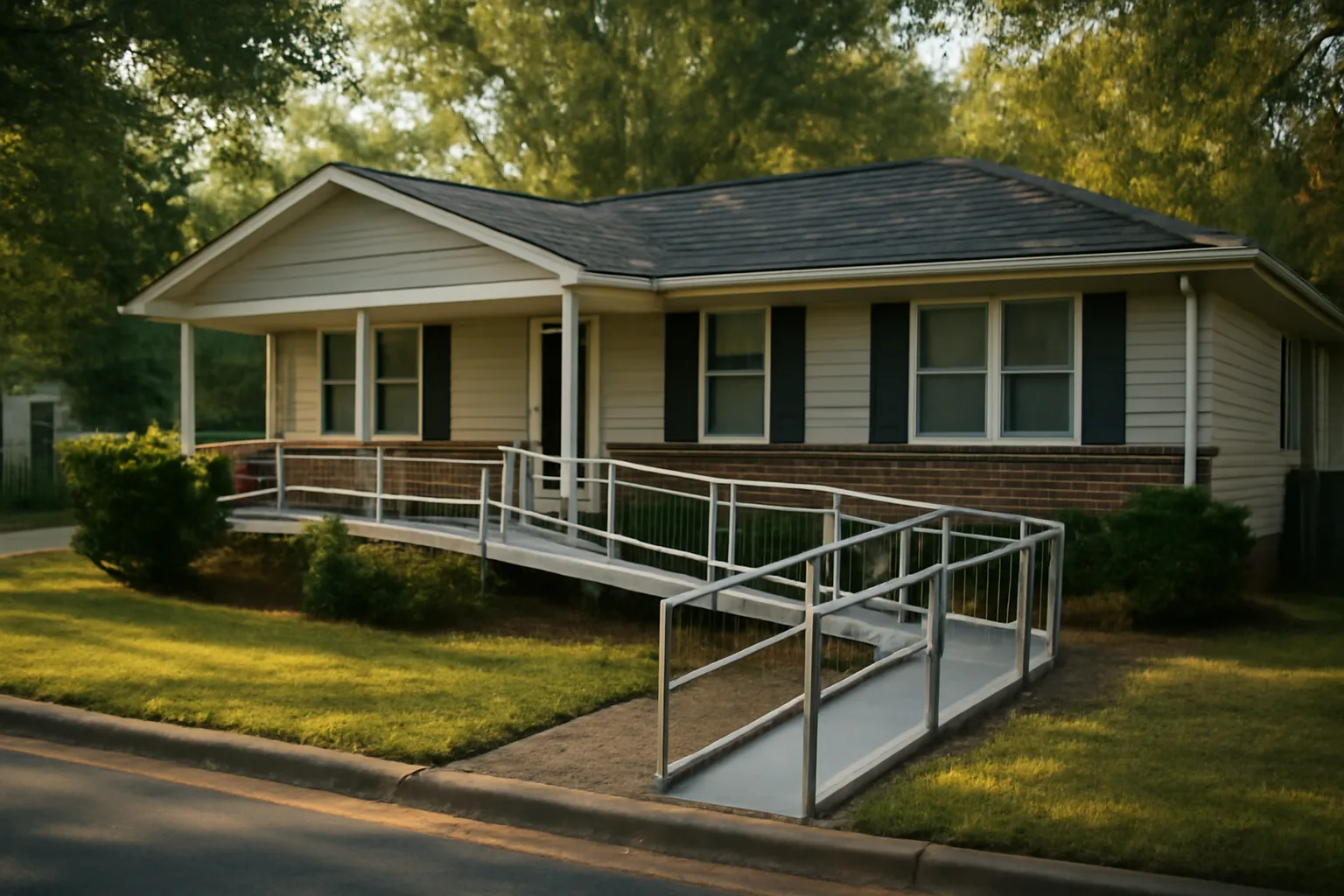
A group home is a licensed residential setting where a small number of unrelated adults or children live together and get supervision, personal care, or behavioral health support from paid staff. It's not a private house where a family member happens to be paid as a caregiver, and it's not a hospital. It sits in between: more support than independent living, less medical intensity than a nursing facility. In Georgia, the term "group home" isn't one single license type. Depending on who lives there and what they need, the state licenses the home as a personal care home, a community living arrangement (CLA), a host home, or a child-caring institution. Georgia's Department of Community Health (DCH) licenses personal care homes and assisted living communities under Chapter 111-8-62 and 111-8-63 of the state rules [1]. Georgia's Department of Behavioral Health and Developmental Disabilities (DBHDD) certifies host homes and CLAs serving people with intellectual and developmental disabilities or mental illness. Children's group homes go through the Department of Human Services, Division of Family and Children Services. So when someone searches "group home in Georgia," the honest answer is: it depends which population you plan to serve, because that decides which agency you file with, which rule chapter applies, and which inspection checklist shows up at your door.
What is assisted living, and how is it different from a group home?
Assisted living is a licensed care level for adults, usually seniors, who need help with daily activities like bathing, dressing, and medication management but don't need skilled nursing care around the clock. Georgia calls its higher-acuity senior care license an "assisted living community" (ALC), separate from the lower-acuity "personal care home" (PCH) license, both regulated by DCH under Chapter 111-8-63 [1]. The practical difference between a personal care home and an assisted living community in Georgia comes down to what residents can need. Personal care homes can serve residents who are ambulatory or need only minimal transfer assistance. Assisted living communities can accept residents who need two-person transfer assistance and can manage residents with certain memory care needs, provided the home has the staffing and physical plant to match [1]. "Group home" is the everyday term people use for any small residential care setting, including personal care homes serving seniors, CLAs serving adults with IDD, and host homes. Assisted living is one specific slice of that world, aimed at older adults and licensed under a defined rule chapter. If you're building a business plan around seniors specifically, read our assisted living facility breakdown alongside this one, since the two licenses share a lot of the same building and staffing logic in Georgia.
What is an assisted living facility, exactly?
An assisted living facility (the term used in most other states; Georgia calls it an assisted living community) is a licensed residential building providing housing, meals, supervision, and help with activities of daily living to adults who need support but not hospital-level nursing care. Georgia's rule defines an ALC as a facility that provides "assisted living care," which includes services beyond what a personal care home may offer, to residents who need higher levels of support [1]. Georgia requires assisted living communities to have a registered nurse involved in resident assessments and care planning, something not required at the personal care home level in the same way [1]. That's the single clearest dividing line if you're deciding which license to pursue: do you want to accept residents with more complex ADL needs and staff a nurse to match, or do you want a lighter-touch personal care home? Capacity matters too. Personal care homes in Georgia range from small operations with a handful of beds up to larger congregate settings, and the rule chapter sets minimum staffing ratios and physical plant standards that scale with resident count [1]. Before you sign a lease or make an offer on a property, get the specific capacity, staffing, and construction-code requirements confirmed with your state licensing agency, because they vary by exact bed count and by whether the building is new construction or a converted residential home.
What is the difference between assisted living and a nursing home?
Assisted living provides help with daily living activities and some health monitoring, but residents generally don't need continuous skilled nursing care. A nursing home (skilled nursing facility) provides 24-hour licensed nursing care for people with serious medical needs, post-surgical recovery, or complex chronic conditions that require a physician-directed care plan. The federal government defines nursing facility services under Medicaid law, and states must certify nursing homes separately from residential care settings like assisted living [2]. In Georgia, nursing homes are licensed by DCH under an entirely different rule chapter than personal care homes or assisted living communities, with different staffing requirements, including licensed nurses on every shift, and different physical plant codes closer to hospital standards. Cost and payer mix also split sharply. Nursing home care is far more likely to be covered by Medicaid because it meets the medical necessity threshold for institutional care, while assisted living and personal care homes are typically private-pay in Georgia, with a narrower Medicaid path (discussed below). If your business plan assumes a nursing home license, you're looking at a different capital outlay, different staffing budget, and a different regulator relationship than a personal care home or CLA.
What does assisted living provide day to day?
Assisted living in Georgia is required to provide, at minimum: room and board, help with activities of daily living (bathing, grooming, dressing, toileting, mobility), medication management or administration, housekeeping, laundry, and 24-hour staff supervision [1]. Assisted living communities specifically must also provide access to a nurse for health assessments and care plan updates, which personal care homes are not uniformly required to do [1]. Most homes also provide meals (typically three meals plus snacks), social and recreational activities, transportation coordination for medical appointments, and some level of behavioral or memory support depending on the license tier and the individual resident's needs assessment. None of this is optional add-on marketing language, it's built into the licensing rule as a floor, not a ceiling. What assisted living does not typically provide is skilled nursing, IV therapy, ventilator care, or complex wound care beyond what a home health referral covers. If a resident's needs exceed the license tier, Georgia rule requires the home to either upgrade its license, bring in outside skilled services under a documented plan, or discharge the resident to a more appropriate setting. That discharge trigger is one of the most common inspection findings, so build your admission and retention policy around it from day one.
Does Medicare cover assisted living facilities?
No. Medicare does not cover the cost of assisted living, personal care homes, or room and board in any residential care setting. Medicare.gov states plainly that Medicare does not pay for "long-term care (also called custodial care)" if that's the only care a person needs [3]. Medicare Part A can cover a limited, medically necessary stay in a skilled nursing facility after a qualifying hospital stay, but that's a different setting entirely from assisted living. Medicaid is the more relevant program for group home operators, but it doesn't pay for room and board either in most cases. Georgia's Medicaid program can cover certain personal care services through home and community-based services (HCBS) waivers, like the NOW and COMP waivers for people with IDD, but the resident or family typically still pays the room and board portion out of pocket [4]. This split (services covered, housing not covered) trips up a lot of new operators who assume Medicaid will fund the whole bed rate. It won't, and building a budget on that assumption is the single most common financial mistake new operators make. For funding mechanics specific to Georgia's waiver programs, see assisted living facilities for a broader state comparison.
How do I start a group home in Georgia?
Starting a group home in Georgia follows roughly the same sequence regardless of which population you serve, though the specific agency and forms differ. Here's the general path: 1. Decide your population and license type. Seniors and adults needing personal care go through DCH (personal care home or assisted living community). Adults with IDD or mental illness typically go through DBHDD (host home or CLA certification). Confirm which category fits your model with the licensing agency before you do anything else, since it changes every step after this one. 2. Check zoning and property requirements. Georgia group homes for people with disabilities get some protection under the federal Fair Housing Act, which limits how local zoning can restrict them, but you still need to confirm occupancy limits, fire code, and any local business licensing with your city or county [5]. Do this before you sign a lease. 3. Write your policy and procedure manual. This includes admission and discharge criteria, medication management protocol, staffing plan, emergency and disaster procedures, resident rights, and grievance process. Georgia's rule chapter lists required policies in detail, and inspectors will ask to see them on day one [1]. 4. Build your staffing plan. Minimum staff-to-resident ratios, background check requirements (including Georgia's fingerprint-based criminal history check through the GBI), and required training hours are all specified in rule and must be documented before you can pass inspection [1]. 5. Submit the license application with required fees. Fee amounts change periodically, so confirm the current application and license fee with DCH or DBHDD directly rather than relying on a number you saw online. 6. Pass the pre-licensure inspection. An inspector will walk the physical plant (fire safety, exits, bedroom square footage, bathroom ratios) and review your files (policies, staff records, resident agreements) before issuing the license. 7. Maintain compliance. Georgia conducts periodic unannounced inspections after licensure, and substantiated complaints can trigger inspections outside the normal cycle. This is also where a lot of first-time operators get overwhelmed, not because any single step is hard, but because the paperwork across steps 3 through 6 has to be internally consistent. If your staffing plan doesn't match your policy manual, or your policy manual doesn't match what the inspector sees on the floor, that's a citation. A $299 State Group Home Licensing Kit built around Georgia's specific rule chapters can shortcut the drafting work on steps 3 and 4, though it doesn't replace confirming current fees and forms directly with DCH or DBHDD.
What does the Georgia licensing process actually cost and how long does it take?
Georgia does not publish a single statewide flat fee for every group home type, because fees vary by license category and by bed capacity. DCH's personal care home and assisted living community rule chapter (111-8-62 and 111-8-63) sets application and renewal fee schedules that are updated periodically, so confirm the current dollar amount directly with DCH's Healthcare Facility Regulation division rather than relying on a secondhand figure [1]. Timeline is the more predictable variable to plan around. Between submitting a complete application, scheduling the life safety inspection, and correcting any deficiencies found, most operators should budget several months, not weeks, from application to open house. Incomplete applications are the single biggest delay factor: missing background check results, incomplete floor plans, or a policy manual missing a required section will bounce the file back and restart the clock. Budget separately for the property itself. Converting a single-family home to meet fire code (sprinklers in some jurisdictions, exit signage, ADA-compliant bathrooms) can run well into five figures depending on the building's starting condition, and that's before staffing costs. None of this is a number DCH publishes as a startup cost estimate, it's a construction and life-safety cost that depends entirely on your specific building, so get a licensed contractor and your local fire marshal involved early.
What staffing rules does Georgia require for group homes?
Georgia's personal care home and assisted living rule requires a minimum ratio of direct care staff to residents at all times, with the ratio scaling based on resident acuity and total census, and requires at least one staff member awake and on duty overnight in most configurations [1]. The exact ratio numbers are set out in Chapter 111-8-63 and differ between personal care homes and assisted living communities, so pull the current chapter text rather than assuming a single number applies across both. All direct care staff must complete a criminal background check, including a fingerprint-based check through the Georgia Bureau of Investigation and a check against the state's nurse aide registry and abuse registry, before they can work unsupervised with residents [1]. Staff also need documented orientation training covering topics like resident rights, infection control, fire safety, and medication assistance (if they'll be administering medications), completed within a set number of days of hire. For homes licensed through DBHDD serving people with IDD or mental illness, staffing and training requirements run through DBHDD's provider manual and certification standards rather than DCH's chapter, and those differ in structure even though the underlying goal (adequate supervision, trained staff, background-checked employees) is the same. Don't assume a staffing plan built for a DCH personal care home will pass a DBHDD host home review, or vice versa.
What zoning issues come up for group homes in Georgia?
Georgia group homes serving people with disabilities are protected under the federal Fair Housing Act, which generally prohibits municipalities from using zoning to exclude group homes from residential neighborhoods solely because of the residents' disability status, and Georgia has its own state fair housing law that mirrors much of this protection [5]. That said, local governments can still apply generally applicable rules like occupancy limits, parking requirements, and fire code, as long as they're not applied in a discriminatory way specifically targeting group homes. In practice, this means you should call your city or county planning department before signing a lease, not after. Ask directly: is a licensed personal care home or CLA a permitted use in this zoning district, or does it require a conditional use permit or variance? Some Georgia municipalities have specific spacing requirements (a minimum distance between group homes) that have been challenged in various states under fair housing law, so if your local government cites a spacing rule, ask for it in writing and consider running it past an attorney familiar with fair housing law before you accept it as final. Homeowners' association covenants are a separate problem from zoning and generally aren't overridden by fair housing law in the same way municipal zoning is, so read your HOA documents carefully if you're buying or leasing in a covenant-restricted subdivision. For a broader look at how this plays out across different state frameworks, see assisted living at home.
What inspections should I expect after I'm licensed?
Georgia conducts both scheduled and unannounced inspections of licensed personal care homes and assisted living communities to check compliance with the physical plant rule, staffing ratios, resident records, medication management practices, and required policies [1]. Expect at least one full inspection cycle per licensure period, plus any complaint-triggered inspections if a resident, family member, or staff member files a complaint with DCH. DBHDD-certified host homes and CLAs go through a separate certification review process with their own inspection cadence and documentation checklist, generally tied to the provider's certification renewal cycle. Either way, the inspector's file review usually covers the same core categories: resident admission agreements, individual service or care plans, medication administration records, staff training and background check files, incident reports, and fire drill logs. The most common citations in small residential care settings nationally, based on state survey patterns, tend to cluster around medication management errors, incomplete or outdated care plans, and staff training documentation gaps, not dramatic health and safety failures. Build a simple internal audit calendar (monthly file spot-checks, quarterly fire drills, ongoing staff training tracking) so you're never scrambling the week before a survey. For the inspection side of this in more depth, our assisted living facility resource walks through a broader multi-state inspection prep checklist.
Frequently asked questions
What is assisted living?
Assisted living is a licensed residential care option for adults, usually seniors, who need help with daily activities like bathing, dressing, and medication but don't require 24-hour skilled nursing care. In Georgia, this level is licensed as an assisted living community under DCH rule Chapter 111-8-63 [1].
What is a group home?
A group home is a licensed residential setting where a small number of unrelated people live together with staff support, ranging from personal care homes for seniors to community living arrangements for adults with IDD or mental illness. Georgia licenses these under different agencies depending on the population served [1][2].
What is an assisted living facility?
An assisted living facility (called an assisted living community in Georgia) is a licensed building providing housing, meals, supervision, and help with daily living activities to adults who need support but not hospital-level nursing care, with a nurse involved in care planning under Georgia rule [1].
What is the difference between assisted living and a nursing home?
Assisted living helps with daily activities and general supervision; a nursing home provides 24-hour skilled nursing care for serious medical needs. Nursing homes are licensed under a separate, more medically intensive rule chapter in Georgia and are far more likely to be covered by Medicaid [1][3].
Does Medicare cover assisted living facilities in Georgia?
No. Medicare does not cover long-term custodial care, including assisted living or personal care home room and board, anywhere in the U.S., including Georgia [4]. Medicare may cover a short, medically necessary skilled nursing facility stay after a qualifying hospitalization, but that's a different license type entirely.
How do I start a group home in Georgia?
Decide your resident population, confirm the correct license type with DCH or DBHDD, secure a zoning-compliant property, write your required policy manual, build a compliant staffing plan with background checks, submit your application and fees, and pass the pre-licensure inspection. Budget several months for the full process [1][2].
Does Georgia Medicaid pay for group home care?
Georgia Medicaid can cover certain personal care services through home and community-based waiver programs like NOW/COMP, but room and board is typically paid separately, often by the resident or family [5]. Medicaid does not generally cover the full cost of assisted living or personal care home care.
What license does a Georgia group home need for adults with disabilities?
Adults with intellectual or developmental disabilities or mental illness are typically served through DBHDD-certified host homes or community living arrangements (CLAs), not DCH's personal care home license. Confirm which certification track applies to your specific service model directly with DBHDD [2].
How many residents can a Georgia group home have?
Capacity depends on license type, building code, and local zoning, and it varies enough that you should confirm the exact allowable bed count for your specific property and license category with DCH or DBHDD rather than assuming a fixed number applies statewide [1].
What staff-to-resident ratio does Georgia require?
Georgia's personal care home and assisted living rule sets minimum direct care staffing ratios that scale with resident count and acuity, detailed in Chapter 111-8-63, with at least one staff member required overnight in most settings [1]. Exact numbers differ by license tier, so check the current chapter text.
Can local zoning block a group home in Georgia?
Not solely because of residents' disability status. The federal Fair Housing Act and Georgia's fair housing law limit discriminatory zoning against group homes for people with disabilities, though generally applicable rules like occupancy limits and fire code still apply [6]. Confirm your specific zoning district with your local planning office.
What's the difference between a personal care home and an assisted living community in Georgia?
Personal care homes serve residents who are ambulatory or need minimal transfer help. Assisted living communities can accept residents needing two-person transfer assistance and require a registered nurse involved in assessments and care planning, a step up in both acuity and staffing requirement [1].
Sources
- Georgia Department of Community Health, Rules for Personal Care Homes and Assisted Living Communities, Ga. Comp. R. & Regs. Ch. 111-8-63: Licensing tiers, staffing ratios, nurse involvement, and required policies for personal care homes and assisted living communities in Georgia
- Medicaid.gov, Nursing Facilities: Nursing facility services are a distinct Medicaid institutional care category separate from residential/assisted living care
- Medicare.gov, Long-term care: Medicare does not cover long-term custodial care such as assisted living room and board
- Georgia Department of Community Health, NOW and COMP Waiver Program manual (SOU/Provider Manual, Part II Policies and Procedures for NOW and COMP Waiver Programs): Georgia Medicaid waiver programs can cover personal care services but typically not room and board
- 42 U.S.C. 3604, Fair Housing Act discriminatory housing practices provisions: Federal Fair Housing Act limits discriminatory zoning restrictions against group homes for people with disabilities