Last updated 2026-07-25
TL;DR
Ohio has no single 'group home license.' You register with the agency that matches your population: Ohio Department of Developmental Disabilities for IDD homes, Ohio Department of Medicaid or Mental Health and Addiction Services for behavioral health, and ODA/ODH pathways for assisted living-style adult care. Each has its own application, fire/health inspection, and staffing rules.
What is a group home, exactly?
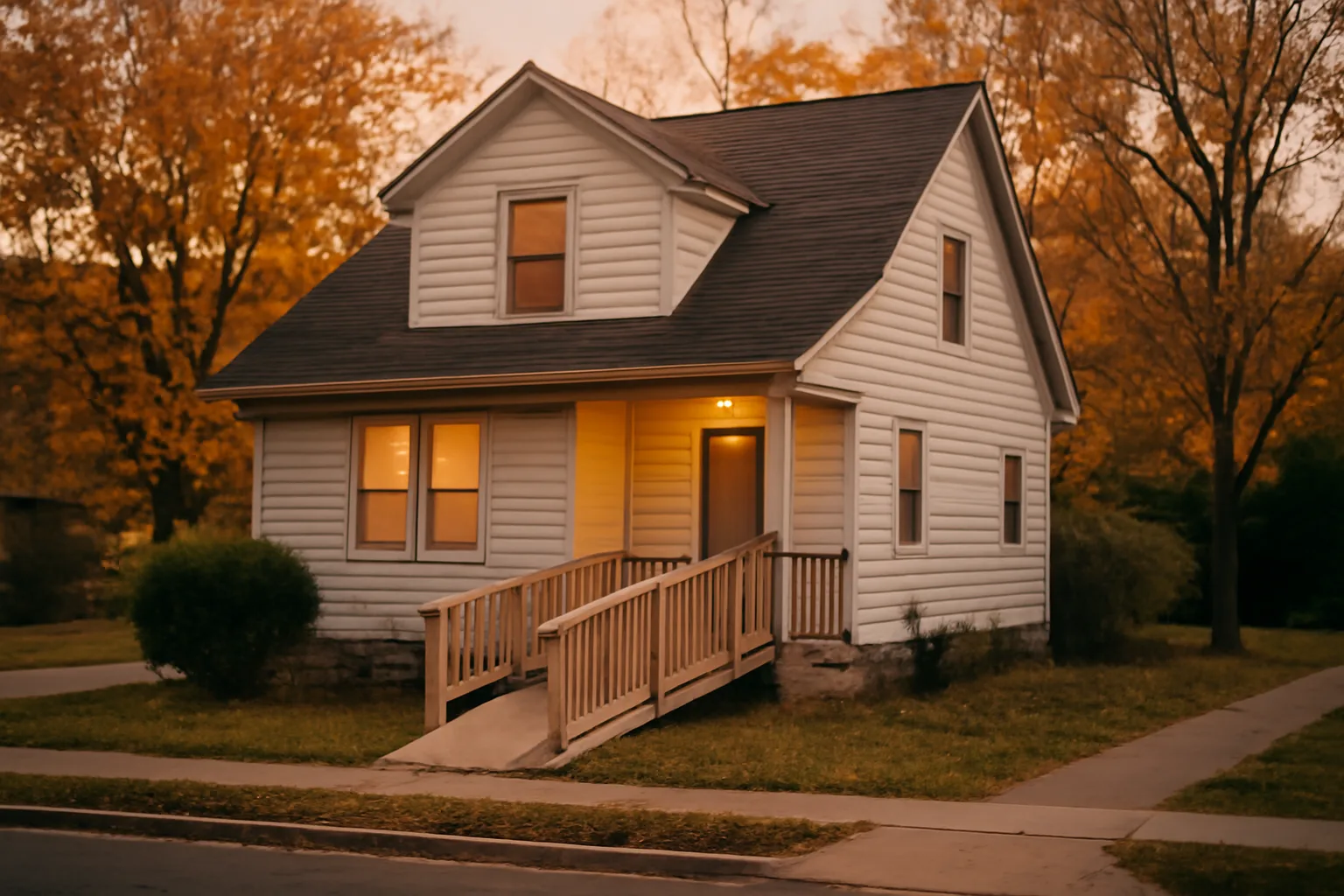
A group home is a residential setting, usually a house in a regular neighborhood, where a small number of unrelated people live together and receive some level of support, supervision, or care. That's the plain-English version. The regulatory version depends entirely on who lives there and what kind of help they need. In Ohio, "group home" isn't one licensed category. It's an umbrella term people use for several distinct, separately regulated setups: homes for adults with intellectual and developmental disabilities (IDD), homes for people in mental health or addiction recovery, adult family homes for seniors or disabled adults needing personal care, and assisted living communities for older adults. Each one answers to a different state agency, has its own rulebook, and requires its own application. If you're planning to open one, the first real decision isn't paperwork. It's population. Who are you serving? That answer tells you which state agency you're dealing with, which in turn determines your fees, your staffing ratios, your inspection cycle, and honestly, your entire business model. For a broader look at how this compares across states, see assisted living facilities.
What is assisted living, and how is it different from a group home?
Assisted living is a specific licensed care model for adults, usually seniors, who need help with daily activities like bathing, dressing, medication management, or meals, but who don't need the round-the-clock skilled nursing care a nursing home provides. In Ohio, assisted living facilities are called Residential Care Facilities (RCFs) and are licensed by the Ohio Department of Health under Ohio Revised Code Chapter 3721 [1]. A group home, by contrast, is a broader housing model that can serve any population, seniors, people with IDD, people in behavioral health recovery, and doesn't always involve the same level of licensed personal care. Some group homes (like certain IDD group homes) are licensed residential facilities. Others operate more like supported independent living with less formal oversight. So "what is assisted living facility" and "what is a group home" aren't the same question, even though the public uses the terms loosely. Assisted living is a defined, licensed, ODH-regulated category for older or disabled adults. Group home is a description of a living arrangement that could fall under several different regulatory umbrellas depending on the population and the services offered. If you're specifically building an ODH-licensed RCF, start with assisted living and assisted living facility for the application mechanics, since Ohio's RCF licensing process is its own multi-step track separate from IDD or behavioral health group homes.
What is assisted living vs nursing home?
The core difference is medical intensity. Nursing homes (skilled nursing facilities) are licensed for residents who need daily skilled nursing care, rehabilitation after surgery or illness, or 24-hour clinical supervision. Assisted living residences serve people who need help with daily tasks but not ongoing skilled medical care. Ohio licenses nursing homes separately from RCFs, also through the Ohio Department of Health, under a different set of rules with higher staffing requirements, mandatory RN coverage, and Medicare/Medicaid certification tied to federal nursing home standards under 42 CFR Part 483 [2]. Assisted living residences in Ohio are not required to have the same level of licensed nursing staff on-site around the clock. Cost and payer mix track this difference too. Nursing homes bill Medicare Part A for short-term rehab stays and Medicaid for long-term custodial stays once a resident spirals down financially. Assisted living is overwhelmingly private-pay or, in some states, covered through Medicaid waiver programs rather than the base Medicaid nursing home benefit. The practical takeaway for an operator: if you're building a business around helping with ADLs (bathing, dressing, ambulation, medication reminders) in a home-like setting, you want the RCF/assisted living track. If you're building around 24-hour skilled nursing, wound care, IV therapy, or post-acute rehab, you're in nursing home territory, which is a heavier lift with far higher capital and staffing requirements.
Does Medicare cover assisted living facilities?
No. Medicare does not cover the cost of room and board or personal care services in an assisted living facility. This is one of the most common and costly misunderstandings among families and new operators alike. According to CMS, Medicare covers medically necessary skilled nursing care, home health services, and short-term rehab stays under specific conditions, but it does not pay for long-term custodial care or assisted living room-and-board costs [3]. Medicaid, on the other hand, may cover some assisted living-type services in certain states through Home and Community-Based Services (HCBS) waivers, but this varies enormously by state and by program. In Ohio, Medicaid's HCBS waivers (like the Ohio Department of Medicaid's PASSPORT and Assisted Living Waiver programs) can help cover certain assisted living services for financially and functionally eligible residents, but this is Medicaid, not Medicare, and it comes with income and asset limits along with a level-of-care determination [4]. If you're building a business model that assumes steady Medicare reimbursement for assisted living beds, stop and rework it. That revenue stream doesn't exist. Confirm current waiver slot availability and reimbursement rates with the Ohio Department of Medicaid before you build a pro forma around them.
How do I start a group home in Ohio? (the real sequence)
Here's the honest order of operations, not the marketing version. 1. Pick your population and confirm the licensing agency. IDD group homes go through the Ohio Department of Developmental Disabilities (DODD). Mental health and addiction recovery residences may fall under the Ohio Department of Mental Health and Addiction Services (MHAS) or operate as unlicensed sober homes depending on services offered. Adult care and assisted living for seniors goes through the Ohio Department of Health. Confirm which one applies to your exact model with the relevant state licensing agency before you sign a lease. 2. Form your business entity and get your EIN. Most operators use an LLC. This isn't optional paperwork, it's what separates your personal assets from the business and it's usually required before an agency will process a facility application. 3. Secure a property that meets zoning and building code requirements. This step derails more first-time operators than any other. Ohio group homes for people with disabilities are generally protected under the Fair Housing Act's reasonable accommodation provisions, and Ohio Revised Code 5123.18 addresses residential facilities for people with developmental disabilities and local zoning [5]. But protection under fair housing law doesn't mean zero local process. You still need to confirm occupancy limits, fire code compliance, and whether your specific municipality treats your home as a "single family residential use" or requires a conditional use permit. 4. Complete facility-specific building and fire safety inspections. Depending on your license type, this may involve the state fire marshal's office, your local fire department, and building code officials. Group homes serving people with mobility limitations often need specific evacuation and life-safety features. 5. Write your policy and procedure manual. Every Ohio licensing track requires documented policies: medication management, staff training, resident rights, incident reporting, grievance procedures, and emergency preparedness. This is not busywork. Inspectors ask to see it, and gaps here are one of the most common reasons applications stall. 6. Hire and train staff to meet the required ratios and background check standards. Ohio requires criminal background checks through BCI (Bureau of Criminal Identification and Investigation) and, for many roles, FBI checks, along with checks against the state's nurse aide registry and abuser registries where applicable. 7. Submit your license application with the required fee, schedule your pre-licensure inspection, and wait for agency review. Timelines vary by agency and by how complete your submission is on the first pass. Confirm current processing timeframes with your specific licensing division, since these shift. 8. Pass your inspection, receive your license, and get your first Medicaid or waiver provider agreement in place if you plan to accept those payers. That's the real sequence. Skipping steps, especially zoning confirmation and the policy manual, is what causes six-month delays.
What does assisted living provide, day to day?
Ohio RCFs (assisted living) are required to provide, at minimum, help with activities of daily living, medication management or assistance, meals, housekeeping, laundry, social and recreational activities, and 24-hour staff availability for resident needs [1]. Some facilities offer additional services like memory care programming for residents with dementia, though Ohio has specific additional rules for facilities holding themselves out as memory care providers. What assisted living does not typically provide is skilled nursing care on a daily basis, which is the dividing line from a nursing home discussed above. Residents in Ohio RCFs generally need to be assessed as not requiring the level of care that would mandate a nursing home placement, and facilities are required to have a written service plan for each resident based on an individual assessment. Staffing ratios in Ohio RCFs aren't a single fixed number across the board; they're tied to resident acuity and the facility's own staffing plan, which must be submitted and approved as part of licensure. This is different from some states that mandate a hard resident-to-staff ratio in statute. Confirm current staffing plan requirements directly with the Ohio Department of Health licensing division for RCFs.
What agency licenses group homes for IDD residents in Ohio?
The Ohio Department of Developmental Disabilities (DODD) licenses and certifies residential settings for people with intellectual and developmental disabilities, including group homes typically referred to in Ohio rule as Intermediate Care Facilities (ICFs/IID) for larger congregate settings, and licensed or certified home and community-based settings for smaller group homes and supported living arrangements [6]. DODD's licensing rules are found in Ohio Administrative Code Chapter 5123, covering everything from certification standards for residential facilities to staff qualifications and health and safety requirements [7]. If your model is a 4 to 8 person home for adults with IDD funded through a Medicaid waiver (like Ohio's Individual Options or Level One waivers), you're almost certainly working through your local County Board of Developmental Disabilities as well as DODD directly, since county boards handle a lot of the waiver enrollment and service coordination locally. This dual-layer structure (state agency plus county board) trips up a lot of new operators who assume it's a single application to a single office. It isn't. Budget extra time for coordinating between DODD licensing staff and your county board's provider certification process.
What agency licenses behavioral health and recovery group homes?
The Ohio Department of Mental Health and Addiction Services (MHAS) certifies behavioral health providers, including residential treatment and recovery housing programs, under Ohio Administrative Code Chapter 5122-25 and related sections . If your group home provides actual treatment services, counseling, clinical supervision, medication-assisted treatment coordination, you likely need MHAS certification. If your model is purely a sober living house with no clinical treatment on-site (residents attend outpatient treatment elsewhere but live together in a supportive, substance-free house), you may fall outside formal state licensing entirely and instead into the voluntary certification world of organizations like the Ohio Recovery Housing Network, which certifies homes against national recovery residence standards. That's a meaningfully lighter regulatory lift than a licensed clinical program, but it also means less legal protection and less eligibility for certain funding streams. Get this distinction confirmed in writing from MHAS before you build your business model. The line between "licensed behavioral health residential facility" and "unlicensed recovery housing" determines your entire compliance burden, your insurance requirements, and what you're legally allowed to advertise.
What are Ohio's zoning rules for group homes?
This is where a lot of good operators get stuck, not because the law is against them, but because local zoning boards don't always know the law. Ohio Revised Code 5123.18 specifically addresses residential facilities for people with developmental disabilities serving up to a certain number of unrelated residents and generally requires municipalities to treat these homes as a permitted single-family residential use, not a special exception requiring a conditional use permit, provided the home is properly licensed and meets state and local building and housing standards [5]. The federal Fair Housing Act's reasonable accommodation requirements add another layer of protection: a municipality generally cannot deny a group home for people with disabilities the same zoning treatment given to any other family living in that district, unless it can show a legitimate, non-discriminatory reason tied to safety, more than neighborhood objection or "not in my backyard" pushback . That said, protection isn't the same as automatic approval, and local officials sometimes get this wrong or slow-walk applications. Before signing a lease or purchase agreement, get written confirmation from the local zoning or planning department that your specific home, at your specific address, with your specific resident count, is compliant. Don't rely on a verbal "that should be fine." Get it in an email or letter you can reference later. For operators comparing zoning treatment across states, assisted living at home covers how home-based models are treated differently from purpose-built facilities.
What does the Ohio group home application actually require?
Requirements differ by agency, but across DODD, MHAS, and ODH tracks, expect to submit some combination of the following: a completed license or certification application form, proof of business entity registration, floor plans and fire marshal approval, a staffing plan with position descriptions and required qualifications, a policy and procedure manual covering medication management, resident rights, grievance procedures, incident and emergency reporting, and infection control, background check clearances for owners, operators, and direct care staff, and a facility fee. Fees vary by license type and are set by rule, not fixed across all Ohio group home categories. Rather than guess at a number, confirm the current fee schedule directly with the specific agency (DODD, MHAS, or ODH) for your license category, since these amounts are set administratively and do change. Most agencies also require a pre-licensure or initial certification inspection before your license is issued, and then a recurring inspection cycle after that, often annually, though some categories use a risk-based or complaint-driven schedule instead of a strict annual calendar. Ask your assigned licensing specialist directly what cycle applies to your category.
What happens during a group home inspection in Ohio?
Inspectors are checking three broad things: physical safety (fire code, means of egress, smoke detectors, sanitation), documentation (policies, resident records, staff training files, medication administration records), and actual practice (are staff doing what the policy manual says they do, are medications stored and logged correctly, are incident reports filed on time). Common citation areas across residential care inspections nationally, and Ohio is no exception, include incomplete or outdated medication administration records, missing or expired staff background checks and training documentation, fire drill logs not kept current, and resident rights postings or grievance procedures not properly implemented. None of these are exotic. They're all things a well-organized operator catches before the inspector does. The practical fix is boring but effective: build a standing internal audit routine. Once a month, someone (not the person who does daily documentation) reviews med records, staff files, and fire drill logs against a checklist that mirrors what the state inspector actually looks for. If you build your policy manual and internal audit process around the state's actual survey tool or inspection checklist rather than a generic template, you'll catch most problems months before a real inspection does. A well-built State Group Home Licensing Kit can save you the time of reconstructing these checklists from scratch, though it doesn't replace confirming current requirements with your specific licensing agency.
How much does it cost to license a group home in Ohio?
There's no single answer because Ohio doesn't have one license type. Costs break down into a few real categories: state licensing or certification fees (vary by agency and facility size, confirm current amounts with DODD, MHAS, or ODH directly), property costs (purchase or lease, plus any renovation needed to meet fire and building code, which can be substantial if you're converting a standard house), staffing costs before you're generating revenue (background checks, required training certifications, and pre-opening wages if you're hiring ahead of your first residents), and ongoing compliance costs (annual inspection fees where applicable, continuing education for staff, and liability insurance, which for residential care operations typically runs into the thousands of dollars annually depending on resident count and coverage limits, so get several quotes rather than assuming a number). Beyond the state fee itself, most first-time operators underestimate the renovation and pre-opening staffing costs, not the license fee. A four-bedroom home built as a standard single-family residence often needs meaningful upgrades, wider doorways, additional egress, upgraded fire suppression or alarm systems, ADA-compliant bathrooms, to meet licensing standards for the population you're serving. Get a contractor who has specifically worked on licensed residential care conversions to walk the property before you commit to a lease or purchase.
Frequently asked questions
What is assisted living?
Assisted living is a licensed residential care model for adults, typically seniors, who need help with daily activities like bathing, dressing, and medication management but don't require full-time skilled nursing care. In Ohio, these facilities are called Residential Care Facilities and are licensed by the Ohio Department of Health under Ohio Revised Code Chapter 3721.
What is a group home?
A group home is a residential setting where a small number of unrelated people live together and receive some level of support or supervision. It's not one licensed category; in Ohio, the specific rules depend on the population served, whether IDD, behavioral health, or adult care, and each population is licensed by a different state agency.
What is an assisted living facility?
An assisted living facility is a licensed building or home where staff provide help with daily living activities, medication management, meals, and supervision for residents who don't need skilled nursing care. In Ohio, these are formally called Residential Care Facilities and are regulated by the Ohio Department of Health.
What is assisted living facility, in plain terms?
It's a licensed residence for people, usually older adults, who need daily help but not hospital-level medical care. Staff assist with bathing, dressing, medications, and meals around the clock, but residents generally live more independently than they would in a nursing home.
What is assisted living vs nursing home?
Assisted living serves people who need help with daily tasks like bathing and medication reminders. Nursing homes serve people who need daily skilled nursing care, rehabilitation, or 24-hour clinical supervision. Ohio licenses them under separate rules, with nursing homes carrying much higher staffing and RN coverage requirements.
What does assisted living provide?
Ohio-licensed assisted living (RCFs) must provide help with activities of daily living, medication assistance, meals, housekeeping, laundry, social activities, and 24-hour staff availability. It does not typically include daily skilled nursing care, which is the line that separates it from a nursing home.
How do I start a group home?
Pick your population first (IDD, behavioral health, or senior/adult care), since that determines your licensing agency in Ohio. Then form your business entity, confirm zoning, complete fire and building inspections, write required policy manuals, hire and background-check staff, and submit your license application with the correct agency (DODD, MHAS, or ODH).
What is the difference between assisted living and nursing home?
The difference is medical intensity and staffing. Assisted living helps with daily tasks in a more home-like setting with lighter staffing. Nursing homes provide 24-hour skilled nursing care, required RN coverage, and are built for residents needing ongoing medical treatment or post-acute rehabilitation.
Does Medicare cover assisted living facilities?
No. Medicare does not cover room and board or personal care costs in assisted living. It covers only specific medically necessary services like short-term rehab or skilled nursing under defined conditions. Medicaid, through state HCBS waivers, may cover some assisted living services for eligible low-income residents, but this varies by state.
How do I start a group home in Ohio specifically?
Confirm which state agency governs your population (DODD for IDD, MHAS for behavioral health, ODH for adult/senior residential care), form your business entity, secure a property that passes zoning and fire code review, write required policy manuals, complete staff background checks, and submit your application with the correct agency's required fee.
Can a group home be denied by local zoning in Ohio?
Not easily, if it houses people with disabilities. Ohio Revised Code 5123.18 generally requires municipalities to treat qualifying group homes as a permitted single-family use, and the federal Fair Housing Act limits discriminatory zoning denials. Still, get written confirmation of compliance from your local zoning office before committing to a property.
Do group home staff need background checks in Ohio?
Yes. Ohio requires criminal background checks through the Bureau of Criminal Identification and Investigation (BCI), and often FBI checks as well, for owners, operators, and direct care staff across DODD, MHAS, and ODH-licensed facilities. Specific registry checks (like abuser registries) may also apply depending on the population served.
How long does it take to get a group home license in Ohio?
There's no fixed statewide timeline since it depends on which agency and license type applies, plus how complete your application is on first submission. Renovation, zoning approval, and inspection scheduling typically take longer than the paperwork review itself. Confirm current processing timeframes with your specific licensing agency.
Sources
- Ohio Revised Code, Chapter 3721 (Homes: Residential Care Facilities): Ohio Residential Care Facilities (assisted living) are licensed by the Ohio Department of Health under ORC Chapter 3721
- CMS, 42 CFR Part 483 (Requirements for States and Long Term Care Facilities): Federal skilled nursing facility requirements including RN staffing standards
- Medicare.gov, Nursing Home Care coverage: Medicare does not cover long-term custodial or assisted living room and board costs
- Ohio Revised Code 5123.18 (Certification of residential facility; zoning): Ohio law requires municipalities to treat qualifying group homes for people with developmental disabilities as a permitted single-family residential use
- Ohio Administrative Code, Chapter 5123 (Residential facility rules): DODD residential facility certification standards, staff qualifications, and health and safety requirements
- Ohio Administrative Code, Chapter 5122-25 (Community mental health/residential certification): Ohio Mental Health and Addiction Services certifies behavioral health residential and treatment programs
- U.S. Department of Justice / HUD, Fair Housing Act reasonable accommodation guidance: The Fair Housing Act limits municipalities from denying reasonable zoning accommodations for group homes serving people with disabilities