Last updated 2026-07-25
TL;DR
Washington doesn't license one thing called a 'group home.' Depending on who you serve, you'll license as an Adult Family Home, Assisted Living Facility, or a certified/contracted supported living provider through DSHS or DOH. Each path has its own application, fee, staffing ratio, and inspection cycle. Start with your target population, not the building.
what is a group home in washington state
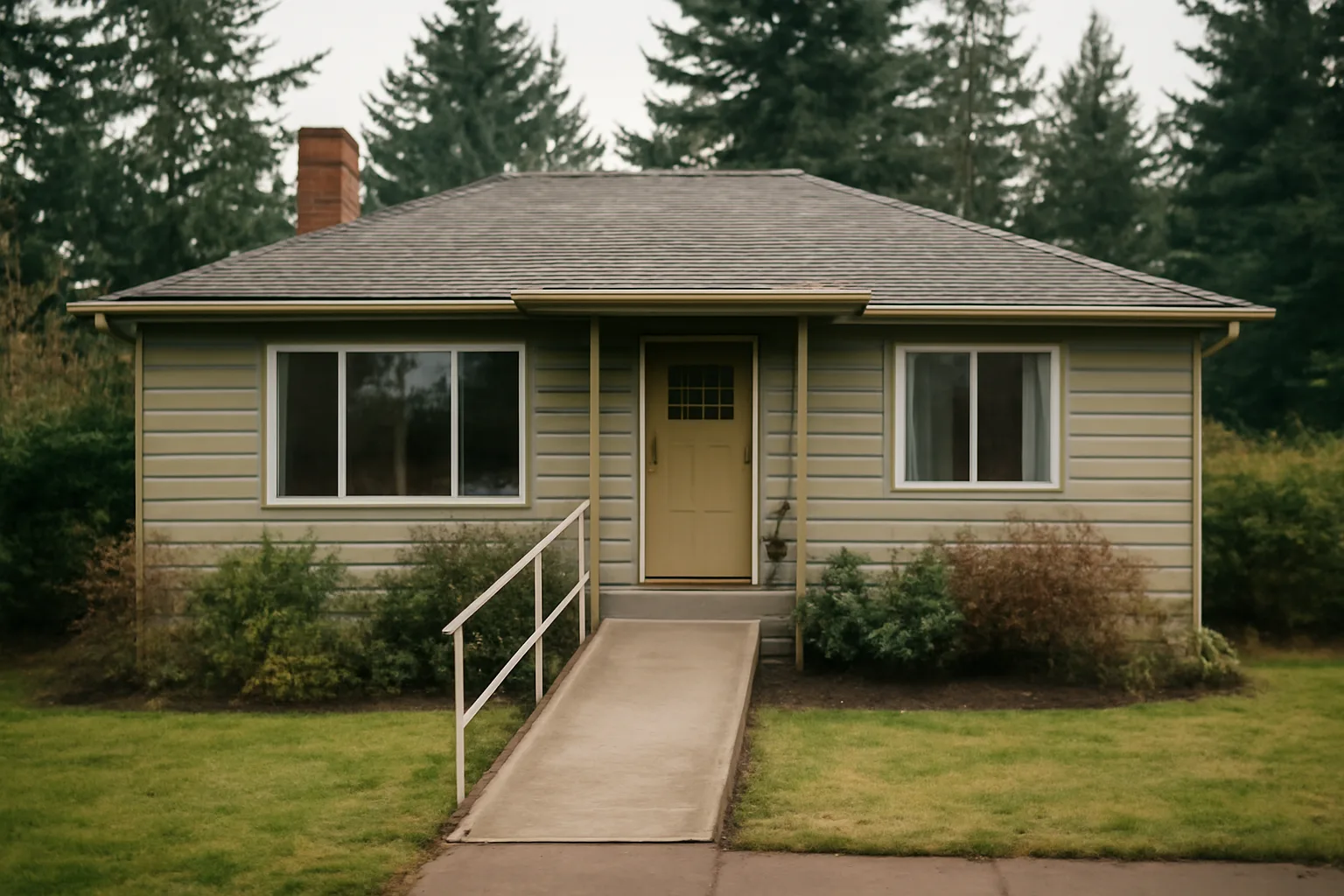
In everyday speech, "group home" means a residential setting where a small number of unrelated people live together and get supervision, meals, and personal care support. Washington's regulatory system doesn't use that term as a license category. Instead, the state sorts these homes by population and level of care into a handful of distinct license types, each run by a different part of state government. If you're picturing a house with six bedrooms and a live-in caregiver serving seniors or adults with dementia, you're probably looking at an Adult Family Home (AFH) license, regulated under RCW 70.128 and administered by the Department of Social and Health Services (DSHS), Aging and Long-Term Support Administration (ALTSA) [1]. If you're picturing a larger facility with more residents, more staff, and a more institutional feel, you may need an Assisted Living Facility (ALF) license under RCW 70.129 and chapter 388-78A WAC, also through DSHS [2]. If your population is adults with intellectual or developmental disabilities, you're likely looking at a Supported Living contract through DSHS's Developmental Disabilities Administration (DDA), which has its own certification and provider qualification process separate from AFH/ALF licensing [3]. Behavioral health residential programs (mental health and substance use recovery) run through yet another track, often involving the Health Care Authority (HCA) and DOH-related certifications for specific service types. The upshot: "group home licensing in Washington" is really shorthand for four or five different regulatory paths that happen to look similar from the outside. Before you fill out a single form, nail down exactly which population you intend to serve, because that answer determines which agency you'll deal with, which statute governs you, and what your fee schedule and inspection cycle looks like.
what is assisted living and what is an assisted living facility
Assisted living is a level of care between independent living and nursing home care. It generally means help with activities of daily living (bathing, dressing, medication management, mobility) plus meals, housekeeping, and 24-hour staff availability, without the intensive skilled nursing services a nursing home provides. An assisted living facility (ALF) is the licensed building where that care happens. In Washington, ALFs are licensed by DSHS under chapter 388-78A WAC and RCW 70.129, and the license explicitly covers "assisted living services," which the state defines to include domiciliary care plus support with health-related services for residents who need that assistance [2]. Washington's WAC 388-78A-2020 spells out the categories of care an ALF can be licensed to provide, ranging from basic domiciliary services up through specialized dementia care and, in some cases, nursing services under specific conditions [2]. ALFs in Washington are distinct from Adult Family Homes mainly in scale and structure. An AFH is licensed for a maximum of six residents in a single-family style home under RCW 70.128.010, while ALFs typically operate at a larger, more institutional scale with more staff layers and a different survey process [1]. If you're planning a bigger community-style building rather than a house, ALF licensing (not AFH) is almost certainly your track. For background on how assisted living licensing works generally across states, see assisted living facility and assisted living facilities.
what is assisted living vs nursing home, and what's the difference
The short answer: assisted living is for people who need help with daily activities but not around-the-clock skilled medical care, while a nursing home (skilled nursing facility) is for people who need ongoing medical or rehabilitative care from licensed nurses. In Washington, nursing homes are licensed separately under chapter 18.51 RCW and are subject to federal Medicare/Medicaid Conditions of Participation because most accept those payers for skilled care [4]. Assisted living facilities and Adult Family Homes are licensed under state-only authority (RCW 70.129 and RCW 70.128, respectively) and are not automatically subject to the same federal nursing home survey rules, though they may serve Medicaid recipients through the state's Community First Choice or Roads to Community Living programs [5]. Staffing is the clearest practical difference. Nursing homes must have licensed nurses on duty and meet federal minimum staffing standards that CMS has been phasing in since a 2024 final rule (though implementation timelines have shifted; check CMS's current guidance for the latest status) [6]. Assisted living and AFH staffing is set by state rule instead, generally requiring "sufficient" staff to meet resident needs and specific awake/asleep staff coverage overnight, rather than a fixed nurse-to-resident ratio [2]. Cost and payer mix also diverge. Nursing home stays are frequently billed to Medicare Part A for short-term skilled stays (with strict eligibility rules) or Medicaid for long-term custodial stays. Assisted living and AFH costs are typically private-pay or covered through state Medicaid waiver programs, not traditional Medicare.
does medicare cover assisted living facilities
No. Medicare does not pay for the room, board, or personal care costs of assisted living, in Washington or any other state. Medicare.gov states plainly that Medicare does not cover long-term care (also called custodial care) if that's the only care a person needs, and it lists assisted living facility costs among the services Medicare does not pay for . Medicare will pay for medically necessary services a resident receives, like doctor visits, physical therapy after a qualifying hospital stay, or durable medical equipment, even if that resident happens to live in an assisted living facility. But it will not pay the facility's monthly rate for housing, meals, or help with dressing and bathing. Medicaid is a different story. Washington's Medicaid program, through DSHS/ALTSA, can help cover the cost of personal care services in an Adult Family Home or Assisted Living Facility for residents who meet both financial and functional eligibility criteria, generally through the state's Community First Choice option and Medicaid Personal Care programs [5]. Room and board are typically still the resident's responsibility, often paid from the resident's own income (like Social Security) plus a state supplement in some cases. If you're building a business plan around Medicaid-funded residents, budget time to get your provider agreement set up with DSHS and understand the applicable reimbursement rate for your license type. It's a separate process from getting your license itself.
how to start a group home in washington state
Starting a licensed residential care home in Washington follows a sequence, even though the specific agency and form numbers change depending on your license type. Here's the general path DSHS lays out for Adult Family Home applicants, which is broadly representative of the process: 1. Decide your population and license type. Seniors and adults needing personal care point toward AFH or ALF licensing under DSHS/ALTSA. Adults with intellectual/developmental disabilities point toward a DDA supported living contract. Mental health or substance use recovery residences point toward HCA/DOH behavioral health certification tracks [3]. 2. Check zoning before you sign a lease or purchase agreement. Washington's Growth Management Act and various municipal codes affect where residential care homes can operate, and some cities require a conditional use permit or occupancy classification review even when state law treats small AFHs as a permitted residential use. Confirm with your local planning department and your state licensing agency before committing to a property. See assisted living for more on how location choice interacts with licensing. 3. Complete required training and background checks. Washington requires AFH providers and resident managers to complete DSHS-approved training (a 48-hour Fundamentals of Caregiving course plus population-specific specialty training for AFH providers is generally required, though hour requirements can change; confirm current hours with DSHS) and pass a Washington State Patrol/FBI background check under RCW 43.43.830 [1] . 4. Submit your license application. For AFHs, this goes to your regional DSHS Residential Care Services office with the applicable non-refundable application fee (confirm the current fee amount with DSHS, as it is subject to change by rule and appears on the DSHS licensing fee schedule) [1]. 5. Pass a pre-licensing inspection. DSHS conducts an on-site survey of life safety, physical plant, staffing plans, and policy manuals before issuing an initial license. 6. Get your local fire and building sign-off. Fire marshal inspection and, in many jurisdictions, a certificate of occupancy specific to a residential care use are required before DSHS will issue your license. 7. Set up your policy manual, staffing plan, and admission agreements. DSHS reviews these as part of licensing, and inspectors reference them again at every survey after you open. Most operators underestimate step 3 and step 6. Training scheduling and local fire inspections are the two places timelines slip the most, often by months, not weeks.
how do i start a group home if i'm serving adults with disabilities (DDA supported living)
If your target residents are adults with intellectual or developmental disabilities, the path runs through DSHS's Developmental Disabilities Administration rather than the AFH/ALF track most people picture when they hear "group home." DDA contracts with certified supported living providers to deliver services to DDA clients in community residential settings. Becoming a supported living provider generally requires forming a qualifying business entity, going through DDA's provider qualification and certification process, and meeting staff qualification standards under WAC 388-101 and related chapters governing residential services and supports for DDA clients [3]. This is a genuinely different application than an AFH license. You're not simply getting a facility license; you're becoming a contracted Medicaid services provider, which involves DDA's own review of your organizational capacity, staff training curriculum, incident reporting systems, and person-centered planning practices. Expect a longer runway here than for an AFH, often many months, because DDA reviews both your organization and each residential setting you propose to use. If you're unsure which track fits your plan, call your regional DSHS office directly before drafting policies or signing a lease. Getting this wrong early (for example, building an AFH-style program when your actual population needs DDA supported living certification) can cost real time and money in rework.
what staffing does washington require in a group home or afh
Washington's Adult Family Home rules require providers to maintain "sufficient staff" to meet each resident's assessed needs at all times, with specific requirements for awake overnight staff when residents have needs that require it, under WAC 388-76 [1]. There isn't a single fixed ratio like "1 staff per 6 residents" written into statute; instead, staffing is tied to the acuity and negotiated care plan of the residents actually living in the home. Assisted Living Facilities under chapter 388-78A WAC follow a similar needs-based standard but at a larger scale, with additional requirements tied to specialized dementia care endorsements and the categories of care the facility is licensed to provide [2]. All caregiving staff, regardless of license type, need to complete DSHS-approved caregiver training and pass background checks before working unsupervised with vulnerable residents, under RCW 43.43.830 and related WAC provisions . Specialty populations (dementia care, mental health, developmental disabilities) generally require additional population-specific training hours on top of the base caregiver curriculum. Budget for turnover. Direct care staffing in residential care nationally has a documented turnover problem; the numbers vary by study and state, but plan your onboarding pipeline (background checks plus training completion) to run continuously, not as a one-time hiring push before opening day.
what does the washington licensing inspection actually check
DSHS conducts both a pre-licensing survey before your first license is issued and periodic unannounced surveys after you're operating, generally on an annual cycle for AFHs, though the exact interval and trigger for complaint-based surveys can vary [1]. Inspectors typically check: life safety and fire code compliance (exits, smoke detectors, sprinkler requirements depending on occupancy classification), medication management and storage, resident records and care plans, staff training and background check documentation, the physical condition of the home (bedroom size and occupancy limits, bathroom ratios), and your written policies covering topics like abuse/neglect reporting, emergency preparedness, and resident rights. Complaint investigations can happen at any time and don't follow the annual schedule. DSHS maintains a complaint intake process, and substantiated findings can result in a Statement of Deficiencies requiring a plan of correction, civil penalties, conditions on the license, or in serious cases, license revocation under RCW 70.128.160 (for AFHs) [1]. Keep your policy manual current and actually followed. Inspectors compare what's written in your manual against what staff say happens and what resident records show. A gap between paper and practice is one of the most common findings in state survey reports across the country, and it's entirely avoidable with routine internal audits.
how much does group home licensing cost in washington and how long does it take
Washington doesn't publish one single number here because costs stack from several independent sources: the state application fee, background check fees, required training course fees, local business licensing and zoning review fees, fire inspection fees, and any building modifications needed to meet occupancy and life safety code. Confirm current application and renewal fee amounts directly with DSHS's Aging and Long-Term Support Administration, since fee schedules are set by rule and change periodically [1]. Timeline is similarly variable. A realistic range most operators experience, start to open, runs from about four to nine months, driven mainly by three bottlenecks: completing required caregiver training, scheduling and passing the fire marshal inspection, and getting the DSHS pre-licensing survey scheduled. Add more time if your property needs zoning approval or physical modifications (like adding a second egress or upgrading fire alarm systems). If you want a structured way to track every document, policy, and form across this process instead of juggling agency PDFs and email threads, that's exactly the gap the $299 State Group Home Licensing Kit is built to close: state-specific checklists and policy templates organized by license type, so you're not reconstructing the requirements from scratch.
what policies and documents does washington require before licensing
At minimum, expect DSHS to require a written policy and procedure manual covering resident rights, admission and discharge criteria, medication administration, abuse and neglect reporting (mandatory under RCW 74.34), emergency and disaster preparedness, infection control, staff training records, and a resident grievance process [1] [2]. You'll also need individual negotiated care plans for each resident (required under AFH and ALF rules), an admission agreement disclosing services and costs, proof of liability insurance, and documentation of your criminal background check clearances for every staff member and, in AFHs, every household member over a certain age. Building these from scratch takes real time, and getting them wrong (vague language, missing required elements) is a common reason initial applications bounce back for revision. Many operators pull from a state-specific template library rather than drafting from zero, which is the other piece of what the licensing kit provides: policy manual templates mapped to Washington's specific WAC citations rather than generic boilerplate that inspectors flag as incomplete.
what's the difference between an adult family home and an assisted living facility in washington
| Feature | Adult Family Home (AFH) | Assisted Living Facility (ALF) | |
|---|---|---|---|
| Governing law | RCW 70.128, WAC 388-76 [1] | RCW 70.129, WAC 388-78A [2] | |
| Max residents | 6 | No fixed statewide cap; varies by building and license | |
| Setting | Single-family residence | Larger, often purpose-built community | |
| Regulator | DSHS/ALTSA | DSHS/ALTSA | |
| Typical staffing model | Live-in or shift-based caregivers | Shift-based staff across multiple positions | |
| Dementia care | Available with specialty training | Available with dementia care endorsement | If you're weighing which one fits your plan, think about scale first. A six-bed home run out of a residential property is an AFH conversation. A 30- or 60-unit community with a dining hall, activity director, and tiered care levels is an ALF conversation. The application processes, fee structures, and inspection standards diverge meaningfully once you know which side you're on, so pin this down before you draft a business plan or approach a lender. |
Frequently asked questions
What is assisted living?
Assisted living is a level of residential care for adults who need help with daily activities like bathing, dressing, and medication management, but don't need the round-the-clock skilled nursing care a nursing home provides. It typically includes meals, housekeeping, and staff available 24 hours a day, delivered in a licensed facility.
What is a group home?
"Group home" is a common term for a residential setting where a small number of unrelated people live together with staff support. Washington State doesn't use "group home" as a formal license category; instead it licenses Adult Family Homes, Assisted Living Facilities, or DDA supported living settings depending on the population served [1][2][3].
What is an assisted living facility?
An assisted living facility (ALF) is a state-licensed building where residents receive help with daily living activities plus meals, housekeeping, and supervision. In Washington, ALFs are licensed under RCW 70.129 and chapter 388-78A WAC by the Department of Social and Health Services [2].
What is assisted living vs nursing home?
Assisted living serves people who need help with daily tasks but not ongoing medical care; nursing homes serve people who need skilled nursing and rehabilitative services around the clock. Nursing homes in Washington are licensed under chapter 18.51 RCW and follow federal Medicare/Medicaid nursing home rules; assisted living is state-licensed only [2][5].
What does assisted living provide?
Assisted living typically provides help with bathing, dressing, mobility, and medication management, plus meals, housekeeping, laundry, social activities, and staff available around the clock. It does not typically include ongoing skilled nursing or rehabilitative therapy, which falls under nursing home or home health care instead.
How do I start a group home in Washington?
Identify your target population first, since that determines your license type (AFH, ALF, or DDA supported living). Then complete required caregiver training and background checks, confirm zoning with your local jurisdiction, submit your application to DSHS or DDA, and pass the pre-licensing inspection covering life safety, staffing, and policies [1][3].
Does Medicare cover assisted living facilities?
No. Medicare.gov explicitly states Medicare does not cover long-term custodial care, including assisted living facility room, board, and personal care costs [8]. Medicare may still pay for medically necessary services like doctor visits or therapy a resident receives while living in assisted living, just not the facility's monthly rate.
What's the difference between an Adult Family Home and an Assisted Living Facility in Washington?
An Adult Family Home is capped at 6 residents in a single-family residence under RCW 70.128; an Assisted Living Facility has no fixed statewide resident cap and typically operates as a larger, more institutional building under RCW 70.129 [1][2]. Both are licensed by DSHS but follow different rule chapters, fee schedules, and inspection standards.
How much does it cost to open an Adult Family Home in Washington?
There's no single published total because costs stack from the DSHS application fee, background check fees, training course costs, local zoning and business license fees, and any physical modifications for fire and life safety code. Confirm the current DSHS application fee directly with the agency, since fee schedules change by rule [1].
How long does it take to get a group home license in Washington?
Most operators report roughly four to nine months from decision to opening day, with the biggest delays coming from completing required caregiver training, scheduling the fire marshal inspection, and getting the DSHS pre-licensing survey scheduled. Zoning issues or required building modifications can add more time.
Do I need a special license to serve adults with developmental disabilities in Washington?
Yes. Serving adults with intellectual or developmental disabilities generally requires becoming a certified supported living provider under contract with DSHS's Developmental Disabilities Administration (DDA), a separate process from Adult Family Home or Assisted Living Facility licensing, governed by WAC 388-101 and related provider qualification rules [3].
What background checks are required for group home staff in Washington?
Washington requires caregivers and, for Adult Family Homes, certain household members to pass a Washington State Patrol and FBI fingerprint-based background check before working unsupervised with vulnerable adults, under RCW 43.43.830. This applies across AFH, ALF, and DDA-contracted settings [9].
Does Medicaid pay for assisted living or Adult Family Home care in Washington?
Medicaid can help cover personal care service costs in an AFH or ALF for residents who meet financial and functional eligibility, generally through Washington's Community First Choice option and Medicaid Personal Care programs administered by DSHS [6]. Room and board are typically paid separately from the resident's own income.
Sources
- Washington State Legislature, RCW 70.128 (Adult Family Homes): Adult Family Homes are licensed under RCW 70.128 with a 6-resident cap, DSHS oversight, and complaint/enforcement authority
- Washington State Legislature, WAC 388-78A (Assisted Living Facilities): Assisted Living Facilities are licensed under RCW 70.129 and chapter 388-78A WAC, including categories of care and staffing standards
- Washington State Legislature, WAC 388-101 (DDA residential services): Providers serving DDA clients in community residential settings must be certified supported living providers under WAC 388-101
- Washington State Legislature, RCW 18.51 (Nursing Homes): Nursing homes in Washington are licensed separately under chapter 18.51 RCW
- Medicare.gov, What Medicare Covers - Long-Term Care: Medicare does not cover long-term custodial care, including assisted living facility costs
- Washington State Legislature, RCW 43.43.830 (Background Checks): Caregivers and certain household members must pass WSP/FBI background checks before working with vulnerable adults