Last updated 2026-07-25
TL;DR
Texas group homes for people with disabilities or seniors needing personal care generally need a license from the Texas Health and Human Services Commission (HHSC), as an Assisted Living Facility, HCSSA, or a similarly licensed provider type. Requirements cover staffing ratios, background checks, fire marshal sign-off, physical plant standards, and an on-site inspection before HHSC issues a license.
What is a group home, exactly?
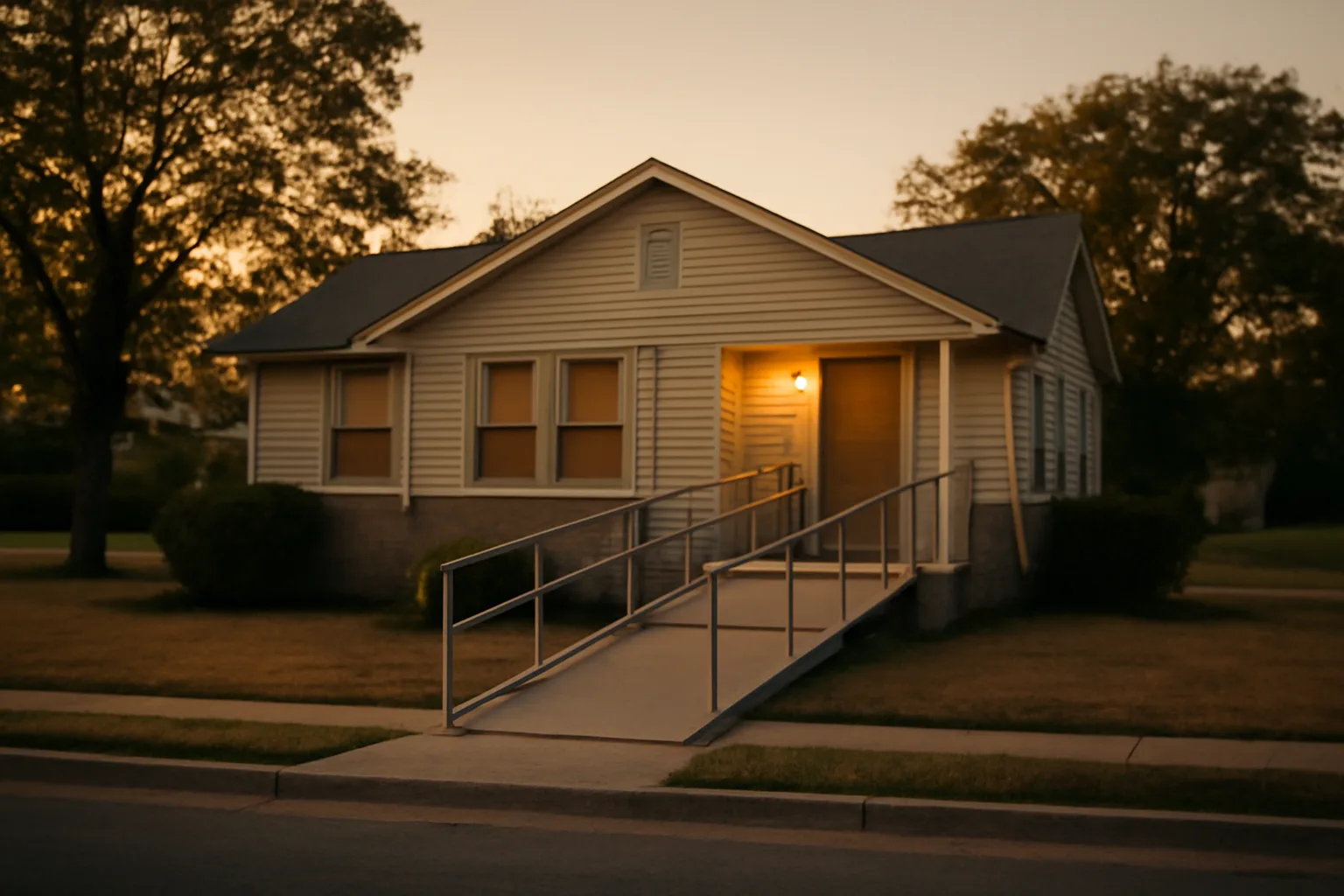
A group home is a residential setting, usually a house or small building in a regular neighborhood, where a small number of unrelated people live together and receive some level of support, supervision, or care. In Texas the term gets used loosely, but the state doesn't have one single license called "group home." Instead, depending on who lives there and what kind of care they need, the operation falls under one of several HHSC-regulated categories: Assisted Living Facilities (ALFs) for people, often seniors, who need help with daily activities; Intermediate Care Facilities or HCS/TxHmL waiver providers for people with intellectual or developmental disabilities; or licensed community-based housing tied to mental health and substance use recovery programs. The practical result is that "group home requirements Texas" almost always routes back to Texas Human Resources Code Chapter 103A, which is the statute governing assisted living facility licensure, and to 26 Texas Administrative Code Chapter 553, which spells out the actual operating rules [1][2]. If you're planning a home for people with IDD funded through Medicaid waivers, you'll instead be dealing with HHSC's IDD provider enrollment process and 26 TAC Chapter 565 or related HCS rules, which is a separate track with its own paperwork. So before you fill out a single form, figure out which population you're serving. That decision drives which license you apply for, which inspection standards apply, and which staffing ratios you have to hit.
What is assisted living, and what is an assisted living facility?
Assisted living is a category of care for people who don't need the round-the-clock medical supervision of a nursing home but do need help with things like bathing, dressing, medication reminders, and meals. An assisted living facility is the licensed building or program that provides that help. Texas defines an assisted living facility in Human Resources Code Section 103A.001 as an establishment that furnishes food, shelter, and personal care services for four or more people who are not related to the owner [1]. That four-or-more threshold matters a lot for smaller operators: a home caring for three or fewer unrelated residents may fall outside ALF licensure entirely, though local zoning and other state rules can still apply, so confirm the exact resident count trigger with your state licensing agency before you assume you're exempt. HHSC further splits ALFs into license types based on the level of care and mobility of residents (Type A, Type B, and Type C designations exist under the Texas rules, with differences tied to whether residents can evacuate unassisted and whether they need nighttime attendance) [2]. Getting the type wrong on your application is one of the more common reasons plan reviews bounce back for correction, so read the definitions in 26 TAC Section 553.61 closely before you submit.
What is assisted living facility vs nursing home?
The short answer: assisted living is for people who need help with daily living tasks but not constant skilled nursing care, while a nursing home (called a skilled nursing facility or nursing facility in Texas) is for people who need ongoing medical supervision, rehabilitation, or care from licensed nurses around the clock. Nursing facilities in Texas are licensed under a completely different statute, Health and Safety Code Chapter 242, and inspected against federal Medicare/Medicaid conditions of participation set out in 42 CFR Part 483 [3][4]. Staffing requirements are heavier: nursing facilities must have a registered nurse on duty at least 8 consecutive hours a day, 7 days a week, per federal rule, and licensed staff coverage around the clock [4]. Assisted living facilities in Texas have lighter staffing rules built around "awake staff" or "on-call" staff depending on facility type, not licensed nursing coverage. Cost and reimbursement differ too. Nursing facility care is far more likely to be covered by Medicaid through the state plan, while assisted living is typically private-pay or covered through a Medicaid waiver (like the STAR+PLUS Home and Community Based Services program in Texas) rather than the core Medicaid nursing facility benefit [5]. If a resident's needs escalate to require daily skilled nursing, an ALF operator usually has to plan a discharge or transfer, because ALFs are not licensed or staffed to provide that level of care.
What does assisted living provide?
Assisted living in Texas generally provides three things: a place to live, help with activities of daily living, and some oversight of health and safety. Under 26 TAC Chapter 553, licensed ALFs must provide, at minimum, food service, housekeeping, personal care assistance (bathing, dressing, grooming, mobility), medication administration or assistance depending on facility type, and social or recreational activity opportunities [2]. What it does not typically provide is skilled nursing care, ventilator management, or complex wound care, unless the facility has obtained a specific waiver or additional licensing designation for that higher level of service. Meals have to meet nutritional adequacy standards, and facilities must keep emergency and evacuation plans on file that the local fire marshal has reviewed. Staffing has to be sufficient for the facility type and resident acuity, and HHSC rules require specific staff-to-resident awareness during nighttime hours in Type B and Type C facilities where residents may not be able to evacuate independently [2]. If you're building a staffing plan for a license application, start from the facility type definition, not from a generic ratio, because the required coverage genuinely differs by type.
How to start a group home in Texas
Starting a licensed group home or assisted living facility in Texas follows a sequence, and skipping steps is the number one reason applications stall for months. Here's the order that actually works. 1. Pick your population and license type. Seniors and adults needing personal care generally point to ALF licensure under HRC Chapter 103A. People with intellectual or developmental disabilities point toward HCS or ICF/IID provider enrollment. Mental health and recovery residences may fall under a different HHSC program or may operate as unlicensed sober living depending on services offered, so confirm classification with your state licensing agency early. 2. Check zoning before you sign a lease or buy property. Texas Local Government Code Section 214.902 (and related Fair Housing Act protections) affect how cities can regulate group homes for people with disabilities, but zoning rules still vary by municipality [6]. Don't assume a residential-zoned house is automatically fine; call the city planning or zoning department first. 3. Get the physical plant right. HHSC inspects for fire safety, sanitation, accessible exits, bedroom square footage per resident, and bathroom-to-resident ratios under 26 TAC Chapter 553 Subchapter E [2]. A local fire marshal inspection and sign-off is required before licensing in most jurisdictions. 4. Write your policy manual. HHSC expects written policies covering resident rights, medication management, abuse/neglect reporting, emergency preparedness, admission and discharge criteria, and staff training. This is the paperwork step operators most often underestimate; a thin policy manual gets kicked back during application review. 5. Staff and background-check everyone. Texas requires criminal history checks through the Texas Department of Public Safety and checks against the HHSC Employee Misconduct Registry and the Nurse Aide Registry for direct care staff [7]. 6. Submit the license application and fee to HHSC, along with your policy manual, staffing plan, floor plan, and fire marshal approval. HHSC then schedules the pre-licensing inspection. 7. Pass the inspection and receive your license. HHSC surveyors will walk the property, review resident files (if you already have any admitted under provisional status), and check staff files against the requirements above. Building this packet from scratch, state by state, is genuinely a lot of paperwork to assemble correctly the first time; that's the whole reason our Licensing Kit Builder exists, so you're not reinventing policy manual language and staffing plan templates from zero.
What does the Texas licensing application actually require?
The HHSC application packet for an assisted living facility license typically requires: a completed application form, the applicable license fee, proof of financial solvency, a facility floor plan, fire marshal approval, a staffing plan matched to your facility type, your written policy and procedure manual, and disclosure of ownership and any prior licensing history in Texas or other states [2]. HHSC also requires a criminal history check for the applicant/owner and for all staff who will have direct contact with residents, run through the Texas Department of Public Safety, plus a search of the HHSC Employee Misconduct Registry to confirm no listed staff member has a substantiated finding of abuse, neglect, or exploitation [7]. Fees and exact form numbers change periodically, so don't rely on a number you saw in a forum post from two years ago. Confirm current fee amounts and required forms directly on the HHSC Long Term Care Regulation licensing page before you submit anything [8]. Once HHSC has a complete application, it schedules an initial licensing survey. Surveyors check the physical plant against the standards in 26 TAC Chapter 553 Subchapter E, review resident and staff files, and verify that emergency procedures are posted and staff can describe them. Deficiencies get documented on a statement of deficiencies, and you'll need a plan of correction before the license is issued in most cases.
What are the staffing and background check requirements?
Staffing rules in Texas ALFs scale with facility type. Type A facilities (residents who are physically and mentally capable of evacuating without staff assistance) have lighter overnight staffing rules than Type B or Type C facilities, where residents may need staff assistance to evacuate or need nighttime attendance for medical reasons [2]. Every direct care employee needs a criminal history check before starting work, run through the Texas Department of Public Safety, and Texas maintains an Employee Misconduct Registry that facilities are required to check before hiring anyone in a direct care role [7]. A hit on either check for certain disqualifying offenses (this list includes crimes like abuse, neglect, exploitation, and various violent or financial crimes) generally bars hiring for direct care positions, subject to Texas's specific rules on look-back periods and rehabilitation. Training requirements also apply. HHSC rules require initial orientation covering resident rights, emergency procedures, infection control, and abuse/neglect reporting, plus ongoing continuing education tied to facility type. Administrators of ALFs in Texas must hold a specific license issued by HHSC's Assisted Living Facility Administrator licensing program, which has its own education and examination requirements separate from the facility license itself [2].
What are the zoning and physical plant requirements?
Zoning is the part most new operators underestimate. Texas Local Government Code Section 214.902 addresses how municipalities can regulate certain residential facilities serving people with disabilities, largely shaped by federal Fair Housing Act protections that prevent cities from treating a group home differently than any other single-family residence purely because of the residents' disabilities [6][9]. That said, cities still enforce building codes, occupancy limits, parking rules, and sometimes separation requirements between similar facilities, and these vary by municipality. Always call your city or county zoning office before signing a lease. On the physical plant side, 26 TAC Chapter 553 sets minimum standards: fire-rated construction or sprinkler requirements depending on facility type and resident mobility, minimum square footage per resident in bedrooms, maximum residents per bedroom, accessible bathrooms, and posted evacuation routes [2]. A local fire marshal inspection is required, and in many counties a health department inspection of the kitchen and water supply is also required before HHSC will schedule its own licensing survey. If you're converting an existing single-family home, expect to spend real money on fire safety upgrades (smoke detection, sprinklers in some cases, exit signage, fire-rated doors) before the property will pass. Buying a property that's already licensed as an ALF or built to assisted living code standards can save a meaningful amount of time and renovation cost compared to converting a standard house.
Does Medicare cover assisted living facilities?
No. Medicare does not cover the room and board costs of assisted living, and it generally does not pay for personal care services like help with bathing or dressing that ALFs provide [10]. Medicare.gov states plainly that Medicare "doesn't cover . . . room and board" for long-term custodial care settings like assisted living [10]. Medicare will cover specific medical services a resident receives while living in assisted living, such as doctor visits, physical therapy ordered by a doctor, or durable medical equipment, the same way it would cover those services for someone living at home. But it does not pay the facility's monthly rate for housing and personal care. Medicaid is a different story, sort of. Texas Medicaid does not pay for room and board in assisted living either, but the STAR+PLUS Home and Community Based Services (HCBS) waiver can help cover personal care and some services for eligible low-income Texans in certain assisted living settings, and separate IDD waivers (HCS, TxHmL) cover services for people with intellectual and developmental disabilities in qualifying residential settings [5]. Coverage details, income limits, and waiver waitlists change, so anyone counting on Medicaid funding for a specific resident should confirm current eligibility and waiver availability directly with HHSC or their local Medicaid managed care organization.
What is the difference between a group home and assisted living, in practice?
In everyday use, "group home" tends to describe a smaller residential setting, often serving people with intellectual/developmental disabilities, mental health needs, or in recovery from substance use, while "assisted living facility" is the specific Texas license category for personal care services aimed mostly (though not exclusively) at seniors and adults with physical care needs. The overlap is real: a small group home serving four or more unrelated adults who need help with daily living could legally need an ALF license in Texas, depending on services provided, even if nobody calls it "assisted living" out loud. Conversely, a home serving people with IDD funded through a Medicaid waiver is licensed and inspected under a completely different set of HHSC rules (HCS/TxHmL provider standards), not the ALF chapter [1][2]. The practical lesson: don't assume the informal name of your business tells you which license you need. HHSC classifies based on population served, services provided, and number of residents, not on your sign out front. If you're unsure which bucket you fall into, call HHSC Long Term Care Regulation directly and describe your intended population and services before you file anything.
What happens during the inspection?
HHSC conducts an initial licensing survey before issuing an assisted living facility license, and then periodic unannounced surveys after that (Texas ALFs are generally surveyed at least once every 12 to 15 months, though HHSC's actual survey frequency policy should be confirmed on the agency's current inspection guidance page) [2][8]. Surveyors check physical plant conditions, staff files, resident files, medication administration records, and interview residents and staff. Common deficiencies HHSC surveyors cite in group care settings include incomplete staff training documentation, missing or expired criminal history checks, medication storage or administration errors, inadequate staffing during required hours, and fire safety equipment that hasn't been tested or documented on schedule. If deficiencies are found, the facility gets a statement of deficiencies and must submit a plan of correction with a timeline. Serious or repeated violations can lead to enforcement actions ranging from administrative penalties to license revocation, so keeping documentation current (staff files, training logs, fire drill records, medication logs) isn't just paperwork for its own sake. It's what an inspector will ask to see first.
How does Texas compare to other states on group home licensing?
Every state licenses these facilities differently, which trips up multi-state operators constantly. Texas routes assisted living through HHSC and HRC Chapter 103A, with facility type distinctions (A, B, C) based on resident mobility and care needs [1][2]. Other states use different structures entirely: some have a single "residential care" license with tiered levels, others separate small group homes (under a certain resident count) from larger assisted living licensure with completely different rule sets. If you're comparing Texas to a state you're also considering, resources like our guides on assisted living facility licensing and assisted living facilities requirements walk through how other states structure their rules, so you can see where the overlap and the differences are before you commit to building in a particular state.
Frequently asked questions
What is assisted living?
Assisted living is a residential care option for people, often seniors, who need help with daily activities like bathing, dressing, and medication management but don't need the round-the-clock skilled nursing care a nursing home provides. In Texas, assisted living facilities are licensed by HHSC under Human Resources Code Chapter 103A and 26 TAC Chapter 553.
What is a group home?
A group home is a residential setting where a small number of unrelated people live together with some level of support or supervision. Texas doesn't issue a single "group home" license; depending on the residents and services, the operation is licensed as an assisted living facility, an IDD waiver provider, or under another HHSC program.
What is an assisted living facility?
An assisted living facility is the licensed building or program in Texas that provides food, shelter, and personal care services to four or more unrelated residents, as defined in Human Resources Code Section 103A.001. HHSC licenses these as Type A, B, or C facilities based on resident mobility and care needs.
What is the difference between assisted living and a nursing home?
Assisted living helps with daily living tasks like bathing and medication reminders; a nursing home provides ongoing skilled nursing care, licensed 24/7 nursing staff, and rehabilitation services. Nursing facilities in Texas are licensed under Health and Safety Code Chapter 242 and must meet federal Medicare/Medicaid staffing rules under 42 CFR Part 483.
What does assisted living provide?
Texas assisted living facilities must provide food service, housekeeping, personal care assistance, medication assistance or administration (depending on facility type), and social activities, per 26 TAC Chapter 553. They generally do not provide skilled nursing, complex wound care, or ventilator management unless specifically licensed for a higher level of service.
How do I start a group home in Texas?
Pick your population and license type first (ALF, IDD waiver provider, or another category), check local zoning, prepare the physical plant to meet fire and sanitation code, write your policy manual, background-check all staff, submit your HHSC application with the required fee, and pass the initial licensing survey before admitting residents.
Does Medicare cover assisted living facilities?
No. Medicare does not cover room and board or custodial personal care in assisted living facilities. Medicare.gov confirms Medicare doesn't cover long-term custodial care costs. Medicare will still pay for covered medical services, like doctor visits or physical therapy, a resident receives while living in assisted living.
Does Medicaid pay for assisted living in Texas?
Texas Medicaid doesn't cover room and board in assisted living, but the STAR+PLUS Home and Community Based Services waiver can help cover personal care services for eligible low-income Texans in some assisted living settings. Separate IDD waivers (HCS, TxHmL) cover services in qualifying residential settings for people with intellectual and developmental disabilities.
How many residents make a home require an assisted living license in Texas?
Texas Human Resources Code Section 103A.001 defines an assisted living facility as one serving four or more unrelated residents who receive food, shelter, and personal care. Homes with three or fewer residents may fall outside ALF licensure, but confirm the exact threshold and any exceptions with HHSC before assuming exemption.
What background checks are required for group home staff in Texas?
Direct care staff need a criminal history check through the Texas Department of Public Safety before starting work, and facilities must check the HHSC Employee Misconduct Registry to confirm no substantiated finding of abuse, neglect, or exploitation exists for that individual before hiring them into a direct care role.
Can a Texas city block a group home through zoning?
Not simply because residents have disabilities. Texas Local Government Code Section 214.902 and federal Fair Housing Act protections limit how cities can single out group homes for people with disabilities. Cities can still enforce general building codes, occupancy limits, and other neutral zoning rules, so confirm requirements with your local planning department.
How often does HHSC inspect assisted living facilities?
HHSC conducts an initial licensing survey before granting a license and then periodic unannounced surveys afterward. Exact frequency intervals and any recent policy changes should be confirmed on HHSC's current Long Term Care Regulation inspection guidance, since survey cycles and enforcement priorities can shift.
What's the difference between an ALF administrator license and a facility license?
The facility license authorizes the business to operate as an assisted living facility. The administrator license is a separate credential HHSC issues to the individual who manages daily operations, requiring specific education and an exam. A facility can lose its license if it operates without a properly licensed administrator on record.
Sources
- Texas Statutes, Human Resources Code Chapter 103A: Definition of assisted living facility and the four-or-more resident threshold
- Texas Administrative Code, Title 26, Chapter 553: Assisted living facility types, staffing, physical plant, and administrator licensing rules
- Texas Statutes, Health and Safety Code Chapter 242: Nursing facility licensing statute in Texas
- Code of Federal Regulations, 42 CFR Part 483: Federal nursing facility conditions of participation including 8-hour RN coverage requirement
- Texas Health and Human Services, STAR+PLUS Program: STAR+PLUS HCBS waiver can help cover personal care services in assisted living settings
- Texas Statutes, Local Government Code Section 214.902: State law provision addressing municipal regulation of certain residential facilities
- Texas Health and Human Services, Employee Misconduct Registry: Requirement to check the Employee Misconduct Registry before hiring direct care staff
- Texas Health and Human Services, Long Term Care Regulation: HHSC licensing application and inspection process for assisted living facilities
- U.S. Department of Justice, Fair Housing Act overview: Federal Fair Housing Act protections limiting discriminatory zoning against group homes for people with disabilities
- Medicare.gov, Long-term care coverage: Medicare does not cover room and board or custodial care in assisted living