Last updated 2026-07-25
TL;DR
Most group home startups need somewhere between $15,000 and $250,000 depending on whether you rent or buy, how many beds you're licensed for, and your state's requirements. The biggest swing factors are real estate (rent deposits vs. a mortgage down payment), fire/life-safety upgrades, licensing and background check fees, and 3-6 months of operating cash before Medicaid or private-pay reimbursement starts flowing.
How much do you actually need to start a group home?
There's no single number, and anyone who quotes you one flat figure without asking about your state, your population, and whether you're renting or buying is guessing. That said, real-world ranges cluster in a few bands. A small rented home (3-6 residents, adult foster care or IDD group home model) with an existing structure that mostly passes fire code as-is can start around $15,000 to $40,000. That covers a security deposit and first/last month's rent, background checks and fingerprinting fees for staff, basic furnishings, insurance down payment, and your state licensing application fee. A mid-size operation that needs sprinkler retrofits, ADA bathroom modifications, or a fire alarm system upgrade (common in older houses being converted to residential care) typically runs $75,000 to $150,000 once you add construction costs on top of the base licensing and staffing expenses. A purpose-built or heavily renovated residential assisted living (RAL) home, especially one licensed for 10+ beds or memory care, commonly runs $250,000 to $500,000+ when you include the property or a substantial down payment, commercial-grade kitchen and fire suppression, and a real marketing and staffing runway. Some multi-bed new-construction RAL projects have reported costs well north of $500,000 once land and permitting are factored in, though nobody publishes a standardized industry-wide figure for this, so treat any total as a planning estimate, not a guarantee. The honest answer to "how much do you need" is: pull your specific state's licensing fee schedule, get a fire marshal walkthrough quote for your actual building, and build a 12-month cash flow model before you sign a lease. The assisted living facility licensing category you fall under changes almost every cost line item.
What is a group home?
A group home is a licensed residential setting where a small number of people, often people with intellectual or developmental disabilities, mental illness, or substance use recovery needs, live together and receive supervision, support with daily activities, and sometimes direct care from paid staff. It's typically a house in a regular neighborhood, not an institutional building. States regulate group homes under different names and different rule sets depending on the population served. A home for adults with developmental disabilities might be licensed as an Intermediate Care Facility for Individuals with Intellectual Disabilities (ICF/IID) or under a state's developmental disabilities services agency, while a home for adults needing personal care as they age is more likely licensed as adult foster care or a residential care facility for the elderly. Because "group home" isn't a single federal legal term, your state's licensing agency is the only reliable source for which category, rules, and fees actually apply to your project. Check your state licensing guides hub for the agency-specific starting point.
What is assisted living?
Assisted living is a residential care model for adults, usually seniors, who need help with daily activities like bathing, dressing, medication reminders, and meals but don't need the round-the-clock skilled nursing care a nursing home provides. Residents typically have their own room or apartment and access shared common areas and staff support. The Centers for Medicare & Medicaid Services (CMS) doesn't set a single federal licensing standard for assisted living; states license and regulate these facilities individually, which is why terminology (assisted living facility, residential care facility, personal care home, adult foster care) and requirements vary so much state to state [1]. Assisted living sits between fully independent senior living and a nursing home on the care-intensity spectrum. It's a good fit for someone who needs help with activities of daily living (ADLs) but not IV medications, wound care, or ventilator support.
What is an assisted living facility (and what does assisted living provide)?
An assisted living facility (ALF) is the licensed building and program itself, the physical home or campus plus the staff, policies, and services delivered there. What it provides typically includes help with ADLs (bathing, dressing, toileting, mobility), medication management or reminders, three meals a day, housekeeping and laundry, social and recreational activities, and 24-hour staff availability for emergencies. What it does NOT typically provide, in most states, is skilled nursing care, ventilator management, or complex wound care, those trigger a different license category (skilled nursing facility) under most state rules. Some states allow assisted living facilities to hold a higher-acuity endorsement for aging in place, but that comes with its own additional staffing and inspection requirements, so confirm the specific service ceiling with your state licensing agency before you market a home as able to handle higher-need residents. If you're building your program description or resident agreement, start from your state's own list of "included services" definitions; some states legally require you to list exactly what's covered and what costs extra. See assisted living facilities for state-by-state service definitions.
What is the difference between assisted living and a nursing home?
Assisted living provides help with daily living activities and some health monitoring but is not primarily a medical facility; nursing homes (skilled nursing facilities) provide 24-hour skilled nursing care ordered and supervised by physicians, for people who need ongoing medical treatment, rehabilitation, or have complex medical needs. Staffing is the clearest dividing line. Nursing homes are federally required to have a registered nurse on duty for at least 8 hours a day, 7 days a week, and licensed nursing staff on duty 24 hours a day, under federal nursing home requirements at 42 CFR 483.35 [2]. Assisted living facilities have no comparable federal staffing mandate; their staffing ratios and required credentials are set entirely by state licensing rules, which is why one state's assisted living staffing minimum can look nothing like another's. Cost and payer mix also differ. Nursing home care is more likely to be covered by Medicaid or Medicare (for short, medically necessary skilled stays) because it's treated as a medical service, whereas assisted living is overwhelmingly private-pay, with Medicaid coverage available in many states only through home and community-based services (HCBS) waivers that cover the care component, not room and board [3].
Does Medicare cover assisted living facilities?
No. Medicare does not cover the cost of assisted living, including room and board or personal care services. Medicare.gov states plainly that Medicare "doesn't cover: Long-term care (also called custodial care)... in most cases," and assisted living falls squarely into that custodial care category [4]. Medicare will pay for specific medical services a person might receive while living in an assisted living facility (a doctor's visit, physical therapy, durable medical equipment), but it will not pay the facility's monthly rate for housing, meals, or help with bathing and dressing. Medicaid is a different story, and this matters enormously if you're planning to accept anything other than private-pay residents. Many states use Medicaid Home and Community-Based Services (HCBS) waivers, authorized under Section 1915(c) of the Social Security Act, to cover the personal care and supportive service costs in assisted living or group home settings, even though room and board still generally has to come from the resident's own income (often Supplemental Security Income). If Medicaid reimbursement is part of your business plan, you need a state Medicaid provider agreement in addition to your residential license, and the application and readiness timeline for that can add real months to your opening date. Start with our funding and Medicaid resources before you finalize your budget.
How do I start a group home? (step by step)
Starting a group home is really six overlapping workstreams, not one linear checklist, but here's the order that avoids the most expensive mistakes. 1. Pick your population and license category first. Adult foster care, IDD group home, mental health residential, substance use recovery residence, and senior residential care/assisted living are regulated under different statutes, different staffing ratios, and often different state agencies entirely. This decision drives every dollar figure that follows. 2. Confirm zoning before you sign anything. Many states have "reasonable accommodation" protections for small group homes under the federal Fair Housing Act, but local zoning fights over occupancy limits and "family" definitions are still one of the most common reasons projects stall or die. The Fair Housing Act, at 42 U.S.C. 3604(f)(3)(B), makes it unlawful discrimination to refuse "to make reasonable accommodations in rules, policies, practices, or services, when such accommodations may be necessary to afford such person equal opportunity to use and enjoy a dwelling," a provision courts have applied to local zoning decisions affecting group homes for people with disabilities [5]. Check your municipal zoning code and talk to your state licensing agency about what protections apply to your category before you commit to a lease or purchase. 3. Get your state's actual application packet. Every state licensing agency publishes an application, fee schedule, and a set of physical plant and staffing rules. Read the actual document, not a summary, because minimum square footage per resident, required staff-to-resident ratios, and background check requirements are usually spelled out to the exact number. 4. Line up your building and pass a pre-licensing inspection. Fire marshal sign-off, health department sign-off, and your licensing agency's own physical plant inspection typically all have to happen before you're approved to accept residents. Budget both time (often 60-180 days depending on the state and whether construction is involved) and money for this stage. 5. Write your policy and procedure manual. Most states require written policies covering medication administration, emergency procedures, resident rights, grievance processes, staff training, and incident reporting before they'll issue a license. This is also where a lot of new operators either burn weeks writing from scratch or pay a consultant several thousand dollars; a state-specific template can compress this significantly. (This is genuinely where GroupHomePath's $299 State Group Home Licensing Kit earns its keep, it's built around your state's actual required policy categories instead of a generic template, so you're not guessing at what your inspector expects to see. See the licensing kit builder.) 6. Hire and train staff, then apply for your license and schedule your opening inspection. Most states require staff background checks (often through the state police or an FBI fingerprint channel) and some minimum hours of training (first aid/CPR, medication administration, abuse reporting) completed before residents move in, not after. Realistically, from "decided to do this" to "first resident moves in," most operators are looking at 6 to 12 months, longer if construction or zoning approval is involved.
What does the startup budget actually break down into?
| State licensing application fee | $100-$2,000+ | Varies enormously by state and license type; confirm with your state licensing agency | |
|---|---|---|---|
| Background checks/fingerprinting per staff member | $30-$100 | Often through a state police or FBI-approved vendor | |
| Real estate (rent deposit) | $2,000-$10,000 | First/last/security on a rented home | |
| Real estate (purchase down payment) | $30,000-$100,000+ | If buying rather than renting | |
| Fire/life-safety upgrades (sprinklers, alarms, egress) | $0-$100,000+ | Depends heavily on the building's existing condition and code year | |
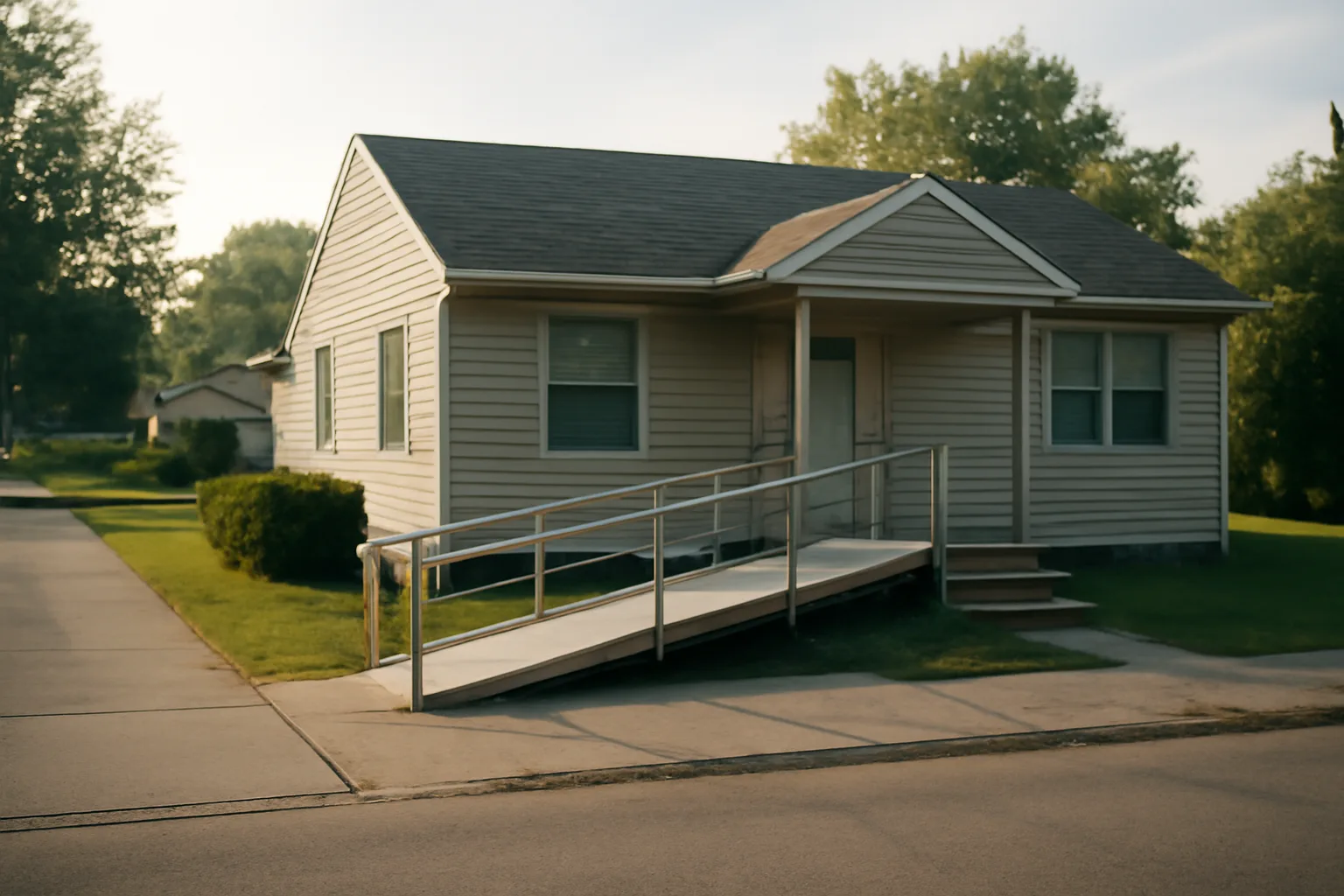
| ADA/accessibility modifications | $5,000-$40,000 | Ramps, grab bars, bathroom modifications | |
| Furnishings and equipment | $5,000-$25,000 | Beds, medical alert systems, kitchen equipment | |
| Liability and property insurance (first year) | $3,000-$15,000 | Varies by state, population, and bed count | |
| Staffing before first resident (training, orientation) | $2,000-$10,000 | Pre-opening wages and training costs | |
| Working capital reserve | 3-6 months of operating expenses | Covers the gap before steady private-pay or Medicaid reimbursement | The single biggest wildcard on this list is fire/life-safety. An older residential structure that needs a full sprinkler retrofit and a second means of egress can add six figures to a project that otherwise looked cheap on paper. Get a fire marshal or licensed contractor to walk the actual building before you budget anything else. |
Here's a rough breakdown of where the money goes for a small-to-mid-size group home startup. Treat every figure as a planning range; your state's fee schedule and your building's condition will move these numbers. | Cost category | Typical range | Notes |
Do I need to rent or own the property?
Either can work, and your state's licensing rules almost never require ownership, but each path changes your upfront cash need and your risk profile differently. Renting keeps your upfront cash need lower (typically a few thousand to $15,000 in deposits and first months' rent) and lets you exit more easily if the location doesn't work out. The tradeoff is landlord risk: many landlords are wary of licensed residential care uses, some local zoning ordinances add friction for rentals specifically, and you may need to negotiate specific lease language allowing the fire/life-safety modifications your license requires. Buying gives you control over modifications and eliminates landlord risk, but it means a down payment (often 10-25% of purchase price for commercial or investment-property financing) plus closing costs, and it locks up capital that could otherwise fund your operating reserve. Some operators use SBA 7(a) or 504 loans for owner-occupied commercial real estate, including licensed care homes, which can lower the down payment requirement compared to conventional commercial financing, though SBA loans still typically require a personal guarantee and a demonstrated ability to service the debt. Whichever you choose, get your state licensing agency's physical plant requirements in writing before you lease or buy. A gorgeous house that fails minimum square-footage-per-resident or egress rules is not a bargain.
What ongoing costs come after the doors open?
Startup cash is only half the picture. Group homes have real recurring costs that new operators sometimes underestimate. Staffing is almost always the largest ongoing line item, frequently more than half of total operating costs, because most state licensing rules require minimum awake-staff ratios around the clock, more than during business hours. Payroll taxes, workers' compensation insurance, and staff turnover/retraining costs stack on top of base wages. Insurance renews annually and tends to climb as claims history builds; general liability, professional liability, and property coverage are typically all required by your license, not optional add-ons. Food, utilities, and supplies scale with your census (number of residents), so a home running below capacity still pays close to full utility and staffing costs while collecting revenue from fewer beds, which is why cash flow modeling before opening matters so much. Relicensing and continuing education also cost money every year, license renewal fees, required annual staff training hours, and periodic re-inspection fees are recurring, not one-time. Build these into your model from day one rather than discovering them at renewal time.
Can I get financing or grants to start a group home?
Traditional small business financing is more available than most first-time operators expect, though nobody should count on grants as a primary funding source. SBA loans (7(a) and 504 programs) are the most commonly used financing route for group home real estate and startup costs, because they're designed for exactly this kind of owner-occupied commercial property and small business purchase. Conventional bank loans and credit union commercial loans are also options, especially for operators with existing real estate or other collateral. Some states run small business development or disability services grant programs aimed at increasing residential care capacity, but these are typically limited, competitive, and specific to a population (often IDD or mental health) rather than general-purpose startup funding. There is no standing federal grant program that funds private group home startups; check your specific state's health and human services department for anything currently open rather than assuming one exists. Medicaid provider status is not financing, it's a reimbursement relationship that starts only after you're licensed and have residents, so it doesn't help with startup cash, but it's worth building your Medicaid enrollment timeline into your financing conversations with lenders since it affects your revenue ramp.
What's the fastest way to get an accurate cost estimate for my state?
Pull three documents before you spend a dollar: your state's residential care/group home licensing statute and administrative rules, the current fee schedule published by your licensing agency, and a written quote from a local fire marshal or life-safety contractor who's actually walked your building. Those three documents, combined with a realistic staffing plan built against your state's required staff-to-resident ratio, will get you within a reasonable range of your true startup number faster than any generic online calculator. Every state licensing agency publishes this information; it's a matter of finding the right department (often called Health and Human Services, Department of Social Services, or a state-specific Office of Long-Term Care or Developmental Disabilities Services) and reading the actual regulation text, not a summary blog post. This is also the point where a lot of first-time operators either lose weeks digging through unfamiliar state code or pay a licensing consultant a few thousand dollars for guidance. A structured, state-specific packet, like GroupHomePath's $299 State Group Home Licensing Kit, is built to shortcut that research phase: it maps your state's actual application steps, required policy topics, and fee categories so your budget conversation with a lender or partner starts from real numbers instead of guesses. Explore the licensing kit builder to see what's covered for your state.
Frequently asked questions
What is assisted living?
Assisted living is residential care for adults, usually seniors, who need help with daily activities like bathing, dressing, and medication reminders but don't need full-time skilled nursing care. Residents typically live in their own room or apartment with access to shared meals, activities, and 24-hour staff support. States, not the federal government, set licensing rules for assisted living.
What is a group home?
A group home is a licensed residential setting, usually a house in a regular neighborhood, where a small number of people (often adults with intellectual/developmental disabilities, mental illness, or recovery needs) live together with paid staff support. States license these under various names, adult foster care, ICF/IID, residential care, depending on the population served and the agency involved.
What is an assisted living facility?
An assisted living facility is the licensed building and program that delivers assisted living services: help with daily activities, meals, medication management, housekeeping, and 24-hour staff availability. It's licensed by the state where it operates, and the exact scope of services allowed is defined by that state's licensing regulations, not a national standard.
What is the difference between assisted living and a nursing home?
Assisted living helps with daily activities like bathing and dressing but isn't a medical facility. Nursing homes provide 24-hour skilled nursing care under federal staffing rules requiring licensed nursing staff around the clock and an RN at least 8 hours daily, per 42 CFR 483.35. Nursing homes serve people with more complex medical needs.
Does Medicare cover assisted living facilities?
No. Medicare does not cover assisted living room, board, or personal care costs; Medicare.gov classifies this as custodial long-term care, which Medicare excludes in most cases. Medicare may cover specific medical services (doctor visits, therapy) received while living in assisted living, but not the facility's monthly rate.
How do I start a group home?
Pick your population and license category, confirm local zoning allows it, get your state's actual licensing application and fee schedule, secure and inspect a building for fire/life-safety compliance, write required policies and procedures, hire and background-check staff, then apply for licensure and schedule your opening inspection. Most operators take 6-12 months start to finish.
How much do you need to start a group home?
Realistic ranges run from about $15,000-$40,000 for a small rented home needing minimal modification, up to $75,000-$150,000 with fire/life-safety upgrades, and $250,000-$500,000+ for purpose-built or larger licensed homes. Real estate, fire code compliance, and 3-6 months of operating reserve drive most of the variation.
Do I need a special license to open a group home?
Yes. Every state requires a specific residential care license (the category depends on the population you serve, such as adult foster care, ICF/IID, or assisted living licensure), issued by a state health, social services, or disability services agency. Operating without this license, even a small home, is illegal in every state.
Can I use Medicaid to pay for group home care I provide?
In many states, yes, through Medicaid Home and Community-Based Services (HCBS) waivers authorized under Section 1915(c) of the Social Security Act, which can cover personal care and support services in a licensed group home setting. Room and board typically still comes from the resident's own income, and you need a separate Medicaid provider agreement beyond your basic license.
What's the difference between a group home and assisted living facility?
They overlap conceptually but differ in typical population and licensing category. Group home usually refers to smaller residential settings for people with IDD, mental illness, or recovery needs, licensed under disability or behavioral health rules. Assisted living facility usually refers to senior-focused residential care licensed under aging services or health department rules, though states' actual terminology varies.
How long does it take to get a group home license?
Most states take 60-180 days from application submission to license issuance, assuming your building passes fire marshal and health inspections without major rework needed. Add several more months if construction, zoning approval, or Medicaid provider enrollment is involved. Check your specific state licensing agency's published processing timeline.
Is starting a group home a good investment?
This depends entirely on your state's reimbursement rates, local demand, your operating costs, and your own management capacity; there's no universal answer, and anyone promising guaranteed returns is not being straight with you. Build a real 12-month cash flow model using your state's actual fee schedule and staffing ratio requirements before committing capital.
Do group homes need to meet ADA requirements?
Yes, in most cases. Group homes and assisted living facilities are generally subject to the Fair Housing Act and, depending on size and structure, ADA accessibility requirements for common areas and paths of travel. Specific requirements (ramp grades, bathroom clearances, door widths) vary by state building code, so confirm with your state licensing agency and a local building inspector.
Sources
- Medicaid.gov, Home & Community Based Services: States regulate assisted living individually and HCBS waivers can cover services in these settings
- eCFR, 42 CFR 483.35 Nursing services: Federal nursing home staffing requirement for licensed nursing staff 24/7 and RN coverage at least 8 hours daily
- Medicaid.gov, Home & Community Based Services 1915(c): 1915(c) HCBS waivers authorize Medicaid coverage of personal care/support services, room and board generally excluded
- Medicare.gov, What Medicare Covers: Medicare does not cover long-term custodial care in most cases, including assisted living
- 42 U.S.C. 3604(f)(3)(B), Fair Housing Act reasonable accommodation provision: The Fair Housing Act requires reasonable accommodation in rules, policies, practices, or services necessary for people with disabilities to use and enjoy a dwelling, a provision applied to local zoning decisions on group homes