Last updated 2026-07-25
TL;DR
You get a group home license by contacting your state's licensing agency (usually health or social services), completing pre-licensure training, submitting a program description and staffing plan, passing a fire and building inspection, and paying a licensing fee. Timelines run 3 to 12 months depending on the state and population served (IDD, mental health, or senior residential care).
What is a group home?
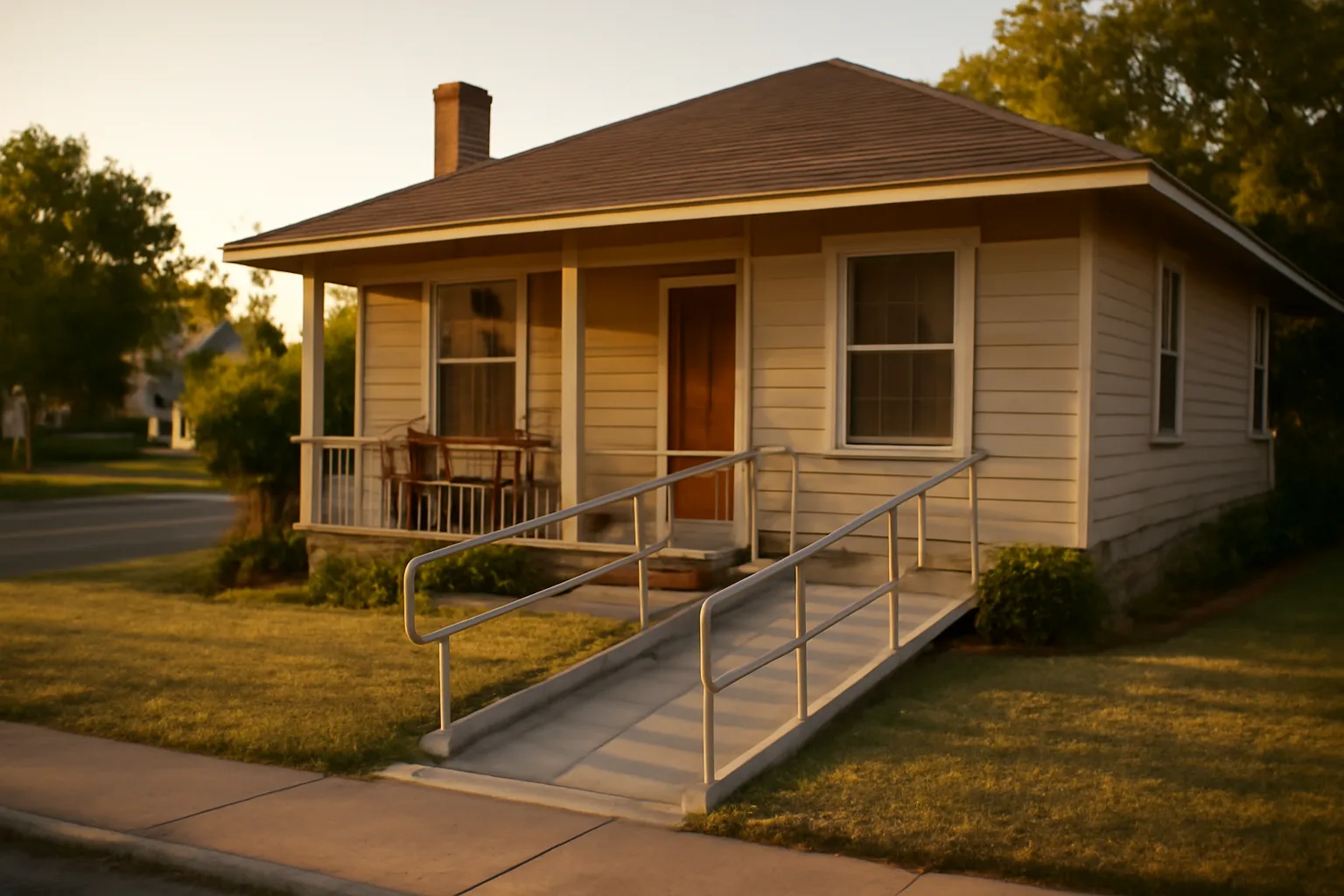
A group home is a licensed residential setting where a small number of unrelated people, usually between 4 and 16 depending on the state, live together and receive supervision, personal care, or behavioral support from paid staff. Group homes serve different populations: people with intellectual or developmental disabilities (IDD), people in mental health or substance use recovery, and in some states, seniors who need help with daily activities but not skilled nursing care. The legal name for this license varies a lot by state. You might apply for an "adult foster care home" license, a "community residential facility" license, an "intermediate care facility" (ICF/IID) certification, or an "assisted living facility" license depending on who you serve and which state you're in. This is the single biggest source of confusion for new operators. There is no single national "group home license." Each state's health department, department of social services, or department of aging runs its own program with its own rules [1]. Most group homes are staffed around the clock or close to it, distinguishing them from a boarding house or a sober living house that offers no paid supervision. If staff give medication, help with bathing or toileting, or manage behavioral crises, you almost certainly need a license, more than a rental agreement.
What is assisted living, and how is it different from a group home?
Assisted living is a licensed care model for adults, usually seniors, who need help with activities of daily living like bathing, dressing, or medication management, but don't need the round-the-clock skilled nursing care a nursing home provides. An assisted living facility (sometimes called residential care facility for the elderly, or RCFE, depending on the state) is the building and program licensed to deliver that care [2]. A group home and an assisted living facility can overlap in practice. Small assisted living homes are sometimes called "residential assisted living" or "group homes for seniors," but the licensing category and rules differ. Assisted living rules focus heavily on aging-in-place, medication assistance, and dementia care unit requirements. Group home rules for IDD or mental health populations focus more on behavior support plans, individual service plans, and staff training in de-escalation. If you're deciding which population to serve, read our breakdown of assisted living facilities and how that license differs from IDD or mental health group home licensing, since the application, staffing ratios, and inspection checklist are not interchangeable.
What does assisted living provide that a nursing home doesn't?
Assisted living provides help with daily living activities (bathing, dressing, meals, medication reminders), social activities, and light housekeeping, in a residential setting that looks and feels like a home or apartment. A nursing home (skilled nursing facility) provides 24-hour licensed nursing care, rehabilitation therapy, and medical treatment for people with more complex health needs [3]. The practical difference an operator needs to know: assisted living staff are typically certified nursing assistants, medication aides, or direct support professionals, not registered nurses providing skilled treatment. Nursing homes must have a registered nurse on duty for at least 8 consecutive hours a day, 7 days a week, and licensed nursing coverage 24 hours a day, under federal nursing home requirements [4]. Assisted living has no equivalent federal staffing mandate. States set their own minimums, which is exactly why assisted living licensing rules vary so much state to state. If a resident's needs progress to requiring skilled nursing, ventilator care, or complex wound care, most assisted living licenses require the operator to either get additional waivers or discharge the resident to a nursing home. Know your state's "scope of care" limits before you accept a resident who may age past what your license allows.
Does Medicare cover assisted living facilities?
No. Medicare does not cover the cost of room and board or personal care in an assisted living facility. Medicare Part A and Part B pay for medically necessary services like doctor visits, hospital stays, and short-term skilled nursing care after a qualifying hospital stay, but they do not pay for long-term custodial care or the monthly cost of living in a group home or assisted living residence [5]. Medicaid is different. Many states cover home and community-based services (HCBS) in group home and assisted living settings through Medicaid waivers, which can pay for personal care, supervision, and case management, though most waivers still don't cover room and board itself [1]. This distinction matters enormously for your business model. If you're planning to rely on Medicaid waiver reimbursement, you need a separate Medicaid provider enrollment process on top of your state license, and the rates and covered services differ by state and by waiver. Operators building a funding plan around Medicaid should read CMS's home and community-based services page directly before assuming a waiver will cover a specific cost, and should talk to their state Medicaid agency early, before signing a lease or buying property.
How do I start a group home? (The step-by-step order)
Starting a group home follows a fairly consistent order across states, even though the specific forms and agency names differ. Here's the sequence most licensing agencies expect, roughly in order: 1. Pick your population and license type (IDD, mental health, adult foster care, or assisted living/RAL) and identify the exact state agency that licenses it. This is usually the department of health, department of social services, or department of developmental disabilities, confirm with your state licensing agency since names vary. 2. Check zoning and local occupancy rules for your property before you lease or buy. A residential zone that allows single-family use doesn't automatically allow a licensed group home; some states have fair housing protections that limit local zoning restrictions on group homes, but local fire and occupancy codes still apply. See our guide on assisted living at home for how zoning questions come up for smaller residential settings. 3. Complete any required pre-licensure orientation or training. Many states require the prospective administrator or licensee to attend an orientation session or complete specific training hours before the application is even accepted. 4. Write your program description, policies and procedures manual, and staffing plan. This usually includes admission criteria, resident rights, medication management policy, emergency procedures, and a staffing schedule that meets minimum ratios. 5. Submit the license application with required attachments: floor plan, fire marshal approval, background check clearances for all staff and household members, proof of financial capacity, and the application fee. 6. Pass your fire safety inspection and building/health inspection. Both usually happen before a license is issued, not after. 7. Pass the licensing agency's pre-operational survey or site visit. 8. Receive your provisional or initial license, then apply separately for Medicaid provider enrollment if you plan to accept Medicaid-funded residents. Timelines vary widely. Some states process straightforward adult foster care applications in 60 to 90 days, while ICF/IID certification or facilities requiring a Certificate of Need can take 6 to 12 months or longer. Budget time, more than money.
How do I apply: what documents does the license application actually require?
Every state application asks for some version of the same core documents, even though the exact form numbers differ. Expect to prepare: - A completed license application form, signed by the owner/operator
- Proof of ownership or a signed lease for the property
- A fire safety inspection report or fire marshal sign-off
- A local building or health department inspection approval
- Criminal background check results (often through a state or FBI fingerprint system) for the operator, administrator, and all direct care staff
- A staffing plan showing shift coverage, staff-to-resident ratios, and required credentials
- Policies and procedures covering medication administration, emergency and disaster planning, resident rights, grievance procedures, and infection control
- Proof of financial capacity to operate (this can be a bank statement, business plan, or bond depending on the state)
- The licensing fee itself Most states also require a designated administrator or program director to hold a specific credential, sometimes a state-issued administrator license, sometimes just documented training hours, before the facility license is approved. If you're the owner and the administrator, this credential requirement can be the slowest part of the timeline since some states require exam scheduling months in advance. Our licensing kit builder organizes these documents by state and population type, since the difference between an IDD program description and an assisted living program description is significant enough that copying one state's template into another usually gets an application rejected on first review.
What staffing does a licensed group home need?
Staffing requirements depend on the population and the state, but nearly every state sets a minimum staff-to-resident ratio, required background checks, and mandatory training hours before staff can work unsupervised. A mental health or IDD group home commonly requires at least one direct care staff awake and present at all times, with higher ratios during waking hours and for residents with higher support needs. Required training typically includes CPR and first aid certification, medication administration training (if staff will administer medication), abuse and neglect reporting, and de-escalation or behavior support training specific to the population served. Many states require a set number of orientation hours, commonly somewhere between 8 and 40 hours, before a new hire can work independently, confirm exact hours with your state licensing agency since this varies significantly. Don't understaff to save money during your first inspection cycle. Licensing surveyors check timecards against your posted schedule and resident census. A ratio violation found in your first survey creates a paper trail that follows you into every renewal inspection after that.
How much does it cost to get a group home license?
Licensing fees themselves are usually modest, often in the range of a few hundred to a couple thousand dollars for the state application fee, but that's a small fraction of what it actually costs to open. The real costs are property (purchase or lease of a home meeting fire and accessibility code), renovations to meet fire and life-safety code (sprinklers, exit signage, ADA-compliant bathrooms), staffing before you have paying residents, insurance, and background check fees for every employee. Because exact license fees, surety bond amounts, and renovation code requirements differ by state and even by county fire jurisdiction, confirm current fee schedules directly with your state licensing agency's fee page before budgeting. Treat any number you see online, including ranges in this article, as a starting estimate, not a quote. A realistic financial plan separates one-time startup costs (property, renovation, license fee, initial staffing) from ongoing costs (payroll, food, utilities, insurance renewal, continuing education). Undercapitalized operators are the most common licensing failure we see reported anecdotally by state ombudsman offices. The home passes its first inspection, then can't sustain staffing ratios once real occupancy and real behavioral needs show up.
What happens during the licensing inspection?
The pre-licensure inspection (sometimes two separate inspections: fire/life-safety and health/program compliance) checks that your physical building and your paperwork match what you submitted in your application. Inspectors typically check exits and exit signage, smoke detectors and fire extinguishers, water heater temperature (many states cap it around 120°F to prevent scalding), medication storage and locked cabinets, resident bedroom square footage minimums, and posted emergency evacuation plans. They will also review your personnel files: background check clearances, training certificates, and TB test or health screening results for staff, since a missing document in a personnel file is one of the most common citation types at initial licensure. Bring physical copies of everything to the inspection even if you already submitted digital copies. Inspectors often want to see the original signed forms on site. A failed inspection isn't usually a fatal denial. Most states issue a correction plan with a deadline (commonly 30 to 60 days) to fix cited deficiencies before a re-inspection. What kills applications is missing the correction deadline, not the initial citation itself.
What is a group home license renewal, and how often do I need to renew?
Most states issue an initial license for one year, then require annual or biennial renewal with its own inspection, fee, and updated documentation (current background checks, updated staffing roster, updated policies). Some states use a provisional or probationary license for the first 6 to 12 months before granting a standard multi-year license once you've demonstrated compliance. Renewal inspections are usually less intensive than the initial survey but still check the same core categories: fire safety, staffing ratios, medication management, and resident records. Complaint-driven inspections can happen at any time between renewals if a resident, family member, or staff member files a report with the licensing agency, so ongoing compliance matters more than passing the one big initial inspection. Keep a compliance calendar. Missed renewal deadlines, expired staff background checks, and lapsed fire inspection certificates are the most common reasons an operating home gets a licensing hold or provisional status, not dramatic care failures.
Frequently asked questions
What is assisted living?
Assisted living is a licensed residential care model for adults who need help with daily activities like bathing, dressing, and medication management, but who don't need the 24-hour skilled nursing care a nursing home provides. It combines housing, personal care, meals, and supervision in a home-like or apartment-style setting [2].
What is a group home?
A group home is a licensed residential setting where a small number of unrelated people live together with paid staff providing supervision, personal care, or behavioral support. Group homes serve people with intellectual/developmental disabilities, mental health conditions, substance use recovery needs, or seniors, depending on the state license category [1].
What is an assisted living facility?
An assisted living facility is the licensed building and program that delivers assisted living services: personal care help, medication assistance, meals, and social activities for adults who need support but not skilled nursing. Licensing names vary by state, some call it a residential care facility for the elderly (RCFE) [2].
What is the difference between assisted living and a nursing home?
Assisted living provides help with daily activities in a residential setting with no federal nursing staffing mandate. A nursing home provides 24-hour skilled nursing care and must have a registered nurse on duty at least 8 consecutive hours daily under federal requirements [4]. Nursing homes serve people with more complex medical or rehabilitation needs.
Does Medicare cover assisted living facilities?
No. Medicare does not pay for room, board, or personal care in an assisted living facility. It covers medically necessary services like hospital stays and short-term skilled nursing after a qualifying hospitalization, not long-term custodial care [5]. Some state Medicaid programs cover services (not room and board) through HCBS waivers [6].
How do I start a group home?
Pick your population and license type, confirm zoning, complete required pre-licensure training, write your program description and staffing plan, submit your application with background checks and a fire inspection, pass the site survey, then receive your license. Timelines commonly run 60 days to a year depending on the state and license type.
How long does it take to get a group home license?
It varies by state and license type. Simpler adult foster care or small group home applications can process in about 60 to 90 days in some states, while facilities requiring a Certificate of Need or ICF/IID certification can take 6 to 12 months or more. Confirm current timelines with your state licensing agency.
What credentials does a group home administrator need?
Most states require the administrator or program director to complete specific training hours or hold a state-issued administrator credential before the facility license is approved. Some states also require a separate exam. Requirements differ significantly by state and by population served, confirm with your licensing agency.
Can I run a group home out of my own house?
In many states, yes, this is the basis of adult foster care and small assisted living home licenses, but you still need the license, a passing fire and health inspection, and compliance with local zoning. Not all residential zones automatically permit a licensed group home; check local zoning before committing to a property.
What is the staff-to-resident ratio for a group home?
Ratios vary by state and by resident support needs, but most states require at least one awake direct care staff member present at all times, with higher ratios during waking hours or for residents needing more support. Confirm exact required ratios with your state licensing agency, since they differ by population type.
Do I need a separate Medicaid enrollment to accept Medicaid residents?
Yes. Getting your state operating license does not automatically enroll you as a Medicaid provider. You must separately apply through your state Medicaid agency, and coverage for group home services typically runs through a home and community-based services (HCBS) waiver, which covers services but often not room and board [6].
What's the difference between a group home and assisted living licensing category?
A group home license usually covers IDD, mental health, or adult foster care populations with a focus on behavior support and individual service plans. An assisted living license covers seniors needing help with daily activities, with rules focused on medication management and aging-in-place. The application forms, ratios, and inspection checklists differ.
Sources
- Medicaid.gov, Home & Community Based Services: Group home licensing categories and community-based service definitions vary by state agency
- Medicare.gov, Assisted Living Facilities: Assisted living provides personal care support distinct from skilled nursing facility care
- Medicare.gov, Skilled Nursing Facility Care: Nursing homes provide 24-hour skilled nursing and rehabilitation care distinct from assisted living
- 42 CFR § 483.35, Nursing Services requirements: Nursing homes must provide licensed nursing services and RN coverage at least 8 consecutive hours a day, 7 days a week
- Medicare.gov, What Part A Covers: Medicare does not cover long-term custodial care or room and board in assisted living