Last updated 2026-07-25
TL;DR
To start a group home for veterans in Georgia, you generally need to license as a Personal Care Home (or larger assisted living community) through the Georgia Department of Community Health, secure zoning approval, meet staffing and life safety codes, and set up admission agreements. Veteran-specific funding usually comes through VA programs, not a separate state veteran license.
What is a group home, exactly?
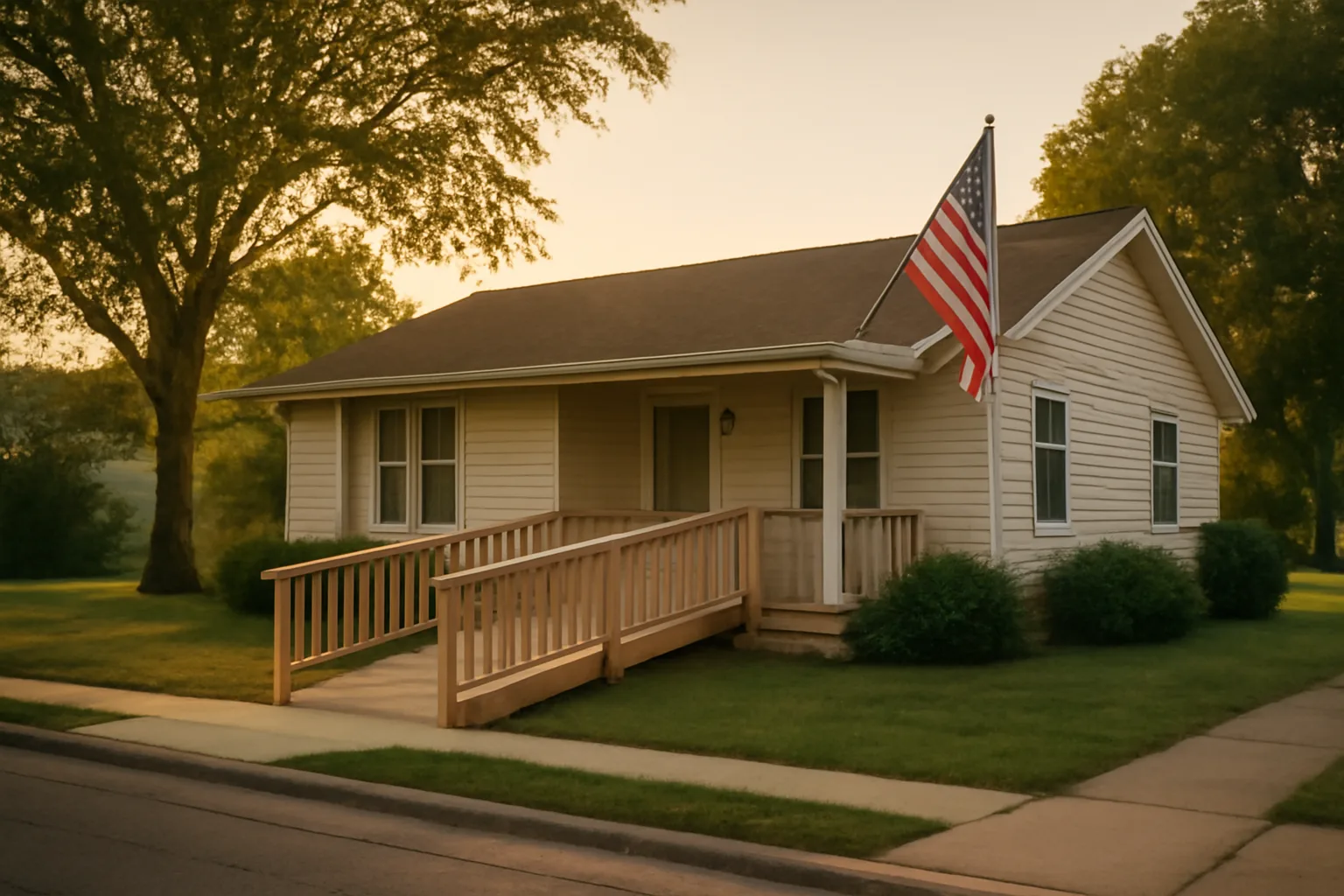
A group home is a residential setting, usually a house or small facility, where people who need support with daily living share a home and receive supervision or personal care from staff. It's not a hospital and it's not a nursing home. Think of it as a step between fully independent living and a skilled nursing facility. For veterans specifically, group homes usually serve people dealing with service-connected disabilities, aging-related frailty, PTSD, traumatic brain injury, substance use recovery, or a combination of those. Some homes market themselves specifically to veterans and lean into VA referral relationships, peer support culture, and staff who understand military background. But legally, in Georgia, there's no separate "veteran group home license." You license under the same categories that apply to any personal care home or assisted living operation, then you build veteran-specific programming and referral pipelines on top of that base license. This matters because a lot of people searching "how to start a group home for veterans" assume there's a distinct VA licensing track. There isn't, at least not at the state level. The VA does have its own contracting and certification requirements if you want to participate in VA programs like the Medical Foster Home program or community residential care, but your state license is the foundation everything else sits on.
What is assisted living in Georgia's regulatory framework?
Assisted living in Georgia is regulated as a distinct license category, separate from and above personal care homes, under the Georgia Department of Community Health (DCH), Healthcare Facility Regulation Division. Georgia law defines an "assisted living community" as a facility that provides at minimum a certain level of care, including assistance with activities of daily living plus limited nursing-related services beyond what a basic personal care home offers [1]. Georgia's rules, found under Chapter 111-8-63 for assisted living communities and Chapter 111-8-62 for personal care homes, spell out staffing ratios, resident assessment requirements, medication management rules, and physical plant standards [2] [3]. If your veteran group home plans to accept residents who need help with two or more activities of daily living, or who need medication administration beyond self-administration, you likely need the assisted living community license rather than the more basic personal care home license. The practical difference: personal care homes handle lighter supervision and ADL assistance, assisted living communities handle a higher acuity population and carry more nursing oversight requirements. Pick the wrong category and you'll either be under-licensed for the residents you actually serve (a compliance and liability problem) or over-built for a lighter-need population (an unnecessary cost problem).
What is an assisted living facility versus a personal care home?
An assisted living facility (the more common national term, called an "assisted living community" under Georgia code) is licensed to provide a broader scope of personal and health-related services than a personal care home. Georgia's Rules for Assisted Living Communities require an on-site awake night staff person, specific staffing ratios tied to resident acuity, and expanded medication management capability compared to personal care homes [2]. A personal care home in Georgia, by contrast, is defined in state rule as a facility that provides housing, food service, and one or more personal services for two or more adults who are not related to the owner or administrator [3]. Personal care homes are the more common entry point for smaller, home-style operations, including many veteran-focused group homes that start in a single-family residence with 6 to 10 beds. Here's the practical decision point: if you're picturing a house with 4-8 beds, house-parent-style staffing, and residents who are largely independent but need supervision, medication reminders, and a stable structured environment, personal care home licensure is probably the right lane. If you're picturing a larger community with dedicated nursing oversight and residents who need more hands-on ADL help, assisted living community licensure is the right lane. Call the DCH Healthcare Facility Regulation Division directly and describe your intended resident population before you pick; they can tell you which category applies to your model [4].
What is the difference between assisted living and a nursing home?
Assisted living and nursing homes differ in medical acuity, staffing, and regulatory oversight. Nursing homes (called skilled nursing facilities) are licensed to provide 24-hour skilled nursing care, are certified for Medicare and Medicaid reimbursement of that skilled care, and are regulated under both state licensure and federal Conditions of Participation enforced by the Centers for Medicare & Medicaid Services (CMS) [5]. Assisted living, including Georgia's assisted living communities and personal care homes, is a state-only licensed category. There's no federal Medicare certification for assisted living because Medicare does not pay for the custodial, non-skilled care that defines assisted living [4]. Nursing homes have registered nurses on staff around the clock in most cases and handle things like wound care, IV therapy, and rehab after surgery. Assisted living and personal care homes handle daily supervision, help with bathing and dressing, medication reminders, and meals, but not ongoing skilled medical treatment. For a veteran group home, this distinction decides your ceiling. If a resident's needs escalate to requiring skilled nursing care, hospice-level symptom management, or ventilator support, that resident generally needs to transition out of a personal care home or assisted living community and into a nursing facility. Your admission agreement and discharge policy need to spell out exactly what triggers that transition, because Georgia's rules require facilities to discharge or transfer residents whose needs exceed the facility's licensed scope of care [3].
What does assisted living provide day to day?
Assisted living provides help with activities of daily living (bathing, dressing, toileting, mobility, eating), medication management or administration, three meals a day plus snacks, housekeeping and laundry, social and recreational activity, and 24-hour staff supervision. It does not typically provide ongoing skilled nursing care, physical therapy under a treatment plan, or hospital-level monitoring. For a veteran-focused group home, day-to-day operations usually add a few things on top of the baseline: coordination with VA case managers, transportation to VA medical appointments, peer support groups (sometimes run by other veterans or by staff with military or first-responder background), and PTSD-informed or trauma-informed staff training. None of these are required by Georgia's licensing rules, but they're what separates a generic personal care home from one that genuinely serves veterans well. Georgia's personal care home rules require a written program of activities appropriate to residents' needs and interests [3]. If your population is veterans, your activity plan should reflect that, and inspectors will look for evidence the plan is actually followed, more than written down and shelved.
How do I start a group home in Georgia, step by step?
Starting a group home in Georgia follows roughly the same sequence whether or not you focus on veterans, with the veteran-specific work layered on afterward. Here's the order that causes the fewest expensive mistakes: 1. Decide your license category (personal care home vs. assisted living community) based on the acuity of residents you intend to serve [2] [3]. 2. Confirm zoning before you sign a lease or purchase a property. Group homes for unrelated adults with disabilities are protected under the federal Fair Housing Act, but local zoning still governs things like occupancy limits, parking, and whether the use is permitted by right or requires a conditional use permit. Check with your county or city planning department directly [6]. 3. Form your business entity (LLC or corporation) and get an EIN from the IRS. 4. Line up your physical plant. Georgia's rules specify minimum square footage per resident, bedroom occupancy limits, bathroom-to-resident ratios, and fire and life safety requirements tied to the National Fire Protection Association's Life Safety Code [2] [3]. 5. Get your fire marshal inspection and any required building/health inspections before you apply for licensure, since DCH requires these clearances as part of the application packet. 6. Write your policy and procedure manual: admissions criteria, medication management, staffing plan, emergency preparedness, resident rights, grievance procedures, and discharge criteria. This is the single most time-consuming piece for first-time applicants, and it's also the piece where a licensing kit or template saves the most hours, since Georgia's application expects specific policy sections in specific formats. 7. Submit your license application to the DCH Healthcare Facility Regulation Division along with the required fee (confirm current fee amount with DCH, as fee schedules are updated periodically) [4]. 8. Pass your pre-licensure inspection. DCH surveyors will walk the physical plant, review your policy manual, and check staff files and training records. 9. Hire and train staff, including required background checks through the Georgia Bureau of Investigation and a national fingerprint-based check where required by rule [3]. 10. Once licensed, build your veteran referral pipeline: reach out to your regional VA medical center's social work or homeless veteran outreach staff, register with your state veterans service office, and consider whether you want to pursue VA per diem contracts or Medical Foster Home participation, which involve separate VA-level applications on top of your state license. Timelines vary a lot by county (zoning and fire marshal scheduling are the usual bottlenecks), so budget several months from decision to opening day, not weeks.
Does Medicare cover assisted living facilities or group homes?
No. Medicare does not cover the cost of room, board, or personal care in assisted living facilities, personal care homes, or group homes. Medicare.gov states plainly that Medicare "doesn't cover long-term care (also called custodial care)" if that's the only care a person needs, and custodial care is exactly what assisted living and personal care homes provide [7]. Medicare Part A may cover a short stay in a skilled nursing facility after a qualifying hospital stay, and Medicare Part B may cover doctor visits, some therapy, and medical equipment for a resident living in a group home, but none of that pays for the facility's room and board or personal care services [7]. For veterans, this is where the funding conversation gets more interesting than it does for the general senior population. VA Aid and Attendance benefits, VA per diem payments to contracted community residential care providers, and in some cases Medicaid waiver programs can help cover costs that Medicare won't touch. None of these are guaranteed and none are fast; families and operators both need to plan around waiting periods and eligibility documentation. Check current program rules directly with the VA and with Georgia's Medicaid agency rather than relying on secondhand summaries, since eligibility criteria and payment rates change .
What funding sources actually apply to a veteran group home?
Veteran group homes typically layer three funding sources: private pay, VA benefits, and in some cases Medicaid waiver programs. There is no dedicated "veteran group home" state Medicaid category in Georgia; residents access funding through the same general channels available to any personal care home or assisted living resident. Georgia's Medicaid program does not pay directly for room and board in personal care homes or assisted living communities, matching the federal restriction on Medicaid home and community-based waiver funds, which can pay for certain services but not room and board . Some states run a state-funded supplemental payment (often called an optional state supplement) that helps cover the gap for low-income residents in personal care homes; confirm with the Georgia Department of Community Health and the Department of Human Services whether such a supplement currently applies to your facility type and how to enroll as a provider [4]. On the VA side, Aid and Attendance is a pension benefit that qualifying wartime-era veterans (or their surviving spouses) can use toward the cost of assisted living or in-home care, but it's paid to the veteran or family, not directly contracted to the facility, so it functions as an enhanced private-pay source rather than a direct provider contract . Separately, the VA's Community Residential Care program and per diem contracts do involve direct agreements between the VA and approved residential care providers; if you want that revenue stream, you'll need to go through VA's own provider approval process, which sits on top of, not instead of, your state license.
How does zoning affect a veteran group home in Georgia?
Zoning determines whether your chosen property can legally operate as a group home, and it's one of the most common places first-time operators lose months. Group homes for people with disabilities, including many veteran residents with service-connected disabilities, are protected under the federal Fair Housing Act (42 U.S.C. § 3604), which prohibits zoning rules that treat a group home for people with disabilities less favorably than a similarly sized household of unrelated people [6]. That protection doesn't mean zoning doesn't apply at all. Cities and counties in Georgia can still enforce neutral rules about occupancy density, off-street parking, building code compliance, and separation distances between similar facilities, as long as those rules are applied evenhandedly. Some jurisdictions treat small group homes (typically under 6-8 residents) as a permitted single-family use by right, while larger facilities may need a conditional use permit or special exception. Before you sign a lease or make an offer on a property, call your county or city planning and zoning department and ask specifically: is a licensed personal care home or assisted living community a permitted use in this zoning district, and if not, what's the process and timeline for a conditional use permit? Get the answer in writing if you can. If you want a deeper walkthrough of how assisted living zoning fights typically play out, see our guide on assisted living facilities licensing basics, which covers zoning alongside the licensing sequence.
What staffing does Georgia require for a veteran group home?
Georgia's personal care home and assisted living community rules set minimum staffing requirements tied to resident count and acuity, along with training and background check requirements for direct care staff. Personal care homes must have staff "awake and on duty" 24 hours a day and must maintain a staff-to-resident ratio sufficient to meet residents' needs, with more specific ratios laid out for assisted living communities based on resident assessment scores [2] [3]. All direct care staff need a criminal background check, and Georgia law requires certain caregiving facilities to run checks through the Georgia Bureau of Investigation and, in many cases, a national fingerprint-based criminal history check for new employees with direct resident access [3]. Administrators of personal care homes and assisted living communities in Georgia must complete state-approved administrator training and, depending on facility size, may need to hold or employ someone with a specific administrator license or certification; confirm current administrator qualification requirements directly with DCH since these have been updated in past rule cycles [4]. For a veteran-focused home specifically, add training that isn't required by the state but matters for the population: trauma-informed care, PTSD awareness, de-escalation techniques, and familiarity with VA benefit systems so staff can help residents navigate paperwork. None of this is optional in practice even though it's optional on paper. A staff team that doesn't understand combat-related trauma will struggle with a veteran population, license or no license.
How do I write policies and pass inspection the first time?
Georgia's licensing inspection checks your physical plant against the Life Safety Code adopted by reference in DCH rules, reviews your written policies against the specific policy requirements in Chapter 111-8-62 (personal care homes) or 111-8-63 (assisted living communities), and audits a sample of resident and staff files for completeness [2] [3]. The policies DCH expects to see in writing include: admission and discharge criteria, medication management procedures, emergency and disaster preparedness plans, resident rights and grievance procedures, staffing plans and job descriptions, infection control procedures, and abuse/neglect reporting protocols. Missing or incomplete policies are one of the most common reasons first-time applicants get a deficiency citation rather than a clean pass. This is the part of the process where a lot of first-time operators either hire an expensive consultant or spend weeks reinventing policy language from scratch. A structured licensing kit built around your state's specific rule chapters (like the $299 State Group Home Licensing Kit at /licensing-kit-builder) gives you the policy templates, staffing plan structure, and application checklist mapped to Georgia's requirements, so you're editing for your specific home rather than starting from a blank page. It doesn't replace legal review of your final documents, and it won't get you approved faster than DCH's own review timeline, but it removes a lot of the guesswork on structure and content. Before your actual inspection, walk your own building with a copy of the applicable rule chapter in hand and check every room against it: exit signage, fire extinguisher placement and inspection tags, resident bedroom square footage, locked medication storage, posted evacuation plans. Surveyors are checking specifics, not vibes.
What's the real difference between assisted living and nursing home care for veterans?
For a veteran resident, the practical difference between assisted living/personal care home placement and nursing home placement comes down to medical need and funding path, more than comfort level. A veteran who is largely independent but needs supervision, medication reminders, and a stable home environment (common with PTSD, mild TBI, or early-stage dementia) fits an assisted living or personal care home model. A veteran who needs daily skilled nursing intervention, wound care, or post-acute rehab needs a nursing home or the VA's own Community Living Center system. The VA operates its own network of Community Living Centers (the VA's term for nursing homes) separate from the state-licensed personal care home and assisted living system, and eligibility and placement into VA-operated facilities runs through VA channels, not state DCH licensure . If you're building a group home aimed at veterans, you're generally building for the assisted-living-acuity population, not the skilled nursing population, unless you also pursue a separate skilled nursing facility license, which is a much heavier regulatory lift under different DCH rule chapters entirely. Knowing this distinction up front keeps you from marketing your home to a population you're not licensed or staffed to serve, which is both a compliance risk and, more importantly, a real risk to resident safety.
Frequently asked questions
What is assisted living?
Assisted living is a residential care model for people who need help with daily activities like bathing, dressing, and medication management but don't need 24-hour skilled nursing care. It combines housing, meals, personal care assistance, and supervision in a home-like or campus setting, licensed at the state level rather than certified by Medicare.
What is a group home?
A group home is a residential setting where a small number of unrelated adults who need support live together with staff supervision and assistance. In Georgia, group homes serving adults are typically licensed as personal care homes or assisted living communities under Department of Community Health rules, not under a separate "group home" license category.
What is an assisted living facility?
An assisted living facility is a licensed residential care setting providing housing, meals, personal care assistance, and supervision for people who need help with daily living but not full-time skilled nursing care. Georgia's equivalent license category is called an "assisted living community," governed by DCH rule chapter 111-8-63.
What is the difference between assisted living and a nursing home?
Assisted living provides help with daily activities and supervision but not ongoing skilled medical care; nursing homes provide 24-hour skilled nursing care and are federally certified for Medicare/Medicaid reimbursement of that care. Medicare doesn't cover assisted living room and board, but it may cover short skilled nursing facility stays after a qualifying hospital admission.
Does Medicare cover assisted living facilities?
No. Medicare does not pay for room, board, or personal care in assisted living facilities or group homes, according to Medicare.gov, because that's considered custodial long-term care, which Medicare excludes. Medicare may still cover doctor visits, therapy, or short skilled nursing stays for a resident living in such a facility.
How do I start a group home in Georgia specifically for veterans?
Start by choosing the correct license category (personal care home or assisted living community) through the Georgia Department of Community Health, confirm zoning with your local planning department, build your physical plant to code, write required policy manuals, pass your licensing inspection, then build VA referral relationships and consider VA per diem or Community Residential Care contracts once your state license is active.
Is there a special Georgia license just for veteran group homes?
No. Georgia does not have a distinct license category for veteran-specific group homes. You license under the standard personal care home or assisted living community rules through the Department of Community Health, then layer veteran-specific programming, staff training, and VA referral partnerships on top of that base license.
How much does it cost to license a group home in Georgia?
Licensing fees change periodically, so confirm the current fee schedule directly with the Georgia Department of Community Health Healthcare Facility Regulation Division. Beyond the state fee, expect costs for property renovation to meet life safety code, fire marshal inspections, staff background checks, and policy manual development, which vary widely by property condition and facility size.
Can Medicaid pay for a veteran's stay in a Georgia group home?
Georgia Medicaid does not pay for room and board in personal care homes or assisted living communities directly, consistent with federal Medicaid rules that generally exclude room and board from home and community-based waiver payments. Some residents may access a state supplemental payment program; confirm current availability and eligibility with the Georgia Department of Community Health and Department of Human Services.
What VA programs help fund assisted living for veterans?
VA Aid and Attendance is a pension benefit paid to qualifying wartime veterans or surviving spouses that can be used toward assisted living costs. Separately, the VA's Community Residential Care program and per diem contracts involve direct agreements between VA and approved residential providers; both require separate VA-level applications beyond your state facility license.
What staffing ratios does Georgia require for personal care homes?
Georgia requires personal care homes to have staff awake and on duty 24 hours a day with ratios sufficient to meet residents' assessed needs, with more detailed ratio requirements for assisted living communities tied to resident acuity levels. Exact ratio numbers are specified in DCH rule chapters 111-8-62 and 111-8-63; confirm current requirements with DCH before finalizing your staffing plan.
Do zoning laws let me open a group home for veterans in any residential neighborhood?
Federal Fair Housing Act protections generally prevent zoning rules from treating small group homes for people with disabilities less favorably than similarly sized families, but local rules on occupancy, parking, and permit type still apply. Always confirm directly with your county or city planning department before committing to a property.
What's the difference between a personal care home and an assisted living community in Georgia?
Personal care homes handle lighter supervision and basic ADL assistance for residents with lower acuity needs, while assisted living communities are licensed for a broader scope including more nursing oversight, awake night staff, and expanded medication management for higher-acuity residents. The right category depends on the needs of the residents you intend to serve.
Sources
- Georgia Rules and Regulations for Assisted Living Communities, Ga. Comp. R. & Regs. 111-8-63: Assisted living community staffing, physical plant, and service scope requirements
- Georgia Rules and Regulations for Personal Care Homes, Ga. Comp. R. & Regs. 111-8-62: Personal care home definition, staffing, discharge, and policy requirements
- Centers for Medicare & Medicaid Services, Nursing Home Conditions of Participation: Nursing homes are subject to federal Conditions of Participation and Medicare/Medicaid certification
- Medicare.gov, Long-Term Care coverage: Medicare does not cover custodial long-term care such as assisted living room and board
- U.S. Department of Justice, Fair Housing Act, 42 U.S.C. § 3604: Federal Fair Housing Act protections apply to zoning treatment of group homes for people with disabilities
- U.S. Department of Veterans Affairs, Aid and Attendance benefits: VA Aid and Attendance is a pension benefit that can help cover assisted living costs for qualifying veterans
- Medicaid.gov, Home & Community-Based Services: Medicaid home and community-based waiver funds generally exclude room and board payments