Last updated 2026-07-25
TL;DR
RAL (residential assisted living) means small, home-like senior care settings, usually licensed as assisted living or adult foster care homes, that provide help with daily living but not skilled nursing. Median assisted living cost is $5,900/month nationally (Genworth, 2021). Medicare does not pay for room and board in these settings. Licensing runs through your state's aging or health department, not the federal government.
What is assisted living?
Assisted living is a licensed residential setting where people who need help with daily activities, bathing, dressing, medication reminders, meals, get that help while living in something closer to a home than a hospital. It sits between fully independent senior housing and a nursing home. Residents usually have their own room or apartment, and staff are on site but care is "non-skilled," meaning aides help with activities of daily living rather than administering IV medications or wound care that requires a nurse's judgment. There is no single federal definition. Each state writes its own assisted living statute and licenses facilities under names like "assisted living facility," "residential care facility for the elderly," "personal care home," or "community-based residential facility." The Centers for Medicare & Medicaid Services (CMS) itself notes that "assisted living communities are licensed and regulated by individual states" [1], which is why the rules for staffing ratios, admission criteria, and medication assistance vary so much depending on where you operate. Most residents are older adults, though some states license assisted living for adults with disabilities too. The National Center for Health Statistics found that in 2018 there were about 28,900 residential care communities in the U.S. with about 996,100 licensed beds [2], a useful baseline if you're trying to size a market before you write a business plan.
What is a group home?
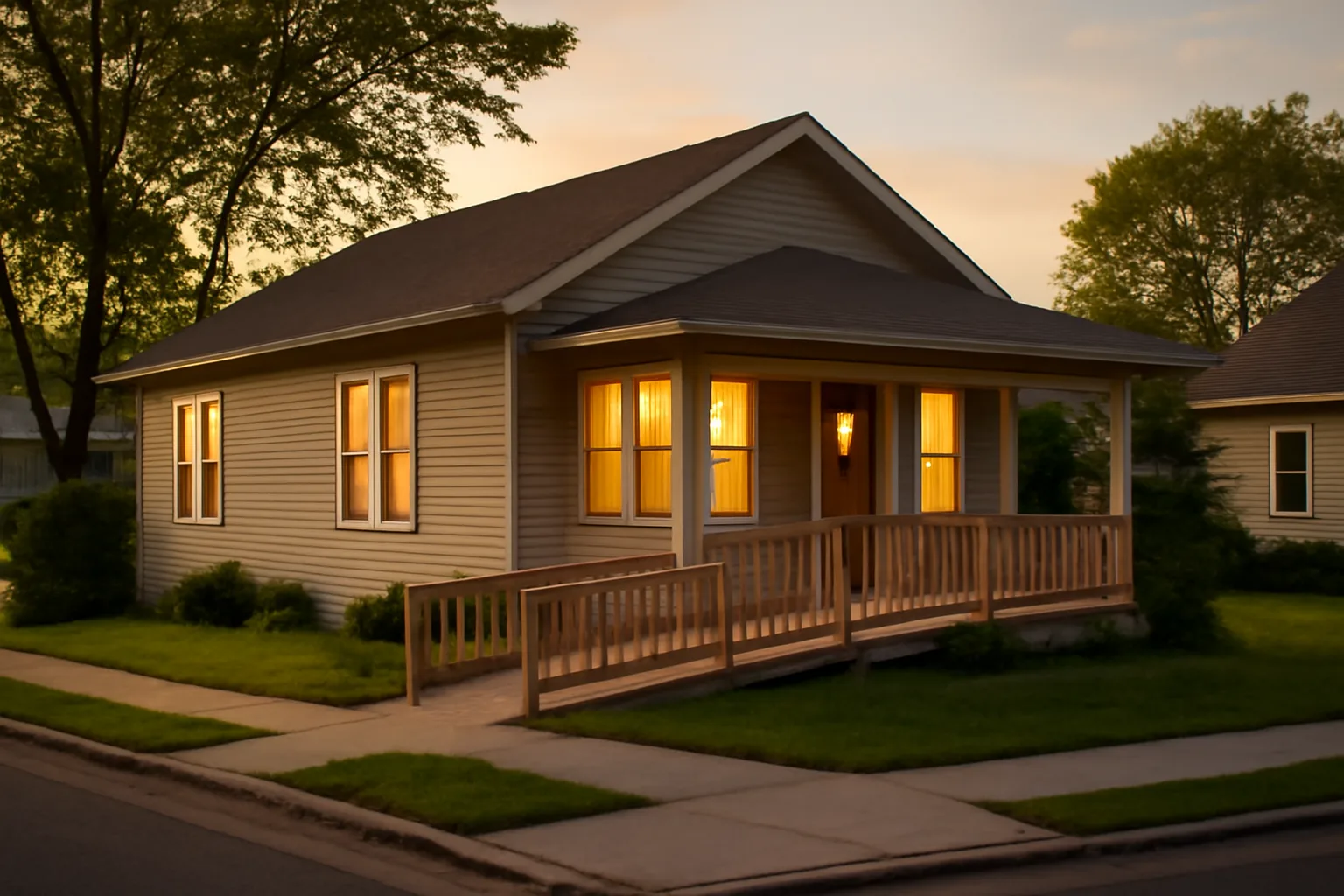
A group home is a small residential setting, often a single-family house, where a handful of unrelated residents live together and receive support from paid staff. The term gets used loosely, but in licensing language it usually means fewer beds (commonly 4 to 10) than a large assisted living building, and it can serve different populations: people with intellectual or developmental disabilities, people in mental health recovery, or seniors needing personal care. RAL (residential assisted living) is essentially the senior-focused version of the group home model, built small on purpose. Instead of a 100-bed building with a commercial kitchen and an activities director, an RAL home might be a 6,000-square-foot house on a residential lot with 8 to 12 residents and a home-style dining room. The appeal is a lower staff-to-resident ratio, a quieter environment, and (often) a lower buildout cost per bed than a purpose-built facility. Because "group home" isn't a licensing category in most states, you have to find out what your state actually calls the license you need. If you're planning to serve seniors, that's typically an assisted living license or, in states like Michigan, Oregon, and others, an adult foster care license used across all ages. If you're planning to serve adults with IDD, you may need a separate provider certification through your state's Medicaid waiver agency in addition to (or instead of) a residential license. Check the assisted living facility requirements for your state before you assume RAL and group home licensing are the same process, because in some states they are administered by entirely different agencies.
What is an assisted living facility?
An assisted living facility (ALF) is the licensed building or home where assisted living services happen. It is the legal entity your state inspects, more than a marketing label. To operate one, you typically need a license issued by a state health department, department of elder affairs, or department of social services, and that license specifies your maximum resident capacity, the level of care you're allowed to provide, and staffing requirements. Florida, for example, licenses ALFs under Chapter 429 of its statutes and requires facilities to obtain a license from the Agency for Health Care Administration before admitting a single resident [3]. California licenses these homes as Residential Care Facilities for the Elderly (RCFEs) under Health and Safety Code Chapter 3.2, administered by the Department of Social Services, Community Care Licensing Division [4]. Texas calls them Assisted Living Facilities and licenses them through the Health and Human Services Commission under Texas Health and Safety Code Chapter 247 [5]. The capacity range matters a lot for your business plan. A small RAL home might hold 6 to 16 residents. A large ALF campus might license for 100+. Smaller homes generally face lighter staffing ratio math but also spread fixed costs (license fees, an administrator's salary, food service compliance) across fewer paying residents, so margins per bed can actually be tighter than people expect starting out.
What does assisted living provide?
Assisted living provides help with activities of daily living (ADLs), which is the technical term regulators use for bathing, dressing, toileting, transferring (moving from bed to chair), eating, and mobility. Most licenses also cover medication assistance or administration, congregate or in-room meals, housekeeping, laundry, and 24-hour staff supervision. What it does not typically provide is skilled nursing care. That means things like IV therapy, ventilator care, complex wound care, or ongoing physician-directed treatment plans generally sit outside what an assisted living license allows, unless your state has a higher "limited nursing services" tier that some facilities opt into. California's RCFE program, for instance, allows licensed facilities to provide "incidental medical care" under specific conditions but draws a line well short of skilled nursing [4]. A typical day-to-day service list looks like this: - Medication reminders or assistance (some states allow licensed aides to administer meds under a delegating nurse; others restrict this to self-administration with reminders only)
- Three meals a day plus snacks, often with dietary accommodation
- Housekeeping and laundry
- Help with bathing, dressing, grooming
- Transportation to medical appointments (sometimes an added service, sometimes included)
- Social and recreational activities
- 24-hour staff availability, though not necessarily a nurse on site around the clock What's included versus billed as an add-on differs facility to facility and state to state, so if you're building a rate sheet, decide early whether your model is all-inclusive pricing or a base rate plus care-level tiers. Most operators eventually land on tiered pricing because it protects margin as residents' needs increase.
What is the difference between assisted living and a nursing home?
| Regulator | State agency (varies by state) | State agency + CMS federal certification | |
|---|---|---|---|
| Medical care level | Non-skilled, ADL support | Skilled nursing, 24/7 licensed nurse | |
| Typical setting | Home-like, apartment or shared room | Clinical, hospital-adjacent | |
| Medicare coverage | Not covered (room and board) | Covered up to 100 days post-hospitalization, with conditions [7] | |
| Medicaid coverage | Varies; often via HCBS waiver | Covered as a mandatory Medicaid benefit in most states | |
| Average monthly cost (national median) | $5,900 (Genworth, 2021) [8] | $9,733 (semi-private room, Genworth, 2021) [8] | Nursing homes exist for people who need ongoing clinical oversight: IV medications, ventilators, post-surgical recovery, complex chronic disease management. Assisted living exists for people who need help getting through the day but don't need a nurse managing their care hour to hour. A lot of families move a parent from assisted living to a nursing home specifically because the ADL-support model can't legally cover what their loved one now needs medically, and vice versa: some people move down from a nursing home to assisted living once they stabilize, because it's less clinical and less expensive. |
The core difference is the level of medical care and who regulates it. Assisted living is a residential, non-medical model regulated at the state level (often by aging or social services agencies), while nursing homes (also called skilled nursing facilities) provide 24-hour skilled nursing care and are certified by CMS for Medicare and Medicaid participation under federal nursing home requirements in 42 CFR Part 483 [6]. Here's a side-by-side that operators find useful when explaining this to families or investors: | Feature | Assisted living (RAL) | Nursing home (SNF) |
Does Medicare cover assisted living facilities?
No. Medicare does not pay for room and board or personal care services in an assisted living facility. CMS states plainly that "Medicare doesn't cover . . . long-term care (also called custodial care) if that's the only care you need" [9], and assisted living is classified as custodial, non-medical care. What Medicare will cover, even for someone living in assisted living, is medically necessary services delivered there: home health visits ordered by a physician, physical therapy, durable medical equipment, and doctor visits under Medicare Part B. It just won't pay the facility's monthly rate for room, board, and personal care aides. Medicaid is a different story, but it's complicated. Medicaid does not pay for room and board in assisted living either, in most states, but many states use a Medicaid Home and Community-Based Services (HCBS) waiver under Section 1915(c) of the Social Security Act to cover the personal care and service costs (not the rent portion) for eligible low-income residents in licensed assisted living settings . Coverage, eligibility income limits, and whether your state even includes assisted living in its waiver varies enormously, so if your business model depends on Medicaid waiver residents, you need to contact your state Medicaid agency's HCBS waiver office directly before you assume any percentage of your census will be covered.
How to start a group home (the general process)
Starting a group home or RAL means working through five stages: market and zoning research, entity formation and financing, facility buildout, state licensing application, and staffing/policy development before your first admission. None of these is optional, and skipping the order (say, buying a house before confirming zoning) is the single most expensive mistake new operators make. 1. Confirm zoning first. Call your city or county planning department before you sign a lease or purchase agreement. Many jurisdictions allow small group homes (typically 6 or fewer residents) as a matter of right in residential zones under the federal Fair Housing Act's protections for group homes serving people with disabilities , but larger homes may need a conditional use permit or special exception. See our zoning coverage for how this plays out for home-based models specifically. 2. Pick your license category. Decide who you're serving (seniors, adults with IDD, mental health recovery, adult foster care generally) and find the matching license type in your state. This determines which agency you apply to, what your facility has to look like physically, and what staff credentials you need. 3. Write your policy and procedure manual. States require a written manual covering admission and discharge criteria, medication management, emergency and disaster plans, resident rights, incident reporting, staff training, and infection control, before they'll issue a license. This is usually the most time-consuming paperwork step, and it's also the document surveyors pull out first during an inspection. 4. Submit your license application with required attachments: floor plans, fire marshal sign-off, background check clearances for owners and staff, proof of financial solvency (some states require a surety bond or minimum reserve), and your policy manual. Application and licensing fees vary by state, so confirm the current fee schedule with your state licensing agency rather than budgeting off a number you saw online. 5. Pass your pre-licensure inspection. A state surveyor or fire marshal (sometimes both) will walk the physical space before granting a license, checking things like exit widths, smoke detectors, accessible bathrooms, and posted emergency plans. Build in real lead time. Depending on the state and how complete your application is, licensing timelines commonly run anywhere from 60 days to 6+ months, and rush requests are not typically accepted, so treat your target opening date as flexible until the license is actually in hand.
How do I start a group home if I've never done this before?
If you're starting from zero, spend your first month on research, not real estate. Talk to your state licensing agency directly (most publish a provider handbook or applicant guide online), tour a few existing licensed homes if the operators will let you, and get a realistic read on your state's specific staffing ratio, physical plant, and training requirements before you commit to a property. A few things that trip up first-time applicants constantly: - Assuming any house works. Fire code often requires specific things for a licensed care home that a regular residential home doesn't have: hardwired interconnected smoke detectors, a certain number of egress points, sometimes a fire sprinkler system depending on resident capacity and mobility level. Get the fire marshal's input before you buy or lease.
- Underestimating staffing costs. States set minimum staff-to-resident ratios, and many also require a certain number of staff to hold specific certifications (medication aide, CPR/first aid, dementia care training in some states). Budget the real hourly cost of 24-hour coverage, more than one shift.
- Writing a policy manual from a generic template. Surveyors check that your policies match your state's actual regulation citations. A manual copied from another state's requirements will get flagged immediately.
- Not budgeting for the pre-licensure gap. You'll likely pay rent, insurance, and some staff costs before you're allowed to admit your first resident and start collecting payment. Plan your cash reserves around a licensing timeline of several months, not a few weeks. If you want a structured starting point instead of assembling every state form and manual template from scratch, this is exactly the gap our $299 State Group Home Licensing Kit is built to close: state-specific application checklists and policy manual templates so you're not guessing at what your particular agency wants to see. It doesn't replace your state's actual application or guarantee approval, no vendor can promise that, but it does save you from reinventing the paperwork.
What license category should an RAL operator actually apply for?
There is no license literally called "RAL." The term is industry shorthand, popularized by the Residential Assisted Living Association and similar training programs, for a small-footprint assisted living home. What you actually apply for depends entirely on your state's regulatory framework and who you intend to serve. For seniors needing personal care, most states use one of these categories: assisted living facility, residential care facility for the elderly, personal care home, adult care home, or community-based residential facility. Some states, like Michigan and Oregon, fold senior residential care into a broader "adult foster care" license that also covers adults with disabilities. For adults with intellectual or developmental disabilities, you'll usually need a certification through your state's IDD or developmental disabilities agency, often tied to Medicaid Home and Community-Based Services waiver enrollment, in addition to or instead of a general residential license. Before you draft a business plan, call your state licensing agency and ask directly: "What license do I need to operate a small residential home providing personal care to [your target population] with a capacity of [your planned bed count]?" Get the answer in writing if you can. This single phone call saves more wasted time than any other step in the process, because operators frequently discover mid-application that they applied under the wrong category entirely.
What does the staffing plan need to cover?
Your staffing plan needs to show your state licensing agency, in writing, how many staff will be on duty at every hour of every day relative to your resident census, plus what training and background checks each staff member has completed. Most states set a minimum staff-to-resident ratio that gets stricter overnight or for higher-acuity residents. A typical staffing plan submission includes: a shift schedule template showing coverage 24/7, job descriptions for each role (administrator, caregiver, medication aide, cook), required training hours for new hires (many states require a set number of orientation hours before a new employee can work unsupervised, commonly in the 8 to 40 hour range depending on the state and role), and documentation of background check and health screening requirements (TB test, criminal history check, sometimes an abuse registry check). Don't skimp here to save money on paper. Surveyors compare your actual time clock or schedule records against your submitted staffing plan during inspections, and a mismatch is one of the most common citations issued in licensed care homes.
What happens during a licensing inspection?
A licensing inspection (sometimes called a survey) is a physical walkthrough plus a records review, conducted by your state licensing agency, that checks whether your home matches what you promised in your application and whether you're meeting ongoing regulatory requirements. Pre-licensure inspections happen before you open; renewal inspections typically happen annually or on whatever cycle your state sets, and complaint-driven inspections can happen any time someone files a report. Surveyors generally check: physical plant safety (exits, smoke detectors, medication storage, accessible bathrooms), resident records (care plans, physician orders, incident reports), staff files (background checks, training documentation, TB tests), and your posted policies (resident rights notices, emergency evacuation plans, grievance procedures). Deficiencies get documented on a report, and most states give you a correction timeline, often 10 to 30 days for non-life-threatening issues, immediate correction for anything posing immediate resident danger. Repeated or serious deficiencies can lead to a conditional license, a fine, or in serious cases license revocation. Keep your own inspection binder organized and up to date year-round rather than scrambling before survey day. It's the cheapest insurance policy in this business.
Frequently asked questions
What is assisted living in simple terms?
Assisted living is a licensed home or facility where people who need help with daily tasks, bathing, dressing, medications, meals, live and receive that help from paid staff, without needing 24-hour skilled nursing care. It's regulated at the state level, not federally, so exact rules and terminology vary depending on where the facility is located.
What is a group home in senior care?
In senior care, a group home usually means a small residential setting, often a converted single-family house, licensed to serve a limited number of residents (commonly under 10 to 16) with staff providing personal care and supervision. It's the small-scale version of assisted living, sometimes marketed as RAL (residential assisted living).
What is an assisted living facility (ALF)?
An assisted living facility is the specific licensed building or home authorized by a state agency to provide personal care, meals, medication assistance, and supervision to residents. The license sets the facility's maximum capacity and allowed level of care. Examples include Florida's ALF license under Chapter 429 and California's RCFE license under the Health and Safety Code.
What is the difference between assisted living and a nursing home?
Assisted living provides non-skilled help with daily activities in a home-like setting; nursing homes provide 24-hour skilled nursing care and are federally certified under CMS rules for Medicare and Medicaid. Nursing homes cost more on average ($9,733/month for a semi-private room vs. $5,900/month for assisted living, Genworth 2021) and serve residents with higher medical needs.
Does Medicare cover assisted living facilities?
No. Medicare does not cover room, board, or personal care costs in assisted living because CMS classifies that as custodial, non-medical care. Medicare can still pay separately for medically necessary services delivered to a resident there, like physician visits, home health, or physical therapy, under standard Medicare Part B rules.
Does Medicaid pay for assisted living?
Sometimes, and only partially. Most state Medicaid programs don't cover room and board in assisted living, but many use a Home and Community-Based Services (HCBS) waiver under Section 1915(c) to cover personal care service costs for eligible low-income residents. Availability, income limits, and covered services vary by state, so confirm directly with your state Medicaid agency.
How do I start a group home from scratch?
Start by confirming zoning with your city or county, then identify the exact license category your state uses for your target population (seniors, IDD, mental health), write a policy and procedure manual matching your state's regulations, submit your license application with floor plans and background checks, and pass a pre-licensure inspection before admitting residents.
How long does it take to get an assisted living or group home license?
Timelines commonly range from about 60 days to 6 months or more, depending on the state, how complete your application is, and whether your facility passes its fire marshal and licensing inspections on the first try. There's no guaranteed or expedited approval track in most states, so build significant buffer time into your opening date.
How much does it cost to start a residential assisted living (RAL) home?
Costs vary enormously by state, property type, and whether you're building new or converting an existing house, and there's no single reliable national figure. Major cost categories include the property (purchase or lease), buildout to meet fire and accessibility code, licensing and application fees, initial staffing before you're at full census, and insurance. Confirm fee schedules directly with your state licensing agency.
What is the minimum number of residents for a group home license?
There's no universal minimum; some states license homes with as few as 3 to 6 residents under a "small" or "family-style" category with lighter requirements, while larger facilities face additional rules. The exact threshold and what changes above it (staffing ratios, fire sprinkler requirements) is set by each state, so check your specific state's licensing statute.
What's the difference between an RAL home and a traditional assisted living facility?
RAL (residential assisted living) usually refers to a small, home-style facility, often under 16 beds, built in a converted or purpose-built house on a residential lot. Traditional assisted living facilities are often larger, purpose-built buildings with 50 to 100+ beds. Both operate under the same state assisted living license category in most states; RAL is a business model description, not a separate legal license type.
Can a group home serve people with intellectual or developmental disabilities (IDD) instead of seniors?
Yes. Group homes serving adults with IDD typically require a separate certification through your state's developmental disabilities or Medicaid waiver agency, distinct from a senior-focused assisted living license. The physical plant, staffing training, and service plan requirements differ from senior care licensing, so confirm which agency governs IDD residential services in your state.
Sources
- CDC National Center for Health Statistics, Long-Term Care Providers and Services Users in the United States, 2015-2016: Number of residential care communities and licensed beds in the U.S.
- Online Sunshine, Florida Statutes Chapter 429, Part I, Assisted Living Facilities: Florida requires ALF licensure through the Agency for Health Care Administration before operation
- California Department of Social Services, Community Care Licensing Division, RCFE Program: California licenses assisted living homes as Residential Care Facilities for the Elderly under the Health and Safety Code
- Texas Health and Safety Code Chapter 247, Assisted Living Facilities: Texas licenses assisted living facilities under Health and Safety Code Chapter 247 via HHSC
- eCFR, 42 CFR Part 483 Subpart B, Requirements for Long Term Care Facilities: Nursing homes are federally certified and regulated under 42 CFR Part 483
- Medicare.gov, Skilled Nursing Facility Care Coverage: Medicare covers up to 100 days of skilled nursing facility care under specific conditions
- Genworth, Cost of Care Survey 2021: National median monthly costs for assisted living ($5,900) and semi-private nursing home room ($9,733)
- Medicare.gov, Long-Term Care: Medicare does not cover custodial long-term care when that is the only care needed
- Medicaid.gov, Home & Community-Based Services 1915(c): States use 1915(c) HCBS waivers to cover home and community-based services including services in assisted living settings