Last updated 2026-07-25
TL;DR
Residential assisted living in Charlotte means a licensed adult care home or family care home providing housing, meals, supervision, and help with daily activities for seniors or adults with disabilities. In North Carolina, licensing runs through the NC Division of Health Service Regulation, not the city. Medicare generally does not pay for the room-and-board portion.
What is assisted living, exactly?
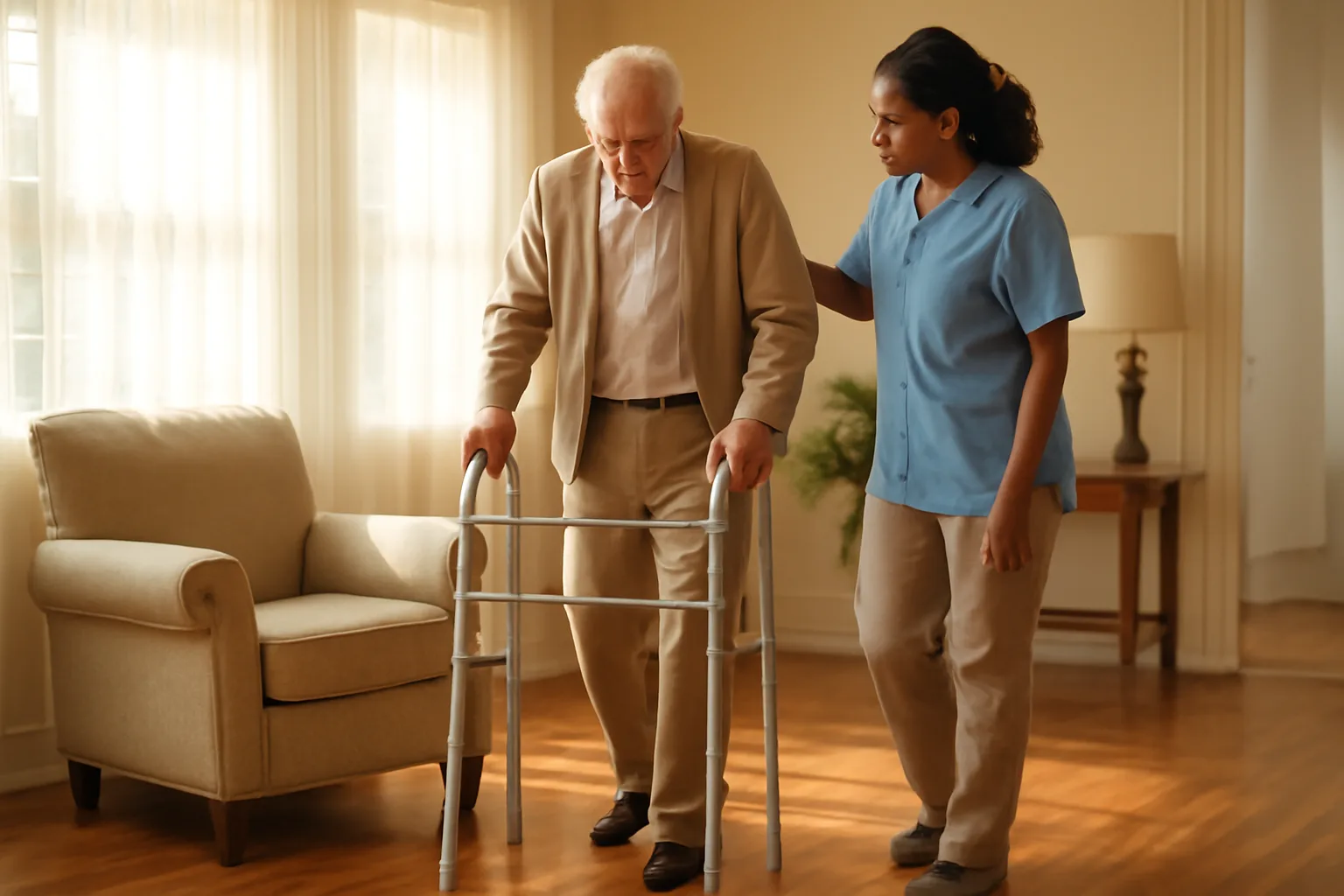
Assisted living is a housing and care model for adults, usually seniors, who need help with daily tasks like bathing, dressing, medication reminders, or meal prep but don't need the round-the-clock skilled nursing you'd find in a hospital-like setting. Residents live in private or semi-private rooms, eat in a shared dining area, and get help from trained staff on a schedule that fits their needs. In North Carolina, this level of care is licensed as an "adult care home," which includes what most people call assisted living facilities and also smaller family care homes. The state defines an adult care home as a facility with an organized staffing pattern that provides room, board, and personal care services to two or more unrelated residents on a 24-hour basis [1]. The distinction matters because it's not a medical model. Nobody's getting IV therapy or ventilator care in a standard assisted living unit. It's supervised daily living support, and that's exactly why families choose it over a nursing home when a loved one is mostly independent but can't safely live alone anymore. If you're researching this as a future operator rather than a family member, start with the state's own definitions before you touch a business plan. Every fee, staffing ratio, and inspection standard flows from how North Carolina classifies your facility type.
What is a group home versus what is an assisted living facility?
A group home is a broader term. It can mean a small residential setting for people with intellectual or developmental disabilities, a mental health recovery residence, a home for youth in the child welfare system, or (confusingly) a small assisted living home for seniors. The population served, not the building, is what defines it. An assisted living facility, by contrast, almost always refers to senior or disabled-adult care with a personal care and supervision component, licensed under a specific state adult care category. In North Carolina, that license type is the adult care home license, and it covers both larger assisted living residences and smaller family care homes of 2 to 6 beds [1]. So when someone in Charlotte says "group home," they might mean an IDD group home licensed under a completely different chapter of state rules, or a small assisted living home licensed as a family care home. Get precise about which population you intend to serve before you file anything, because the licensing category, staffing rules, and physical plant requirements diverge sharply from there. Our assisted living facility guide walks through how states carve up these categories in more detail.
What is assisted living vs nursing home care?
The core difference is medical intensity. Assisted living provides help with daily living activities (bathing, dressing, medication reminders, mobility) plus meals and social supervision, delivered mostly by trained aides. A nursing home, licensed in North Carolina as a skilled nursing facility, provides 24-hour licensed nursing care for people with significant medical needs, post-surgical recovery, or conditions requiring constant clinical monitoring [2]. Cost reflects that gap. National median costs from Genworth's 2023 Cost of Care Survey put assisted living at roughly $5,350 a month nationally, while a semi-private nursing home room runs about $8,669 a month [3]. Charlotte-area figures track close to national medians but confirm current local rates with a few facilities directly, since costs shift year to year and by neighborhood. Staffing requirements diverge too. Nursing homes must have licensed nurses on-site around the clock under federal Medicare/Medicaid participation rules for skilled nursing facilities [4]. Adult care homes in North Carolina have their own staffing pattern rules tied to resident count and need level, but they are not required to staff RNs 24/7 the way skilled nursing facilities are [1]. The practical takeaway for families: if your loved one needs wound care, IV medication, or has a condition requiring frequent physician-level monitoring, a nursing home or skilled facility is the safer fit. If they need help with daily tasks and some supervision but are otherwise stable, assisted living is usually the better and less expensive option.
What does assisted living provide day to day?
A licensed assisted living or adult care home in North Carolina typically provides a private or shared room, three meals a day plus snacks, help with activities of daily living (bathing, grooming, dressing, toileting, transferring), medication management or reminders, laundry and housekeeping, and organized social or recreational activities. Most facilities also handle basic health monitoring, coordinate with outside home health or hospice providers when a resident's needs increase, and keep an emergency response system in place. North Carolina's adult care home rules under 10A NCAC 13F set specific requirements for staffing ratios tied to resident care needs, along with training hours for personal care aides [5]. What it generally does not include is skilled nursing care, rehabilitation therapy beyond what a resident's own outside providers arrange, or the kind of 24-hour clinical supervision a hospital or nursing home provides. Families sometimes assume assisted living is a medical facility. It isn't, and operators who blur that line risk both regulatory trouble and resident safety issues.
How do I start a group home or assisted living home in Charlotte?
Starting a residential care operation in Charlotte means working through both state licensing and local zoning, and they run on separate tracks. Here's the rough sequence most operators follow. First, decide your population and license category. Serving seniors and adults needing personal care support means applying for an adult care home license (which covers both larger facilities and small family care homes) through the NC Department of Health and Human Services, Division of Health Service Regulation [1]. Serving adults with intellectual or developmental disabilities or a mental health/substance use population puts you under a different license category entirely, often through the state's Division of Mental Health, Developmental Disabilities and Substance Abuse Services alongside DHSR. Second, secure a property that fits your zoning. Mecklenburg County and the City of Charlotte have their own zoning ordinances that govern where residential care facilities can operate, including distance separation requirements between similar facilities in some categories. Confirm current zoning classifications and any conditional use requirements with the Charlotte-Mecklenburg Planning, Design & Development department before you sign a lease, because a building that looks perfect can be in the wrong zone entirely. Third, build your policy and procedure manual. State inspectors expect written policies covering medication administration, emergency preparedness, resident rights, staffing plans, incident reporting, and infection control, tailored to your specific license category and NCAC rule chapter. Fourth, submit your license application with the required fee, floor plans, staffing plan, and background check documentation for all staff and owners. Confirm current application fees and required attachments directly with DHSR, since fee schedules and forms are updated periodically. Fifth, pass your pre-licensure inspection. A state surveyor will walk the physical plant, check life-safety code compliance (often coordinated with the state fire marshal's office), review your policy manual, and verify staffing plans before issuing a license. This is also where a lot of first-time operators lose months, not because the rules are impossible but because nobody hands you a checklist that ties every form to every rule citation. That's the gap we built the $299 State Group Home Licensing Kit to close: state-specific application checklists, policy manual templates, and a staffing plan builder, sold once as a flat fee rather than a subscription. It doesn't get you approved faster and it isn't a substitute for your state's own instructions, but it does save you from re-reading regulation PDFs at midnight trying to figure out which form goes with which section.
How do I start a group home for a specific population (IDD, mental health, recovery)?
If your Charlotte project targets adults with intellectual or developmental disabilities, mental illness, or substance use recovery rather than general senior care, you're likely looking at a different license track than the adult care home category described above. North Carolina licenses many of these residential settings under rules administered through the Division of Health Service Regulation's Mental Health Licensure and Certification Section, working alongside county Local Management Entity/Managed Care Organizations (LME/MCOs) that oversee service authorization and provider enrollment for publicly funded clients [6]. The application steps look similar on paper (facility license application, staffing plan, policy manual, inspection) but the substantive rules differ: staff qualification requirements, resident-to-staff ratios, and required programming (like habilitation services for IDD group homes) are governed by different NCAC chapters than adult care homes. Don't assume your adult care home paperwork transfers to this category. It doesn't, and mixing up the two is one of the most common early mistakes operators make when they expand from one population to another. Our assisted living facilities overview breaks down how these categories differ by state if you're weighing which population to serve first.
Does Medicare cover assisted living facilities?
No, not the room-and-board or personal care portion. Medicare.gov states plainly that "Medicare doesn't cover long-term care, room and board, non-medical services, or personal care" in most long-term residential settings [7]. That means the monthly assisted living bill for rent, meals, and daily living support is not a Medicare-covered expense. Medicare Part B may still cover specific medical services a resident receives while living in an assisted living facility, like doctor visits, some outpatient therapy, or durable medical equipment, but that's coverage of the medical service itself, not the housing arrangement. Medicaid is a different story. North Carolina's Medicaid program can help cover personal care services for eligible low-income residents in some adult care home settings through state-specific supplement payments and personal care service benefits, but eligibility rules and covered services vary and change. Confirm current North Carolina Medicaid coverage details for adult care homes directly with NC Medicaid before advising any family on what's covered . For families budgeting for a loved one's care, this gap is often the biggest financial surprise. Long-term care insurance, personal savings, home equity, or state Medicaid personal-care supplements are the realistic funding sources, not Medicare.
What is the difference between a family care home and a larger assisted living facility in NC?
North Carolina splits adult care homes into two practical size tiers even though both fall under similar licensing rules. A family care home typically serves a small number of residents, often in the range of 2 to 6, in a home-like residential setting. Larger licensed adult care facilities can serve many more residents and often look and operate more like a dedicated commercial care facility with dining halls, activity rooms, and larger staff teams. The smaller model tends to appeal to first-time operators because the physical plant requirements and startup capital are lower. You're converting or building a single-family-style home rather than a purpose-built facility. But smaller doesn't mean less regulated. Staffing ratios, background check rules, and inspection standards apply regardless of size under the same NCAC 13F rule chapter [5]. If you're deciding which size to pursue in Charlotte, weigh your available capital, the zoning classification of properties you can access, and how quickly you want to scale. A family care home is often the more realistic first project; expanding to a larger facility later is common once you understand the operational rhythm of running one home well.
What zoning and property rules apply to assisted living in Charlotte?
Zoning for residential care facilities in Charlotte runs through the Charlotte-Mecklenburg Planning, Design & Development department and the Unified Development Ordinance, not through the state health agency that issues your care license. A property can meet every state licensing standard and still be denied a permit because it sits in the wrong zoning district. Common zoning issues operators run into: residential zones that cap the number of unrelated residents allowed in a single-family home (sometimes tied to state group home protections under the Fair Housing Act for smaller facilities), separation distance requirements between similar care facilities, parking and fire-lane requirements for larger facilities, and conditional use permit processes for facilities above a certain resident count. Before signing a lease or purchase agreement, pull the zoning classification for the specific parcel, more than the general neighborhood, and confirm current group home and care facility provisions with Charlotte-Mecklenburg Planning directly. Fire marshal life-safety inspections run alongside this process too, and both agencies coordinate with DHSR before a state license is finalized. Our assisted living at home piece covers how smaller, home-based models handle these same zoning questions in other states, which is useful context even though Charlotte's specific ordinance details are local.
What does inspection and ongoing compliance look like once you're licensed?
Licensing isn't a one-time event. North Carolina adult care homes undergo periodic inspections by DHSR surveyors covering physical plant safety, staffing compliance, medication management, resident records, and resident rights protections. Complaint-driven inspections can happen any time a report is filed, regardless of your regular survey schedule. Common deficiency areas nationally and in North Carolina surveys tend to cluster around medication administration documentation, staffing ratio compliance during short-staffed shifts, and incident reporting timeliness. Building a policy manual that actually gets followed, more than filed away, is the single best defense against repeat deficiencies. Operators should also expect fire marshal re-inspections tied to life-safety code compliance, background check renewal cycles for staff, and continuing education requirements for administrators and direct care staff under the applicable NCAC rule chapter [5]. Budget staff time for this; compliance work doesn't stop once your doors open, it just changes shape.
Frequently asked questions
What is assisted living?
Assisted living is licensed housing and care for adults, usually seniors, who need help with daily activities like bathing, dressing, or medication reminders but don't need full-time skilled nursing care. It combines a private or semi-private living space with meals, supervision, and personal care support delivered by trained staff on a scheduled basis.
What is a group home?
A group home is a residential setting serving a specific population, such as adults with intellectual or developmental disabilities, mental health conditions, or seniors needing personal care. The term covers many license categories; the population served and the state's specific licensing chapter determine which rules and staffing requirements apply.
What is an assisted living facility?
An assisted living facility is a licensed residential setting providing room, board, personal care assistance, and supervision to adults, typically seniors, who need help with daily activities but not full-time skilled nursing. In North Carolina this falls under the adult care home license category administered by the Division of Health Service Regulation.
What is the difference between assisted living and a nursing home?
Assisted living provides help with daily living tasks and supervision from trained aides, while a nursing home provides 24-hour licensed nursing care for residents with significant medical needs. Nursing homes cost roughly $8,669 a month nationally for a semi-private room versus about $5,350 for assisted living, per Genworth's 2023 Cost of Care Survey.
Does Medicare cover assisted living facilities?
No. Medicare.gov states it doesn't cover long-term care, room and board, or personal care services in most residential settings. Medicare may cover specific medical services a resident receives, like doctor visits or therapy, but not the housing, meals, or daily personal care costs of assisted living.
How do I start a group home in North Carolina?
Pick your population and license category, secure a property that meets local zoning, build a compliant policy and staffing manual, submit your license application with required fees and documentation to the state's health licensing division, and pass a pre-licensure inspection covering physical plant and life-safety code compliance.
What does assisted living provide that home care doesn't?
Assisted living provides a licensed physical setting with round-the-clock staff availability, prepared meals, organized social activities, and on-site supervision, none of which home care agencies (which send aides to a person's own house on a scheduled basis) typically provide as a package.
How much does residential assisted living cost in Charlotte?
National median assisted living costs run around $5,350 a month per Genworth's 2023 survey, and Charlotte-area rates generally track close to that national median. Confirm current local pricing directly with individual facilities, since rates vary by room type, care level, and neighborhood.
What license do I need to open an assisted living home in Charlotte?
You'd apply for an adult care home license through the NC Division of Health Service Regulation if serving seniors or adults needing personal care. Different license categories apply for IDD or mental health group homes, so confirm the correct category with the state agency before applying.
Can I convert a regular house into a group home in Charlotte?
Sometimes, but it depends on zoning classification, resident capacity limits under local ordinance, fire marshal life-safety requirements, and state licensing physical plant standards. Confirm zoning eligibility with Charlotte-Mecklenburg Planning, Design & Development before purchasing or leasing any property for this use.
What's the difference between a family care home and an assisted living facility in NC?
A family care home typically serves a small number of residents (often 2 to 6) in a home-like setting, while a larger licensed facility can serve many more residents with a bigger staff and more institutional layout. Both fall under similar state adult care home rules, just at different scales.
Does Medicaid pay for assisted living in North Carolina?
North Carolina Medicaid can help cover personal care services for eligible low-income residents in some adult care home settings, but it generally doesn't cover full room-and-board costs the way it can for nursing home care. Confirm current eligibility and covered services directly with NC Medicaid.
Sources
- NC General Assembly, N.C. Gen. Stat. § 131D-2 (Definitions for Adult Care Home Licensure): North Carolina licenses assisted living and family care homes under the adult care home category
- CMS, Nursing Home Care overview: Skilled nursing facilities provide 24-hour licensed nursing care distinct from assisted living
- Genworth, Cost of Care Survey 2023: National median monthly cost figures for assisted living and nursing home semi-private rooms
- CMS, State Operations Manual, Appendix PP (Nursing Home requirements): Federal requirements for nursing facility staffing and care standards
- NC General Assembly, N.C. Gen. Stat. § 122C-3 (Definitions under the Mental Health, Developmental Disabilities, and Substance Abuse Act): Different license track applies for IDD and mental health residential facilities in North Carolina
- Medicare.gov, Long-term care coverage: Medicare does not cover long-term care, room and board, or personal care services
- NC Medicaid, Clinical Coverage Policy 2A-2, Adult Care Home Personal Care Services: NC Medicaid coverage rules for personal care services in adult care home settings