Last updated 2026-07-25
TL;DR
Residential assisted living courses (often $500 to $2,000+) teach the business model behind small group homes and residential care facilities. They're optional training, not a license. Every state requires its own application, background checks, staffing plans, and inspections through the state licensing agency, regardless of which course you take.
What are residential assisted living courses, exactly?
Residential assisted living courses are private, for-profit training programs that teach people how to open and run a small assisted living home, usually a converted single-family house with somewhere between 6 and 20 beds. They are not government programs and they do not issue a state license. Think of them as business bootcamps: some run a weekend, some run several days, and most bundle in templates for policies, marketing, and staffing. The pitch is almost always the same: real estate plus caregiving equals a home-based business model that avoids building a big institutional facility. That's a reasonable framing of the residential care model, but the course itself has zero legal authority. Your actual right to operate comes from your state's licensing agency, not from a certificate of course completion. Most of these programs are run by former operators or consultants, and quality varies a lot. Some give you honest, state-specific guidance about staffing ratios and inspection prep. Others sell a national template that ignores the fact that Texas, Florida, and Arizona have almost nothing in common for licensing categories, bed caps, or required staff certifications [1].
What is assisted living?
Assisted living is a category of licensed residential care for people who need help with daily activities like bathing, dressing, medication reminders, and meals, but who don't need the 24-hour skilled nursing care a nursing home provides. The Centers for Medicare & Medicaid Services (CMS) notes that assisted living is licensed and regulated at the state level, not the federal level, which is exactly why requirements differ so much state to state [2]. Assisted living residences range from large purpose-built buildings with 100+ units to small residential homes with 6 to 10 beds carved out of an ordinary house. States use different terms for the small-home version, including 'residential care home,' 'adult family home,' 'personal care home,' or 'assisted living residence,' depending on the jurisdiction. Confirm the exact terminology and licensing category with your state licensing agency before you assume your model fits.
What is a group home?
A group home is a licensed residential setting where a small number of people, often 4 to 10, live together and receive supervision, support, or care from staff, rather than living with a family member or independently. The term covers several different populations: seniors needing assisted living support, adults with intellectual or developmental disabilities (IDD), people in mental health recovery, and youth in child welfare placements. Each population type is usually licensed under a different chapter of state law, with different staffing ratios, training requirements, and inspection standards. A group home for adults with IDD is regulated very differently from a senior residential care home, even in the same state. Don't assume one license covers both. If you're comparing the assisted living model against a broader group home license, check your state's definitions section first, because the terminology gets used loosely online but means something specific in statute.
What is an assisted living facility?
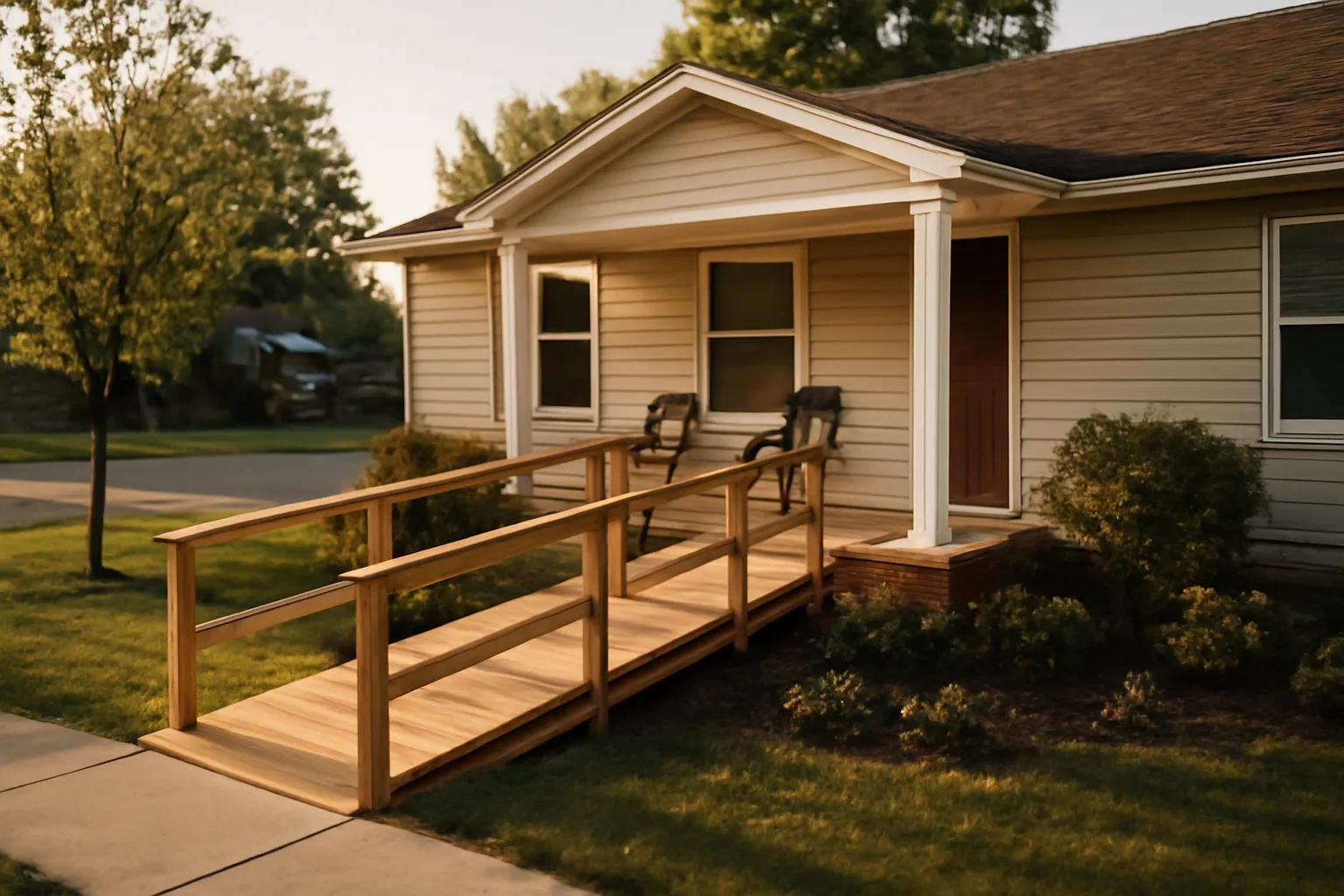
An assisted living facility is the licensed physical location, and the legal entity operating it, that provides personal care services to residents who need help with daily living but not full nursing care. States define this in statute with specific requirements: minimum square footage per resident, staff-to-resident ratios, fire and life safety standards, and a required plan of care for each resident. The word 'facility' doesn't mean it has to be a big building. A licensed assisted living facility can be a converted ranch home with a wheelchair ramp and six residents, as long as it meets your state's physical plant and staffing rules. What matters legally is the license category, not the size of the building. Some states cap small homes at a lower resident count (often 6 or fewer) under a separate, lighter-touch license, while larger buildings fall under a different, more heavily regulated category. Confirm the resident-count thresholds with your state licensing agency, because they change the paperwork significantly.
What does assisted living provide?
| Help with bathing/dressing | Yes | Yes |
|---|---|---|
| Medication administration | Often (varies by state) | Yes |
| Skilled nursing (wound care, IVs) | Rarely, limited | Yes |
| 24/7 RN on site | No, usually not required | Yes, required |
| Rehab therapy (PT/OT) | Sometimes contracted | Yes, on site |
| Typical staff-to-resident ratio | Lower staffing intensity | Higher staffing intensity |
Assisted living typically provides help with activities of daily living (ADLs) such as bathing, dressing, toileting, transferring, and eating, plus medication management, three meals a day, housekeeping, laundry, social activities, and 24-hour staff availability for supervision and emergencies. It does not typically provide skilled nursing care like wound care, IV therapy, or ventilator management, though some states allow limited nursing tasks under a waiver or higher license tier. A resident's individual plan of care, required in nearly every state's licensing rules, spells out exactly what services that specific person receives. This document gets reviewed at every inspection, so it needs to match what's actually happening in the home, not what the intake paperwork said six months ago. Here's a rough comparison of what's typically included versus excluded: | Service | Assisted living | Nursing home |
What is the difference between assisted living and a nursing home?
Assisted living is for people who need help with daily activities but are medically stable and don't need round-the-clock skilled nursing. A nursing home (also called a skilled nursing facility, or SNF) is for people who need ongoing medical care, therapy, or supervision from licensed nurses, and it's regulated under a completely different federal framework because nursing homes that accept Medicare or Medicaid must meet federal Conditions of Participation under 42 CFR Part 483 [3]. Assisted living has no equivalent federal rulebook. That's the single biggest structural difference: nursing homes answer to both state licensing and federal Medicare/Medicaid certification surveys, while assisted living answers only to the state. This is also why nursing home costs and staffing tend to look similar from state to state, while assisted living rules can vary wildly. Cost is another practical difference. The median annual cost of a private room in a nursing home was $127,750 in 2024, compared to a median of $70,800 per year for assisted living, according to Genworth's Cost of Care Survey [4]. That gap reflects the intensity of medical staffing a nursing home has to carry.
Does Medicare cover assisted living facilities?
No. Medicare does not cover the cost of room and board or personal care services in an assisted living facility. Medicare.gov states plainly that 'Medicare doesn't cover assisted living facility care, retirement homes, or other long-term care facilities' for the custodial, non-medical portion of that care [2]. Medicare will still pay for medically necessary services a resident receives while living in assisted living, like doctor visits, physical therapy after a qualifying hospital stay, or durable medical equipment, the same as it would for anyone at home. It just won't pay the facility's monthly rate for housing, meals, or caregiving. Medicaid is different and more complicated. Most states offer Home and Community-Based Services (HCBS) waivers under Medicaid that can cover some assisted living services for eligible low-income residents, but coverage rules, waiver names, and waitlists vary enormously by state, and Medicaid still generally won't cover room and board itself [5]. If Medicaid reimbursement is part of your business model, get the current waiver rules directly from your state Medicaid agency before you build a budget around it.
How do I start a group home?
Starting a group home means working through six things in roughly this order: pick your population and license category, confirm zoning, secure and prep the property, submit your state license application with policies and staffing plans, pass your pre-licensing inspection, and get your business systems (insurance, payroll, intake) running before your first resident moves in. Here's the honest sequence, state variability included: 1. Pick your license type. Senior residential care, IDD group home, mental health residential, or adult foster care are usually separate licenses with separate statutes. Confirm which one matches your intended population with your state licensing agency. 2. Check zoning first, not last. Many jurisdictions treat small group homes (typically 6 or fewer residents) as a permitted residential use under fair housing law, but larger homes may need a conditional use permit or special exception. See our guide on zoning and property considerations before you sign a lease. 3. Write your policy and procedure manual. Medication management, emergency procedures, resident rights, grievance process, staffing plan, and fire safety are close to universal requirements across states, even though the exact required sections differ. 4. Submit your application and pay fees. Application fees for residential care licenses commonly run anywhere from a few hundred to a few thousand dollars depending on the state and bed count. Confirm the current fee schedule with your state licensing agency, since these numbers change and are frequently tied to capacity. 5. Pass your inspection. Fire marshal sign-off, health department review, and the licensing agency's own site visit typically all happen before you get your license. 6. Hire and train staff before intake, including background checks, CPR/first aid, and any state-mandated caregiver training hours. A lot of the courses marketed as 'residential assisted living training' focus almost entirely on steps 1 through 3 and the real estate side, and gloss over steps 4 through 6, which is where most first-time operators actually get stuck.
How do I start a group home if I've never worked in healthcare?
You don't need a nursing degree to open most residential care homes, but you do need a designated administrator or manager who meets your state's training requirements, and that person's qualifications get checked during licensing. Some states require the administrator to hold a specific certification or complete a set number of training hours before the license is issued; others require it within a certain window after opening. If you're not clinical yourself, plan to either become the administrator by completing the required state course, or hire/partner with someone who already qualifies. This is one area where a private residential assisted living course can genuinely help, because good ones walk through what your state's administrator qualification actually requires instead of assuming a one-size-fits-all national standard. Background checks are non-negotiable almost everywhere: owners, administrators, and direct care staff typically go through state criminal history checks and often a check against abuse/neglect registries before licensure or hire. Build that lead time into your opening timeline; it commonly adds 2 to 6 weeks depending on your state's processing speed.
Are residential assisted living courses worth the cost?
It depends what you're paying for. A course that teaches you the general business model (financing, real estate structure, staffing math, marketing) can save you time if you're new to the industry. A course that claims to guarantee state approval, promise fast-track licensing, or hands you a generic multi-state policy manual and calls it done is overselling what any private company can actually deliver. No course, consultant, or template provider can guarantee your state will approve your application. Licensing decisions sit entirely with your state agency, and that agency reviews your specific paperwork, your specific building, and your specific staffing plan against its own regulations. Be skeptical of anyone who implies otherwise. What you actually need, regardless of whether you take a course, is state-specific policy documents (not a generic template), an accurate staffing plan matched to your state's ratios, and a realistic zoning check before you sign a lease. That's the gap a lot of general RAL courses leave open, since they're built to work across all 50 states at once and can't get granular on any single one.
What should a policy and procedure manual actually include?
Most states require, at minimum, written policies covering medication administration and storage, emergency and disaster preparedness, resident rights and grievance procedures, admission and discharge criteria, staffing plans and training records, infection control, and abuse/neglect reporting. Some states publish a required table of contents for this manual as part of the licensing application; others leave the structure up to you as long as the content hits every required topic. The manual isn't a one-time document. Inspectors review it during your initial licensing survey and again at renewal, and they'll check that what's written matches what staff actually do. A policy that says medications are double-checked by two staff members, when your home only has one staff member on shift overnight, is a citation waiting to happen. This is the area where a $299 State Group Home Licensing Kit can save real time compared to writing from scratch or adapting a generic template, because it's built around the state-specific document structure licensing agencies actually expect to see, rather than a one-size-fits-all national boilerplate.
How long does it take to get licensed after taking a course?
Course completion has no bearing on your license timeline; your state's application review time does. Processing times vary widely: some states complete residential care license reviews in 30 to 60 days once a complete application is submitted, while others, especially for higher-capacity facilities requiring fire marshal and health department sign-off, can take several months. The biggest time-killer isn't the agency's queue, it's incomplete applications. Missing background check results, an unfinished policy manual, or a floor plan that doesn't match fire code are the most common reasons applications bounce back for revision, which restarts the clock. Build in buffer time, and don't sign a lease with a hard move-in date before your zoning and building code review are confirmed in writing. If your state requires a pre-licensing inspection (most do), schedule realistically: fire safety corrections alone (exit signage, smoke detectors, sprinkler requirements depending on bed count) can take contractors several weeks to complete once flagged.
Frequently asked questions
What is assisted living?
Assisted living is licensed, state-regulated residential care for people who need help with daily activities like bathing, dressing, and medication reminders, but don't need full-time skilled nursing. It's regulated at the state level, not federally, so services, staffing rules, and terminology differ by state, according to CMS.
What is a group home?
A group home is a licensed residence where a small number of people, often 4 to 10, live together and receive supervision or care from staff. It's used for seniors, adults with IDD, people in mental health recovery, and youth, with each population type usually licensed under a separate set of state rules.
What is an assisted living facility?
An assisted living facility is the licensed location and legal entity providing personal care services to residents needing help with daily living. It can be a large building or a small converted house; what determines its legal status is the state license category, not the size of the property.
What does assisted living provide?
Assisted living typically provides help with bathing, dressing, toileting, and eating, plus medication management, meals, housekeeping, activities, and staff available around the clock for supervision. It generally does not include skilled nursing tasks like wound care or IV therapy, which fall under nursing home or home health care instead.
What is the difference between assisted living and a nursing home?
Assisted living serves people who are medically stable but need help with daily tasks, while nursing homes serve people needing ongoing skilled nursing care. Nursing homes must meet federal Medicare/Medicaid Conditions of Participation under 42 CFR Part 483; assisted living answers only to state licensing rules, with no federal counterpart.
Does Medicare cover assisted living facilities?
No. Medicare.gov states that Medicare doesn't cover assisted living facility care, retirement homes, or other long-term care room and board. Medicare will still pay for medically necessary services like doctor visits or physical therapy a resident receives while living there, just not the facility's housing and personal care costs.
How do I start a group home?
Pick your license category and population, confirm zoning, write state-specific policies and a staffing plan, submit your application with required fees, pass your fire and health inspections, and hire trained staff before intake. Each step routes through your state licensing agency, and requirements differ significantly by state and population type.
Do residential assisted living courses grant a license?
No. These courses are private training programs, not government licensing bodies. Completing one gives you no legal authority to operate; you still need to apply for and receive a license from your state's licensing agency, which reviews your specific application, property, and staffing plan independently.
How much do residential assisted living courses cost?
Prices for RAL courses commonly range from a few hundred dollars for a basic online course to $2,000 or more for multi-day in-person training with mentorship or templates included. Cost doesn't necessarily correlate with usefulness; check whether the course addresses your specific state's rules or just a generic national model.
What license do I need for a group home versus assisted living facility?
It depends on who you plan to serve. Senior residential care typically falls under an assisted living or residential care home license, while IDD group homes, mental health residential programs, and adult foster care each usually have their own separate licensing chapter. Confirm the correct category with your state licensing agency before applying.
Can I run a group home in a regular residential neighborhood?
Often yes for small homes. Many states and municipalities treat group homes with 6 or fewer residents as a permitted residential use under fair housing law, without requiring special zoning approval. Larger homes may need a conditional use permit. Zoning rules vary by county and city, so confirm locally before signing a lease.
What's the difference between an assisted living facility and a nursing home for licensing purposes?
Assisted living facilities are licensed and regulated solely by the state. Nursing homes that accept Medicare or Medicaid must also meet federal Conditions of Participation under 42 CFR Part 483 and undergo federal certification surveys in addition to state licensing, which makes nursing home compliance considerably more complex.
Sources
- CMS.gov, Nursing Home Care: assisted living is licensed and regulated at the state level, not federally, unlike nursing homes
- Medicare.gov, Assisted Living: Medicare's coverage rules for long-term care settings including assisted living
- eCFR, 42 CFR Part 483: nursing homes accepting Medicare/Medicaid must meet federal Conditions of Participation under 42 CFR Part 483
- Genworth, Cost of Care Survey 2024: median annual cost of nursing home private room ($127,750) versus assisted living ($70,800) in 2024
- Medicaid.gov, Home & Community Based Services: Medicaid HCBS waivers can cover some assisted living services for eligible low-income residents, but room and board is generally excluded