Last updated 2026-07-25
TL;DR
A residential assisted living strategy means matching your business plan to your state's licensing category (adult foster care, RCFE, ALF, or group home), your target population's care needs, and realistic funding sources. Medicare does not pay for room and board in assisted living; Medicaid may help through state waiver programs. Start with your state licensing agency's rules, not a franchise pitch.
what is assisted living?
Assisted living is a state-licensed residential care setting for people who need help with daily activities like bathing, dressing, medication reminders, and meals, but who don't need the round-the-clock skilled nursing care of a hospital or nursing home. It sits in the middle of the care spectrum: more support than independent living, less medical intensity than a nursing facility. The Centers for Medicare & Medicaid Services describes assisted living as part of a broader category of home and community-based services meant to help people "live as independently as possible" while getting support with daily living [1]. There's no single federal definition or federal license for assisted living. Each state writes its own rules, sets its own name for the category, and runs its own licensing agency. That's the single most important fact for anyone planning a residential assisted living strategy: you're not building one national business model, you're building a state-specific one. Some states call this level of care "assisted living facilities" (ALF), others use "residential care facility for the elderly" (RCFE), "personal care home," "adult foster care," or "adult family home." The services overlap a lot, but the staffing ratios, physical plant rules, medication administration limits, and admission/discharge criteria differ by state, sometimes by county. You must confirm the exact category and rules with your state licensing agency before you write a business plan around it.
what is a group home?
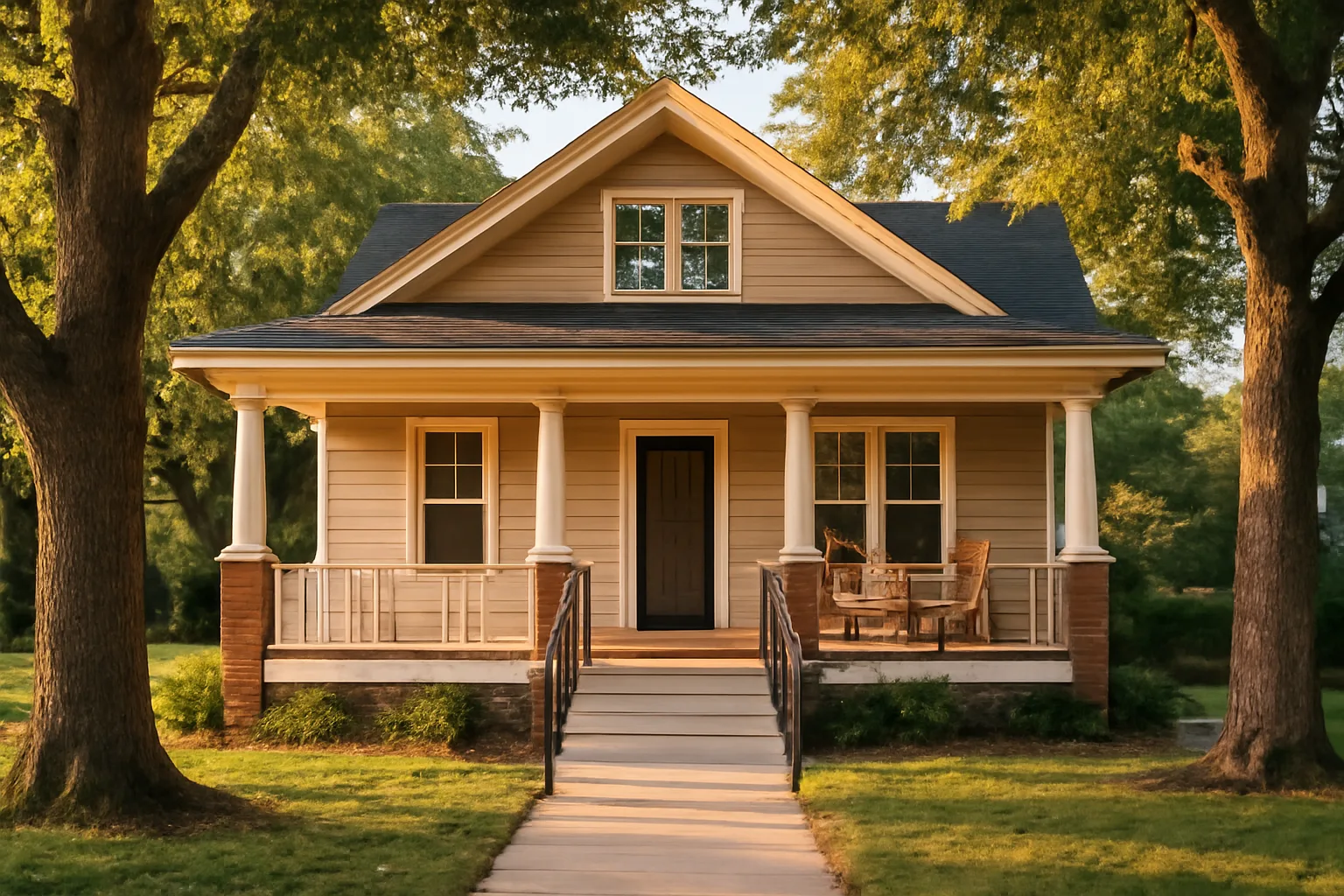
A group home is a small residential setting, usually a single-family house, where a defined number of unrelated residents live together and receive supervision, support, or care from staff. The term gets used across very different populations: intellectual and developmental disability (IDD) group homes, mental health residential programs, substance use recovery homes, and senior residential care homes that function like small assisted living facilities. What distinguishes a group home from a large assisted living building is mostly scale and setting. Group homes typically house somewhere between 4 and 16 residents (state caps vary widely) inside a residential-style structure, while assisted living facilities can range from small residential care homes to buildings with 100+ units. Licensing categories, staffing ratios, and fire/life-safety code requirements shift once you cross certain resident-count thresholds, so the number of beds you plan for isn't just a business decision, it determines which regulatory bucket you fall into. If you're planning a group home for seniors specifically, read up on how it differs from other assisted living facilities models in your state, because the licensing category name doesn't always match what the public calls it.
what is an assisted living facility?
An assisted living facility (ALF) is the licensed physical location, staff, and program that delivers assisted living services under your state's specific statute or regulation. Getting licensed as an ALF means your state's health department, department of social services, or a dedicated long-term care licensing division has reviewed your building, your staffing plan, your policies, and your background checks and approved you to operate at a defined capacity. Most states require, at minimum: a completed license application, a facility floor plan meeting fire and life-safety codes, proof of financial capacity to operate, a staffing plan with required ratios, a resident admission/discharge policy, a medication management policy, an emergency preparedness plan, and background checks (often including FBI fingerprinting) on owners, administrators, and direct care staff. Florida, for example, requires assisted living facility license applicants to submit specific forms through its Agency for Health Care Administration and meet minimum staffing standards under Florida's assisted living statute [2]. The license itself usually needs renewal, commonly every one to two years depending on the state, and can be inspected at any time, more than at renewal. Confirm your state's specific renewal cycle, inspection frequency, and fee schedule with your state licensing agency; these numbers are not the same in any two states.
what is assisted living vs nursing home?
The core difference is the level of medical care and who provides it. Assisted living gives residents help with daily activities (bathing, dressing, meals, medication reminders) in a more independent, home-like setting. A nursing home (skilled nursing facility) provides 24-hour licensed nursing care for people with serious medical needs, post-hospital rehabilitation, or conditions requiring constant clinical monitoring. Nursing homes are federally regulated under Medicare and Medicaid Conditions of Participation, and they must have a registered nurse on duty for at least 8 consecutive hours a day, 7 days a week, with a licensed nurse on duty 24 hours a day, per federal nursing home requirements [3]. Assisted living facilities have no equivalent federal staffing mandate; staffing ratios are set state by state and vary widely, some requiring only "awake staff" overnight rather than a licensed nurse. Cost and payer mix differ too. Nursing home stays are more often covered by Medicare (for short-term, post-hospital skilled care) or Medicaid (for long-term stays, subject to state eligibility rules), while assisted living is mostly paid out of pocket or through state Medicaid waiver programs that don't cover room and board. The median national monthly cost of assisted living was $5,900 in 2024 according to Genworth's Cost of Care Survey, versus $9,733 for a semi-private nursing home room [4].
what does assisted living provide?
Assisted living typically provides help with activities of daily living (ADLs) like bathing, grooming, dressing, toileting, and mobility, plus meals, housekeeping, laundry, social activities, transportation to appointments, and medication management or reminders. Many facilities also offer memory care wings for residents with dementia, though that usually requires a separate license endorsement or specialized certification depending on the state. What assisted living does not typically provide is ongoing skilled nursing care, IV therapy, ventilator support, or ongoing physician-level medical management. If a resident's needs escalate beyond what the facility is licensed to provide, most state regulations require either bringing in outside home health/hospice services or discharging the resident to a higher level of care. Admission and "negotiated risk" or discharge criteria are usually spelled out explicitly in state licensing regulations and must be part of your written policies. For operators building out policy manuals, this is where a lot of first-time applicants get tripped up: state surveyors want to see, in writing, exactly what conditions would trigger a resident transfer out of your facility, more than what services you offer. Vague admission/discharge language is one of the most common reasons plans of correction get issued during inspections.
how to start a group home
Starting a group home (whether for seniors, IDD, mental health, or recovery populations) follows a similar sequence in almost every state, even though the specific forms and agencies differ: 1. Pick your population and license category. Adult foster care, ALF, IDD group home, and behavioral health residential licenses all have different rules; you can't apply generically. 2. Contact your state licensing agency (health department, social services department, or a dedicated long-term care office) to get the actual application packet and current fee schedule. Don't rely on secondhand blog numbers here; call and confirm. 3. Check zoning and occupancy. Most group homes operate in residential zones under "reasonable accommodation" protections from the federal Fair Housing Act, but local zoning, fire code occupancy limits, and building permits still apply and vary by city and county [5]. Read our zoning and property breakdown before signing a lease. 4. Line up your building. Some states require the property to already meet fire/life-safety code before an application is accepted; others let you apply first and inspect after buildout. Confirm the order of operations with your agency. 5. Write your staffing plan and policy manual. This includes staff-to-resident ratios (state-set), training hours, background check requirements, medication administration policy, emergency and evacuation plans, and grievance procedures. 6. Submit your application, pay the licensing fee, and schedule your pre-licensing inspection. Fees range enormously by state and facility size, commonly from a few hundred dollars to several thousand; confirm the exact figure with your agency. 7. Pass the inspection, receive your provisional or full license, and set your admission process. Budget real time for this. Depending on the state and how ready your building is, licensing timelines commonly run anywhere from about 60 days to over a year for first-time applicants; states like Texas and California publish their own timelines and checklists, so check your agency's page directly rather than assuming a national average applies [6][7].
how do i start a group home (funding, staffing, and paperwork realities)
Funding your group home upfront is the part most first-time operators underestimate. You'll typically need money for: the property (purchase, lease deposit, or renovation), licensing and application fees, background checks for every staff member, liability insurance, initial staffing before you have full occupancy, and working capital to cover a slow ramp-up in resident census. None of this is covered by Medicare or Medicaid before you're licensed and operating; those programs pay for services to residents, not startup costs for operators. Staffing is the other place plans fall apart. States set minimum staff-to-resident ratios and required training hours (first aid, CPR, medication administration certification, abuse reporting, and often dementia-specific training if you serve residents with cognitive decline). You need these numbers locked down before you finalize your building size, because a facility licensed for 16 residents with a 1:8 daytime ratio needs a materially different labor budget than one licensed for 6 residents with a 1:6 ratio. Paperwork-wise, expect to produce, at minimum: your business entity documents, facility floor plan and fire marshal sign-off, staffing plan, policy and procedure manual (admissions, medication management, emergencies, resident rights, grievances, infection control), background check results for owners and staff, proof of insurance, and your completed license application with fee payment. Building this stack from scratch state by state is exactly the gap a resource like the $299 State Group Home Licensing Kit is meant to close, it gives you the document structure and checklist so you're not reinventing policy language your state has already told other operators it wants to see. It doesn't replace your state's actual application or guarantee approval; only your licensing agency can approve your license.
what is the difference between assisted living and nursing home?
This is the same core question as above phrased differently, and it's worth restating plainly because it's the single most searched comparison in this space: assisted living is for people who need help with daily living but not full-time medical care, while a nursing home (skilled nursing facility) is for people who need 24-hour licensed nursing care, rehabilitation, or complex medical management. Regulatory oversight differs sharply. Nursing homes are certified under federal Medicare/Medicaid Conditions of Participation and inspected against a uniform federal survey process run through each state's survey agency [3]. Assisted living facilities have no equivalent federal certification; oversight is entirely state-level, meaning two facilities in neighboring states can operate under very different staffing, training, and reporting requirements. Cost structure also differs. Nursing home care is more likely to be covered, at least partially, by Medicare (short-term, skilled, post-hospital stays only, generally up to 100 days per benefit period with cost-sharing after day 20) or by Medicaid for longer-term stays if the resident meets financial and functional eligibility. Assisted living is overwhelmingly private-pay, with some states offering Medicaid Home and Community-Based Services (HCBS) waivers that cover care costs but not room and board .
does medicare cover assisted living facilities?
No. Medicare does not cover the cost of room and board, or the general custodial/personal care services, at an assisted living facility. CMS states plainly that Medicare does not pay for "long-term care," including custodial care in assisted living or a nursing home, when that's the only care needed . Medicare Part A and Part B can still cover specific medical services a resident receives while living in assisted living, such as doctor visits, physical therapy, durable medical equipment, or a short skilled nursing stay after a qualifying hospitalization, but none of that covers the facility's monthly rent or personal care charges. This distinction trips up a lot of families and even some new operators building pro formas: you cannot count on Medicare reimbursement as a revenue stream for the assisted living side of your business. Medicaid is different and more relevant for group home operators. Many states use Medicaid Home and Community-Based Services waivers (authorized under Section 1915(c) of the Social Security Act) to pay for personal care and support services in residential settings, though usually not room and board, and eligibility is subject to strict state-specific income and asset limits . If your business model depends on Medicaid waiver residents, get your state's specific waiver name, reimbursement rate, and provider enrollment process from your state Medicaid agency before you finalize your budget.
how much does it cost to start a residential assisted living business?
There's no honest single number here, and anyone who gives you one without asking about your state, your building, and your resident count is guessing. Real cost drivers include: the property itself (buy vs. lease vs. renovate an existing home), state licensing fees (commonly ranging from a few hundred to a few thousand dollars depending on facility size and state), fire marshal and building code upgrades (sprinkler systems alone can run tens of thousands of dollars in an older home), staffing before full occupancy, insurance, and background check costs per employee. Some states publish fee schedules directly; for example, look up your specific state's ALF or adult foster care fee page rather than relying on aggregated averages, since fees are frequently tied to licensed bed capacity and change year to year. Confirm current fees with your state licensing agency before budgeting. A rough planning framework, not a promise: expect meaningful upfront capital for property and buildout, a separate line item for licensing/legal/insurance setup, and enough working capital to cover several months of operating costs before census stabilizes. Facilities converting an existing residential home are typically cheaper to launch than ground-up new construction, but they still often need fire suppression, egress, and ADA-related retrofits that first-time operators underestimate.
what should my zoning and property strategy look like?
Zoning is where good business plans die before they ever reach the licensing agency. Most residential group homes for people with disabilities are protected under the federal Fair Housing Act's "reasonable accommodation" provisions, meaning cities generally cannot categorically ban small group homes from residential zones just because residents have disabilities [5]. But "reasonable accommodation" is not a blank check: local governments can still enforce neutral occupancy limits, parking rules, and building/fire codes, and disputes over what counts as "reasonable" end up in court regularly. Before you sign a lease or make an offer on a property, check three things locally: the zoning classification and whether group homes are a permitted or conditional use, the fire marshal's occupancy limit for the structure as built, and whether your state's licensing agency has separate physical plant requirements (room size minimums, number of bathrooms per resident, sprinkler requirements above a certain resident count) that might force costly renovations. For a fuller breakdown of how these federal and local rules interact, see our guide on assisted living at home setups and how they differ from larger commercial facility zoning.
how do inspections and ongoing compliance work?
Licensing is the starting line, not the finish line. Once open, assisted living facilities and group homes are subject to periodic inspections (often annual, sometimes more frequent for new operators or facilities with prior violations) plus complaint-triggered surveys any time a resident, family member, or staff member files a report with the state. Inspectors typically review resident records, medication administration logs, staff training files and background check documentation, physical plant conditions (fire extinguishers, exits, sprinklers), meal and nutrition records, and resident rights postings. Deficiencies result in a plan of correction with a deadline; repeated or serious violations can lead to fines, admission holds, or license revocation depending on the state's enforcement ladder. The operators who handle inspections well are the ones who treat their policy manual as a living document, not a file drawer. If your medication policy says double-signature verification and your actual practice doesn't match, that's a citation waiting to happen. Build your policies and procedures around what you can actually execute daily, not what sounds good on paper.
Frequently asked questions
What is assisted living?
Assisted living is a state-licensed residential care option for people who need help with daily activities like bathing, dressing, and medication reminders but don't need 24-hour skilled nursing care. Rules, names, and staffing requirements vary by state; there's no single federal assisted living license or standard [1].
What is a group home?
A group home is a small residential setting, often a house, where a limited number of unrelated residents live together and receive supervision or care. It's used for seniors, people with intellectual/developmental disabilities, mental health needs, or substance use recovery, with licensing rules set state by state.
What is an assisted living facility?
An assisted living facility is the specific licensed location and program approved by your state's regulatory agency to provide assisted living services. Approval requires an application, floor plan review, staffing plan, background checks, and often a fire/life-safety inspection before a license is issued [2].
What is assisted living vs nursing home?
Assisted living helps with daily living activities in a home-like setting; a nursing home provides 24-hour licensed skilled nursing care for serious medical needs or rehabilitation. Nursing homes must have a licensed nurse on duty 24 hours a day under federal rules; assisted living has no equivalent federal staffing mandate [3].
What does assisted living provide?
Assisted living typically provides help with bathing, dressing, mobility, meals, housekeeping, medication reminders, transportation, and social activities. It generally does not provide ongoing skilled nursing, IV therapy, or ventilator care; residents needing that level of care are usually transferred to a nursing facility.
How do I start a group home?
Pick your population and license category, contact your state licensing agency for the current application packet and fees, confirm zoning and occupancy limits, prepare a staffing and policy plan meeting state ratios, then submit your application and pass a pre-licensing inspection. Timelines commonly run 60 days to over a year depending on the state [6][7].
Does Medicare cover assisted living facilities?
No. Medicare does not cover room and board or custodial care in assisted living facilities. It may cover specific medical services a resident receives (like doctor visits or short-term skilled care after hospitalization) but not the facility's monthly costs, per CMS guidance [10].
Does Medicaid pay for assisted living?
Sometimes, through state Medicaid Home and Community-Based Services (HCBS) waivers authorized under Section 1915(c) of the Social Security Act, which can cover personal care services but usually not room and board. Eligibility and coverage vary significantly by state; confirm details with your state Medicaid agency [9].
What's the difference between assisted living and nursing home costs?
Genworth's 2024 Cost of Care Survey put the median monthly cost of assisted living at $5,900 nationally, compared to $9,733 for a semi-private nursing home room, reflecting the higher staffing and medical intensity of nursing home care [4].
Can I start a group home in a residential neighborhood?
Often yes. The federal Fair Housing Act generally requires cities to make reasonable accommodations allowing small group homes for people with disabilities in residential zones, though local occupancy limits, fire codes, and parking rules still apply [5]. Confirm specifics with your local zoning office before signing a lease.
How much does it cost to open an assisted living or group home business?
There's no single honest figure. Costs depend on property acquisition or lease, state licensing fees (often a few hundred to a few thousand dollars), fire/code upgrades, staffing before full occupancy, and insurance. Confirm your state's specific fee schedule with its licensing agency before budgeting.
What staffing ratios do assisted living facilities need?
Staffing ratios are set state by state and vary by shift, resident acuity, and facility size. There is no federal minimum staffing ratio for assisted living (unlike nursing homes' 24-hour licensed nurse requirement). Confirm your state's specific daytime and overnight ratio requirements with its licensing agency.
Do I need a nurse on staff to run an assisted living facility?
It depends on the state and the services you provide, especially if you administer medications or serve residents with higher medical needs. Some states require a licensed nurse consultant or on-call nurse; others allow trained unlicensed staff for basic medication reminders. Check your state's specific ALF regulations.
Sources
- CMS, Home and Community-Based Services: Federal description of home and community-based services supporting independent living
- Genworth, Cost of Care Survey 2024: Median monthly costs for assisted living ($5,900) and nursing home semi-private room ($9,733)
- Texas Health and Human Services, Assisted Living Facility Licensing: State-specific ALF licensing application process and timeline
- California Department of Social Services, Community Care Licensing Division: State licensing checklist and process for residential care facilities
- Medicare.gov, Skilled Nursing Facility Care coverage: Medicare coverage limits for skilled nursing facility stays, including the 100-day benefit period structure
- Medicaid.gov, Home & Community-Based Services 1915(c): Section 1915(c) HCBS waiver authority states use to fund personal care services in residential settings
- Medicare.gov, Long-term care coverage: Medicare does not cover long-term custodial care in assisted living or nursing homes