Last updated 2026-07-26
TL;DR
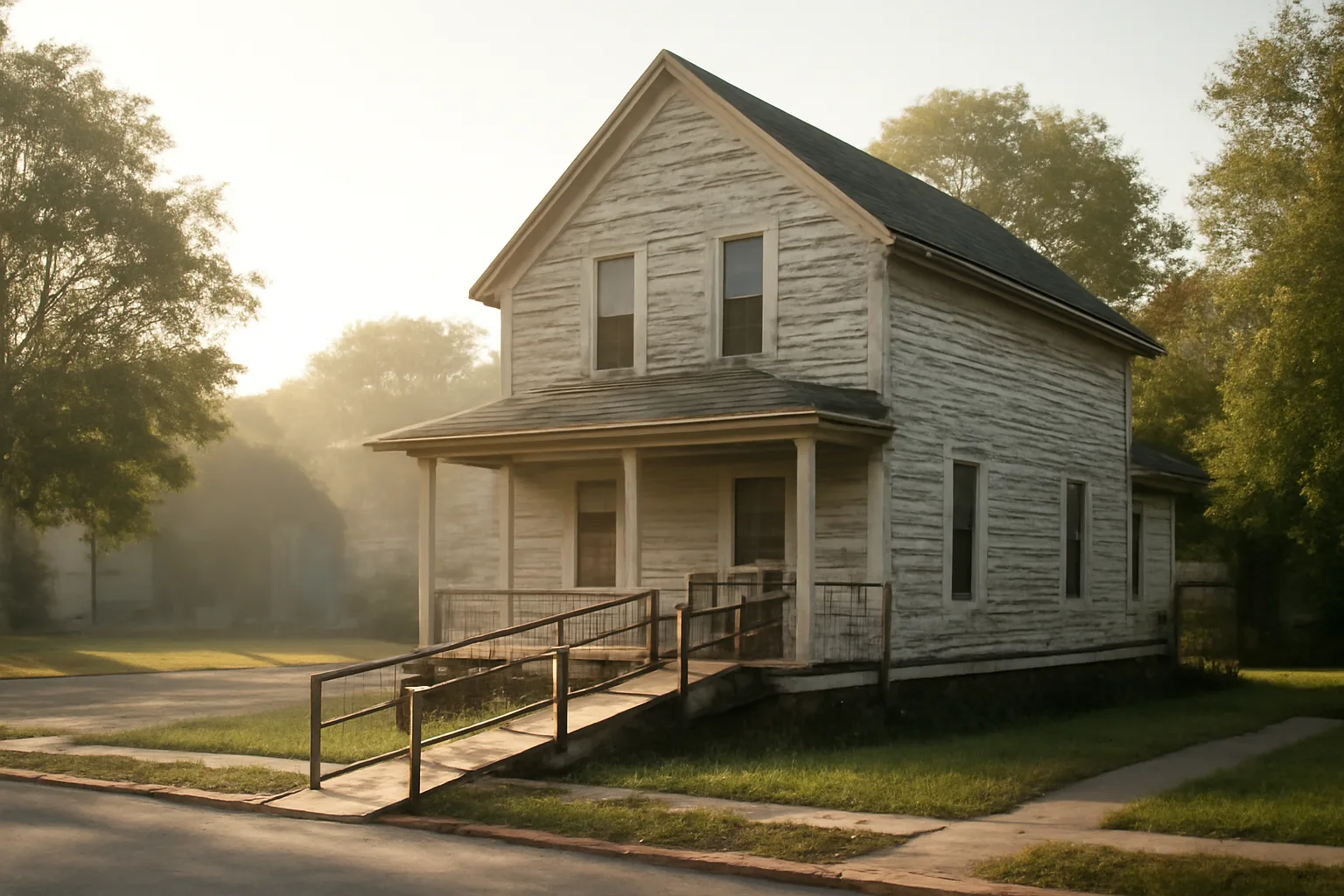
A residential-style assisted living facility in Maryland is a licensed home, usually a converted single-family house, that provides housing, meals, supervision, and personal care to a small group of seniors or adults with disabilities. Maryland licenses these under COMAR 10.07.14 through the Office of Health Care Quality, with three levels of care tied to resident acuity, not building size.
What is assisted living, exactly?
Assisted living is a licensed housing arrangement that blends a private or semi-private living space with help for daily tasks like bathing, dressing, medication reminders, and meals. It sits between fully independent senior housing and a nursing home. Nobody in assisted living needs round-the-clock skilled nursing, but most residents need more support than a family member or occasional home health aide can reasonably provide. In Maryland, the legal term is "assisted living program," and it covers everything from a converted four-bedroom house on a residential street to a 100-bed purpose-built facility. The state doesn't have a separate category called "residential-style" in the statute. That's an industry and marketing term for smaller, home-like licensed operations, usually 4 to 16 beds, that look and feel like a house rather than an institution. Maryland's licensing rules apply the same way regardless of size, though bed count changes some practical requirements like staffing ratios and fire code triggers [1]. The core legal definition comes from Maryland's Health-General Article: an assisted living program is "a structure or distinct part of a structure... that provides housing and food service and, in addition, provides at least one of the following: (i) General oversight; (ii) Assistance with activities of daily living; or (iii) Health-related services" [2]. That three-part test (housing, food, and oversight or care) is what separates assisted living from a boarding house or an unlicensed roommate situation.
What is a group home, and how is it different from assisted living?
"Group home" is a broader, less precise term than most people realize. It gets used for licensed homes serving people with intellectual and developmental disabilities (IDD), mental illness, substance use recovery, juvenile justice populations, and seniors, all under different regulatory schemes with different agencies. In Maryland, a home serving adults with developmental disabilities is typically licensed as a group home or Alternative Living Unit through the Developmental Disabilities Administration (DDA), governed by its own set of regulations, not the assisted living chapter [3]. A home serving adults with serious mental illness may be licensed as a Residential Rehabilitation Program through the Behavioral Health Administration. A home serving seniors who need help with ADLs (activities of daily living) falls under the assisted living program rules at COMAR 10.07.14, licensed through the Office of Health Care Quality (OHCQ) [1]. So the honest answer is: assisted living is one specific type of group home model, aimed at seniors and adults needing personal care and oversight, not clinical treatment or behavioral programming. If you're planning to serve people with IDD or mental health diagnoses instead of, or alongside, aging adults, you're likely looking at a different license entirely, possibly two licenses if you want to serve mixed populations in the same building. Check with the specific administering agency before you assume one license covers everyone you want to serve.
What is an assisted living facility (and what is assisted living facility, legally, in Maryland)?
An assisted living facility, or in Maryland's statutory language an "assisted living program," is the licensed physical location plus the licensed operation together. You can't separate the two. The building has to meet physical plant standards (fire safety, room size, bathroom ratios), and the operator has to hold a valid license from OHCQ tied to that specific address and bed count [1]. Maryland assigns every assisted living program a "level of care" designation: Level 1 (low), Level 2 (moderate), or Level 3 (high), based on the acuity of residents the home is approved to serve, not the size of the building [4]. A small residential-style home with six residents can be licensed for Level 3 care if it has the staffing and physical plant to support residents with significant care needs, including some with dementia. Level of care determines staffing ratios, required training, and what kind of resident assessment triggers a mandatory discharge or higher level of care. The license is not transferable. If you buy an existing assisted living home, you generally need to apply for your own license as the new operator; you can't just inherit the seller's license by closing on the property [1]. Budget time for that. Ownership changes often trigger a fresh inspection and paperwork cycle even if nothing about the physical building changes.
What does assisted living provide, day to day?
Under COMAR 10.07.14, a licensed assisted living program has to provide: a private or shared room, three meals a day plus snacks, help with ADLs (bathing, dressing, toileting, mobility, eating) as needed, medication management or reminders, 24-hour general oversight, housekeeping and laundry, and activities appropriate to residents' needs and interests [1][4]. What it does not automatically provide is skilled nursing care, like IV therapy, wound vac management, or ventilator care, unless the program is specifically licensed at a level and staffing configuration that supports it. That's the line that separates assisted living from a nursing facility. A few things trip up new operators: every resident needs an individualized service plan, called a "resident service agreement" or care plan under the regulation, updated based on periodic assessments (often referred to using Maryland's required resident assessment tool). Staffing has to be sufficient for the acuity mix in the home at any given time, more than meet a flat number on paper. And medication administration by unlicensed staff is only allowed under specific conditions and training requirements spelled out in the regulations, so if your home will have residents who can't self-administer medication, plan your staffing model around that early [1].
What is assisted living vs nursing home?
| Care level | ADL help, oversight, medication management | Skilled nursing, rehab, complex medical care | |
|---|---|---|---|
| Licensing body (MD) | Office of Health Care Quality, COMAR 10.07.14 [1] | OHCQ, under separate nursing home regulations | |
| Staffing | Direct care staff, RN/LPN oversight required at higher levels | Licensed nurses on duty around the clock | |
| Setting | Home-like, private or semi-private rooms | Often more clinical/institutional layout | |
| Typical payer | Private pay, some state waiver programs | Medicare (short-term), Medicaid (long-term) | CMS describes nursing homes as providing "skilled nursing care and rehabilitation services" for people who need a level of care that can't be managed at home or in a lower level of care setting [5]. Assisted living, by contrast, is licensed and regulated at the state level with no single federal definition. That's a big structural difference: nursing homes have to meet federal Medicare/Medicaid Conditions of Participation if they take those payers, while assisted living regulation is entirely state-driven [6]. |
The simplest way to think about it: assisted living is for people who need help with daily activities and supervision. A nursing home (skilled nursing facility) is for people who need ongoing medical or nursing care that can't reasonably be delivered outside a clinical setting. | Feature | Assisted living | Nursing home |
Does Medicare cover assisted living facilities?
No. Medicare does not pay for the room and board or personal care costs of assisted living. Medicare.gov is direct about this: Medicare does not cover "long-term care (also called custodial care)" if that's the only care needed, and assisted living falls squarely into that custodial category . Medicare will still cover the medical services a resident receives, doctor visits, some home health visits, durable medical equipment, physical therapy, the same as it would for someone living at home. But the facility's monthly fee for housing, meals, and personal care assistance is not a Medicare-covered expense. Medicaid is a different story, sometimes. Maryland, like many states, has home and community-based services (HCBS) waiver programs that can help cover some services within assisted living for financially and functionally eligible residents, but Medicaid generally does not pay for the room and board portion either. Federal Medicaid HCBS rules explicitly separate covered services from room and board costs, which usually still fall to the resident or their family . If your business model depends on Medicaid-funded residents, get specific about which services the waiver actually reimburses before you build a budget around it, and confirm current waiver capacity and eligibility rules with Maryland's Medicaid agency directly.
How to start a group home (assisted living) in Maryland: the licensing steps
Starting a residential-style assisted living home in Maryland runs through several sequential steps, and skipping ahead usually costs you time later, not less of it. 1. Confirm your program type and target level of care. Decide up front whether you're serving low-acuity seniors, higher-acuity residents including some dementia care, or a different population entirely (which may mean a different license). This decision drives everything downstream: staffing plan, physical plant needs, and training requirements. 2. Check zoning before you sign a lease or purchase agreement. Maryland counties and municipalities regulate group homes and assisted living through local zoning codes, and small assisted living homes (often up to eight residents) may qualify for "group home" zoning protections under state law that limit a local jurisdiction's ability to treat them differently from a single-family residence, but the threshold and exact protections vary by jurisdiction, so confirm this with your specific county planning or zoning office before committing to a property [1]. Don't assume a house zoned single-family automatically qualifies; some counties require a conditional use permit even for small homes. 3. Assess and prep the physical plant. Bedroom size, number of residents per room, bathroom-to-resident ratios, fire alarm and sprinkler requirements, and accessible egress all get checked. Older houses converted into assisted living homes often need real capital investment here, sometimes more than buyers expect, especially around fire suppression systems. 4. Submit your license application to the Office of Health Care Quality. This includes your program description, resident admission/discharge policies, staffing plan, and floor plans. OHCQ is the licensing and inspecting authority for assisted living programs in Maryland [1]. 5. Complete required trainings and background checks. Administrators and direct care staff have specific training hour requirements tied to the level of care you're licensed for, and Maryland requires criminal background checks for staff who have direct contact with residents. 6. Pass your pre-licensure inspection. OHCQ (or its designee) inspects the physical plant and reviews your policy manual before issuing a license. Expect a walk-through of every resident-accessible space, a review of your emergency preparedness plan, and questions about how you'll handle medication management specifically. 7. Get licensed, then plan for ongoing surveys. Assisted living licenses are not "set and forget." Maryland conducts periodic inspections and investigates complaints, and your license can be limited, suspended, or revoked for serious violations [1]. For operators building the paperwork side of this from scratch, a structured state licensing guide helps you sequence these steps instead of discovering a missing policy during your inspection walk-through. GroupHomePath's $299 State Group Home Licensing Kit is built around this exact sequence: application checklist, policy manual templates, and a staffing plan framework, at /licensing-kit-builder.
What does the licensing application actually require, in detail?
Maryland's assisted living application isn't a single form. It's a package, and OHCQ reviews it as a whole before scheduling your inspection. Expect to submit: a completed licensure application naming the licensee (individual, LLC, or corporation) and the administrator; a floor plan showing every resident bedroom, bathroom, common area, and emergency exit; a staffing plan showing coverage by shift for your proposed resident census and acuity level; written policies covering admission and discharge criteria, medication management, emergency and disaster preparedness, resident rights, abuse/neglect reporting, and infection control; proof of the administrator's qualifications, which in Maryland includes specific training and, depending on level of care, may require licensure as an assisted living manager; and documentation of fire marshal approval or a fire safety inspection specific to your building and resident count [1]. The fee structure and exact dollar amounts change periodically, so confirm current licensing fees with the Office of Health Care Quality directly rather than relying on a number that might be outdated by the time you apply. The same goes for processing timelines: OHCQ doesn't publish a fixed guaranteed turnaround, and timelines shift with application volume and how complete your first submission is.
What staffing does a residential-style home need?
Staffing in Maryland's assisted living rules is need-based, not a single flat number that applies to every home. The regulations require staffing "sufficient in numbers and qualifications" to meet resident needs 24 hours a day, with additional requirements tied to level of care [1]. In practice, for a small residential-style home (say, 6 to 10 residents), that usually means at least one direct care staff member awake and on-site at all times, even overnight, plus additional coverage during peak hours (morning care routines, meal times, evening care routines). Level 2 and Level 3 programs, which serve higher-acuity residents including many with dementia, generally require more hands-on coverage and more frequent registered nurse (RN) involvement in care planning and oversight, even if the RN isn't on-site around the clock. Every assisted living program in Maryland needs a licensed administrator responsible for day-to-day operations, and depending on the level of care and home size, may need a delegating nurse (RN) who reviews and delegates nursing tasks to unlicensed staff under Maryland's nurse delegation framework. That delegation piece is one of the most commonly underestimated parts of a staffing plan by first-time operators; if you're not budgeting for a contracted or part-time RN's time, revisit your model.
What happens during a Maryland assisted living inspection?
OHCQ conducts a pre-licensure survey before your license is issued, then periodic unannounced inspections after you're operating, plus complaint-driven investigations any time a report comes in [1]. Nothing about the schedule is announced to the operator in advance for standard surveys. Inspectors typically review: resident records and service agreements against actual observed care; medication administration records and storage; staff training files and background check documentation; the physical plant for cleanliness, safety hazards, and code compliance; emergency and disaster preparedness plans, including evacuation drills; and resident rights postings and grievance procedures. Deficiencies get documented on a statement of findings, and depending on severity, you'll get a required plan of correction with a deadline. Serious health or safety violations can lead to conditions on your license, a directed plan of correction, or in extreme cases suspension or revocation. The single most common first-time operator mistake isn't a dramatic safety violation, it's incomplete documentation: missing signatures on care plans, gaps in staff training records, or medication logs that don't match what staff actually did that shift. None of that is hard to fix. It just requires building your recordkeeping habits before your first resident moves in, not after your first inspection.
How much does it cost to open one of these homes?
There's no single honest number here, and anyone who gives you one without asking about your specific building, county, and level of care is guessing. Costs depend heavily on whether you're buying an existing licensed home (which may need less physical plant work) versus converting a standard house, what level of care you're targeting, and your local jurisdiction's zoning and permitting fees. Major cost categories to budget for: property acquisition or lease, physical plant renovation (fire sprinklers and alarm systems are often the biggest surprise expense in home conversions), licensing and application fees (confirm current amounts with OHCQ), staff wages and required training, liability insurance, and working capital to cover the gap between opening and reaching stable occupancy. Because Medicare doesn't cover this care and Medicaid coverage is limited to specific waiver services rather than room and board , most residential-style assisted living homes in Maryland rely primarily on private pay, which shapes both your pricing model and your marketing runway before you hit break-even occupancy.
Zoning realities: can you actually put this in a residential neighborhood?
This is where good projects die on paper before they ever apply for a license. Maryland state law provides some protection for small group homes and assisted living programs from restrictive local zoning, generally recognizing homes up to a certain resident count as a permitted residential use rather than a commercial or institutional one, but the exact resident threshold and how it's applied varies by county and municipality [1]. Before you sign a lease or make an offer on a house, call your county's zoning or planning department directly and ask three specific questions: is an assisted living home with your proposed resident count a permitted use, a conditional use, or a prohibited use in this zone; does the county require a special exception or conditional use permit even for small homes; and are there separation requirements (distance from another licensed group home) that could disqualify an otherwise good property. Get the answer in writing if you can. Verbal assurances from a zoning clerk don't hold up the same way a written determination does if a neighbor challenges your use later. For a broader look at how this plays out across different building types, see assisted living facility and facility assisted living licensing structures.
Building your policy manual and resident agreements
Maryland's application requires written policies before you're inspected, not after. That means your policy manual is a licensing document, more than an internal reference binder you write later. At minimum, plan for policies covering: admission criteria and discharge criteria (including what happens if a resident's needs exceed your licensed level of care), medication management procedures matched to your staffing model, emergency and disaster preparedness (including sheltering in place and evacuation), abuse and neglect reporting procedures tied to Maryland's mandatory reporting requirements, infection control, resident rights and grievance procedures, and staff training documentation systems. A lot of first-time operators write generic policies pulled from a template that doesn't match their actual level of care or actual staffing model, then get flagged in their pre-licensure survey because the policy says one thing and the staffing plan supports something different. Consistency between your written policy, your staffing plan, and what inspectors actually observe is what gets you through survey cleanly. If you want a structured starting point instead of building 15 separate policy documents from zero, that's the exact gap our $299 State Group Home Licensing Kit is built to close, with policy templates mapped to state-specific requirements at /licensing-kit-builder.
Frequently asked questions
What is assisted living in simple terms?
Assisted living is a licensed housing option where residents live in private or semi-private rooms and get help with daily activities like bathing, dressing, and medication, plus meals and supervision. It's for people who need more support than independent living offers but don't require the round-the-clock skilled nursing care of a nursing home.
What is a group home?
A group home is a licensed residential setting where a small number of people live together and receive supervision or care, but the term covers very different populations and regulatory schemes: seniors in assisted living, adults with IDD, people with mental illness, or people in addiction recovery, each typically under a different state license and agency.
What is an assisted living facility?
An assisted living facility is the licensed building and operation together, providing housing, meals, and personal care or oversight to residents under a state license. In Maryland it's legally called an "assisted living program" and is licensed under COMAR 10.07.14 by the Office of Health Care Quality.
What is assisted living facility, technically, under Maryland law?
Maryland's Health-General Article defines it as a structure providing housing and food service plus at least one of general oversight, ADL assistance, or health-related services. That three-part definition is what triggers the license requirement, regardless of whether the building is a converted house or a large purpose-built facility.
What is assisted living vs nursing home, in plain language?
Assisted living helps with daily living and supervision in a home-like setting; a nursing home provides skilled nursing and rehabilitation care for people with more complex medical needs. Nursing homes must meet federal Medicare/Medicaid Conditions of Participation if they accept those payers; assisted living regulation is entirely state-driven, with no equivalent federal standard.
What does assisted living provide day to day?
A licensed Maryland assisted living program provides a room, three meals a day plus snacks, help with activities of daily living as needed, medication management or reminders, 24-hour general oversight, housekeeping, laundry, and activities suited to residents' needs, per COMAR 10.07.14.
How to start a group home for seniors in Maryland?
Confirm your target population and level of care, verify zoning with your county before committing to a property, prepare your physical plant to code, submit a licensing application with staffing and policy documents to the Office of Health Care Quality, complete staff training and background checks, and pass the pre-licensure inspection.
What is the difference between assisted living and nursing home in terms of who qualifies for each?
Assisted living generally suits people who are largely mobile and cognitively capable but need help with daily tasks. Nursing homes suit people needing ongoing skilled nursing, post-hospital rehabilitation, or complex medical management that can't be safely delivered in a residential setting.
Does Medicare cover assisted living facilities?
No. Medicare.gov states Medicare does not cover long-term custodial care, which is what assisted living room, board, and personal care fall under. Medicare will still cover separate medical services a resident receives, like doctor visits or physical therapy, but not the facility's monthly housing and care fee.
How do I start a group home if I want to serve people with disabilities instead of seniors?
In Maryland, homes serving adults with intellectual or developmental disabilities are typically licensed through the Developmental Disabilities Administration, not through the assisted living rules under OHCQ. Contact DDA directly to confirm the licensing category, requirements, and application process for that population before assuming assisted living rules apply.
Does Medicaid pay for assisted living in Maryland?
Medicaid generally does not cover room and board in assisted living, but some Home and Community-Based Services waiver programs may cover specific care services for eligible residents. Confirm current waiver eligibility, service coverage, and capacity limits directly with Maryland's Medicaid agency, since program details and availability change.
How many residents can a residential-style assisted living home have in Maryland?
There's no single statewide number; small homes often range from about 4 to 16 residents, and the specific resident count affects zoning treatment, staffing requirements, and physical plant rules. Confirm the resident cap and zoning threshold that applies to your specific property with your county planning office and OHCQ.
Do I need a nurse on staff for a small assisted living home?
It depends on your licensed level of care. Maryland requires nurse involvement in care planning and, for higher-acuity homes, nurse delegation of certain tasks to unlicensed staff, but the nurse doesn't necessarily need to be on-site 24 hours a day. Budget for at least part-time or contracted RN time.
What's the biggest reason new assisted living licenses get delayed or denied in Maryland?
Incomplete or inconsistent applications are the most common issue: staffing plans that don't match written policies, missing floor plan details, or fire safety documentation submitted late. Zoning problems discovered after signing a lease is the second most common and most expensive mistake.
Sources
- Maryland Health-General Article § 19-1801: statutory definition of an assisted living program in Maryland
- Maryland Developmental Disabilities Administration: group homes serving adults with developmental disabilities are licensed separately from assisted living programs
- Medicare.gov, Nursing home care: definition and coverage rules for skilled nursing/nursing home care under Medicare
- CMS, Nursing Home Conditions of Participation: nursing homes must meet federal Conditions of Participation to bill Medicare and Medicaid, unlike state-regulated assisted living
- Medicare.gov, Long-term care coverage: Medicare does not cover long-term custodial care, which includes assisted living room, board, and personal care
- Medicaid.gov, Home & Community Based Services: Medicaid HCBS waivers can cover specific services but generally not room and board costs in residential settings