Last updated 2026-07-26
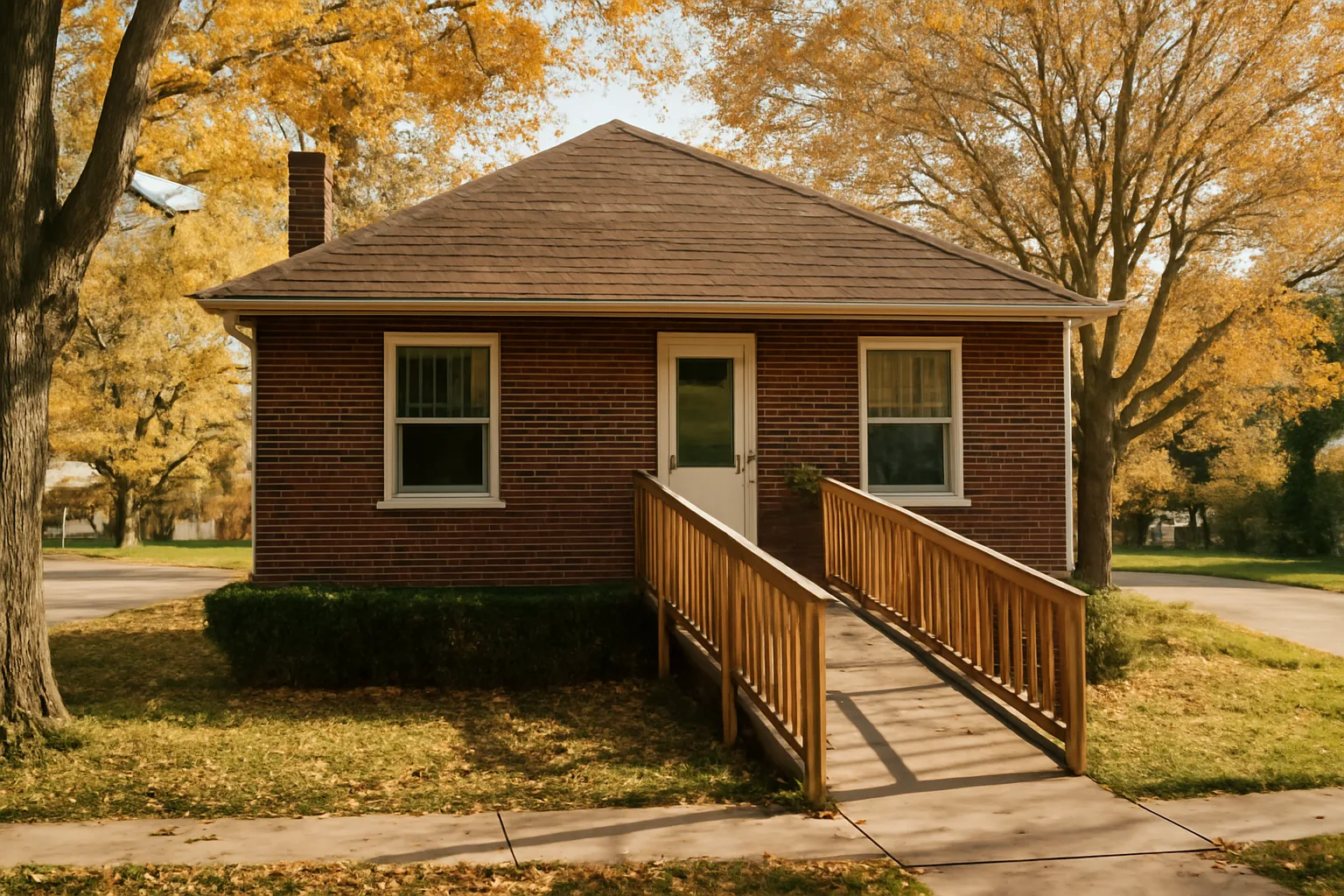
TL;DR
Wisconsin regulates group homes mainly through Adult Family Homes (1-4 beds), Community-Based Residential Facilities or CBRFs (5+ beds), and Residential Care Apartment Complexes. Licensing runs through the Department of Health Services, requires background checks, a fire safety inspection, and local zoning approval. Expect several months from application to open house.
What is a group home, and how does Wisconsin define it?
A group home, in plain English, is a licensed residential setting where a small number of unrelated adults live together and get support with daily living, supervision, or personal care from paid staff. It's not a hospital and it's not independent apartment living. It sits in between. Wisconsin doesn't actually use the term "group home" as a licensing category for adults. Instead the state licenses several distinct types depending on size and level of care: Adult Family Homes (AFH) for 1 to 4 residents, Community-Based Residential Facilities (CBRF) for 5 or more residents, and Residential Care Apartment Complexes (RCAC) for independent apartment-style settings with supportive services. Each has its own chapter of the Wisconsin Administrative Code and its own licensing path through the Department of Health Services (DHS) [1]. If you're planning a home for children instead of adults, that's a different track entirely, licensed as a child welfare group home under a separate DHS division and Wis. Stat. Chapter 48. This article focuses on adult residential care, which is what most people mean when they search "group home licensing" in a business context. For readers comparing terms across states, our general guide to assisted living and assisted living facility licensing breaks down how different states carve up these categories.
What is assisted living, and how does it relate to a CBRF or AFH?
"Assisted living" is a generic industry term, not a specific Wisconsin license. In Wisconsin, the legal umbrella term is actually "community-based residential facility," and CBRFs are what most people picture when they say assisted living: private or semi-private rooms, meals, medication help, and supervision, but not skilled nursing. Wisconsin Statute 50.01(1g) defines a CBRF as a place where 5 or more unrelated adults reside and receive care, treatment, or services above the level of room and board, but that includes no more than 3 hours of nursing care per week per resident [2]. That 3-hour nursing cap is the dividing line between a CBRF and a nursing home. Cross it regularly and you're in nursing facility territory, which is a completely different license and survey process. An Adult Family Home is the small-scale version, capped at 4 residents, and often run out of an actual single-family house. AFHs come in two license types: 1-2 bed homes need to register or in some cases don't need a state license at all (county certification may apply), while 3-4 bed homes need a DHS license under Wis. Stat. 50.032 and HFS 88 [3]. Confirm current thresholds with your state licensing agency, since Wisconsin has adjusted AFH rules more than once in the last decade.
What is an assisted living facility (Wisconsin's CBRF) actually required to provide?
A CBRF has to provide at minimum: a private or shared bedroom that meets space and safety standards, three meals a day plus snacks, help with activities of daily living (bathing, dressing, toileting, mobility), medication administration or assistance, housekeeping and laundry, and 24-hour on-site staff supervision appropriate to resident needs [1]. What it does NOT have to provide, and generally cannot provide beyond the statutory limit, is ongoing skilled nursing care. If a resident needs IV therapy, wound vac management, or ventilator support on a daily basis, that resident typically needs a nursing home, not a CBRF. Staffing ratios aren't fixed at one universal number in the code. Instead, DHS requires staffing sufficient to meet the needs of residents based on each home's individual service plan and resident acuity, verified during licensing review and ongoing inspection under HFS 83 [1]. That means a home housing residents with dementia or significant behavioral health needs will need more staff hours per resident than a home housing higher-functioning seniors, even though both are technically CBRFs. RCACs work differently. Residents live in self-contained apartments with a lockable door, kitchen, and bathroom, and they contract for services rather than getting them bundled into a flat daily rate. That model suits people who want more independence than a CBRF but still need some help.
How do you start a group home in Wisconsin, step by step?
Here's the honest sequence, roughly in order, though some steps run in parallel in practice. 1. Pick your license type. Decide between AFH (1-4 residents), CBRF (5+), or RCAC based on your target population and building size. This decision drives everything downstream, including your building code requirements. 2. Check zoning before you sign a lease or mortgage. Wisconsin has specific state preemption language protecting small community living arrangements from being zoned out entirely, but local municipalities still control setback, parking, and occupancy rules, and larger CBRFs face more local scrutiny than small AFHs. Call your county or city planning department early. Don't assume; verify. 3. Secure the building and get it inspected for fire and building code compliance. DHS licensing review includes a fire safety inspection, often coordinated with the state Department of Safety and Professional Services or local fire authority depending on facility size [1]. 4. Complete required training. Wisconsin requires CBRF administrators and certain staff to complete specific hours of orientation and ongoing training, plus first aid/CPR certification, documented per HFS 83 [1]. 5. Run background checks. Every caregiver, owner, and certain household members in an AFH must clear a Wisconsin Caregiver Background Check under Wis. Stat. 50.065, which screens for a list of disqualifying offenses [4]. 6. Submit your license application to DHS, including your policy and procedure manual, staffing plan, emergency and disaster plan, and floor plan. Pay the application fee (fee schedules are set by DHS and can change; confirm the current amount with your state licensing agency before budgeting). 7. Pass your pre-licensure inspection. A DHS surveyor visits the physical site to confirm it matches your application and meets code. 8. Get your license and open. Some operators choose to build out their internal compliance documents using a structured product like our $299 State Group Home Licensing Kit rather than drafting policy manuals from scratch, since DHS reviewers expect specific plan components (medication management policy, resident rights policy, grievance procedure, emergency evacuation plan) that are easy to miss on a first attempt. Expect the full process, from initial application to open doors, to take several months. Timelines vary heavily by county backlog and how complete your initial submission is.
What is assisted living vs nursing home, and does that distinction matter for licensing?
| Licensing law | Wis. Stat. Ch. 50, HFS 83 | Wis. Stat. Ch. 50, federal 42 CFR 483 | |
|---|---|---|---|
| Nursing care cap | Max 3 hrs/week/resident [2] | Unlimited, RN required | |
| Medicare coverage | Not covered for room/board | Covered short-term post-hospital stays | |
| Typical resident | Needs ADL help, supervision | Needs ongoing medical/nursing care | This distinction is exactly why the question "does Medicare cover assisted living" comes up so often, and the answer trips people up. |
It matters enormously, because it determines which chapter of Wisconsin law and which federal payment rules apply to you. Assisted living (CBRF in Wisconsin) is a residential, non-medical model. Care is personal care and supervision, not skilled nursing. Nursing homes are licensed under a different part of Wis. Stat. Chapter 50 and are certified separately for Medicare and Medicaid participation under federal nursing facility rules (42 CFR Part 483) [5]. Nursing homes have registered nurses on staff around the clock in most cases; CBRFs do not have that requirement built in. The practical difference for an operator: nursing homes face a much heavier federal survey process tied to Medicare/Medicaid Conditions of Participation, while CBRFs are regulated at the state level primarily, with Medicaid waiver payment oversight layered on top if you accept Family Care or IRIS participants. | Feature | CBRF (assisted living) | Nursing Home |
Does Medicare cover assisted living facilities in Wisconsin?
No. Medicare does not pay for room and board or personal care services in an assisted living facility or CBRF, in Wisconsin or anywhere else. Medicare.gov states plainly that Medicare "doesn't cover assisted living, other long-term care facilities, or care services like home-making, personal care, and adult day services" [6]. Medicare Part A will cover a short-term nursing home stay after a qualifying hospitalization, but that's a nursing facility benefit, not an assisted living benefit, and it's capped at a limited number of days with cost-sharing kicking in after day 20 [7]. What does pay for assisted living in Wisconsin, at least partially, for eligible low-income residents? Wisconsin Medicaid, through its Family Care and IRIS home and community-based waiver programs, can cover the cost of care services (not room and board) in a licensed CBRF or AFH for financially and functionally eligible members [8]. This is a huge reason operators pursue Medicaid waiver contracting once licensed. Room and board still comes from the resident's own income (often Social Security or a pension), while the waiver covers the personal care and supervision piece. If your business plan assumes Medicare will pay your daily rate, stop and rework the plan. It won't.
What does assisted living provide that home care doesn't?
Home care sends a worker into someone's existing house or apartment for a set number of hours. Assisted living (a CBRF, in Wisconsin terms) provides a purpose-built or converted residence with staff present around the clock, meals prepared on-site, and a structured environment designed around supervision and safety. The core service basket in a Wisconsin CBRF includes: housing, three meals daily, medication management, help with bathing/dressing/toileting/transferring, laundry and housekeeping, social and recreational activities, and staff response to emergencies at any hour [1]. Home care, by contrast, is billed hourly and doesn't include the building, the meals infrastructure, or continuous staff presence unless the family pays for round-the-clock private hourly care, which gets expensive fast. The tradeoff residents and families weigh is autonomy versus safety net. Someone who can still manage mostly on their own with occasional help often prefers home care or an RCAC apartment setting. Someone who needs eyes on them regularly, or who is at fall risk or has progressing dementia, usually needs the CBRF or AFH level of staffing.
What zoning and property requirements apply to Wisconsin group homes?
Zoning is where a lot of promising group home projects die, so treat it as step one, not step five. Wisconsin state law includes protections for small community living arrangements (generally homes serving up to 8 residents with certain licenses) that limit a municipality's ability to exclude them from single-family residential zones outright, similar to protections found in many states following federal Fair Housing Act principles. But "can't be excluded entirely" is not the same as "no local review required." Municipalities can still apply reasonable spacing requirements between facilities, require a conditional use permit process, and enforce standard building and fire codes. Before you commit to a property: confirm zoning designation and any group-home-specific overlay or spacing ordinance with your local planning department, confirm the building's occupancy classification with the local building inspector (a residential-only structure may need reclassification to an institutional or care occupancy depending on resident count and mobility), and confirm fire suppression and egress requirements, since a home for 5+ residents often triggers different fire code thresholds than a single-family home for 4 or fewer. Our assisted living facilities resource covers property and zoning considerations that apply across states if you're weighing Wisconsin against a neighboring market.
What staffing, training, and background check rules apply?
Every direct caregiver, administrator, and certain owners/household members in a licensed AFH or CBRF must pass a Wisconsin Caregiver Background Check before starting work, under Wis. Stat. 50.065 and its implementing rules [4]. This checks for convictions and findings that disqualify someone from caregiving, including certain crimes against people, financial exploitation, and substantiated abuse or neglect findings. CBRF administrators must complete DHS-approved orientation training and ongoing continuing education documented in personnel files, per HFS 83 [1]. Direct care staff need documented training in first aid, CPR, resident rights, infection control, and the specific care needs of the population served (dementia, mental health, developmental disability, whatever your population focus is). Staffing levels aren't set as a flat number-per-resident ratio in the code; instead DHS reviews your staffing plan against your residents' individual service plans and expects you to adjust upward if acuity increases. A home that admits a resident with elopement risk or significant behavioral needs is expected to increase supervision accordingly, and inspectors will check whether staffing matches actual documented need during a survey, more than whether you hit a generic minimum.
What inspections and ongoing compliance should operators expect?
After initial licensure, DHS conducts periodic on-site surveys to confirm continued compliance with HFS 83 (CBRF) or HFS 88 (AFH) standards. Surveys typically review resident records, medication administration logs, staff training files, the physical building (fire drills, exits, egress, general safety), and resident rights compliance. Complaints trigger unannounced visits. If a family, staff member, or ombudsman files a complaint with DHS about care quality, medication errors, abuse, or neglect, expect an investigator on-site, often without advance notice. Citations for deficiencies come with a required Plan of Correction, and repeat or serious deficiencies can lead to conditional licensure, admission holds, fines, or in serious cases license revocation. Keeping your policy manual current, your training documentation complete, and your incident reports timely is the difference between a routine survey and an enforcement action. Operators expanding into a second home, or comparing Wisconsin's process against other states, may find it useful to look at our broader assisted living and assisted living at home guides for how inspection cycles differ elsewhere.
How much does it cost to get licensed, and how long does it take?
Wisconsin DHS sets specific application and renewal fees for AFH, CBRF, and RCAC licenses, and those fees change periodically. Rather than quoting a number that may already be outdated, confirm the current fee schedule directly with DHS's Division of Quality Assurance before budgeting your startup costs. Beyond the state fee itself, real startup costs include: building acquisition or lease-up costs, fire and life-safety upgrades (sprinklers, alarm systems, exit signage), background check fees per employee, liability insurance, initial staff training and CPR certification costs, and the time cost of preparing a compliant policy and procedure manual, which most first-time operators underestimate badly. Timeline realistically runs several months from application submission to opening, longer if your building needs code upgrades or your municipality requires a conditional use permit hearing. Rushing the property and zoning steps to "save time" is the single most common reason applications stall, because DHS won't schedule a pre-licensure inspection until your physical plant is ready and your local occupancy approvals are in hand.
Frequently asked questions
What is assisted living?
Assisted living is residential care for adults who need help with daily activities like bathing, dressing, and medication, but not full-time skilled nursing. In Wisconsin, this is licensed as a Community-Based Residential Facility (CBRF) for 5+ residents or an Adult Family Home for 1-4 residents, both under Wis. Stat. Chapter 50.
What is a group home?
A group home is a licensed residential setting where a small number of unrelated people live together and receive supervision or care from paid staff. Wisconsin doesn't use "group home" as an official adult licensing term; it uses Adult Family Home, CBRF, or RCAC depending on size and service model.
What is an assisted living facility?
An assisted living facility is a residence providing housing, meals, supervision, and help with daily living for adults who can't fully live independently but don't need hospital-level medical care. Wisconsin's version is the CBRF, defined at Wis. Stat. 50.01(1g), capped at 3 hours of nursing care per resident per week.
What is the difference between assisted living and a nursing home?
Assisted living (CBRF in Wisconsin) provides personal care and supervision without ongoing skilled nursing; nursing homes provide 24-hour skilled nursing care with an RN on staff and are certified under federal 42 CFR Part 483 for Medicare/Medicaid. The nursing care hour cap is the legal dividing line in Wisconsin.
Does Medicare cover assisted living facilities?
No. Medicare does not cover room, board, or personal care in assisted living or CBRF settings anywhere, including Wisconsin, per Medicare.gov guidance. Medicare Part A may cover a short-term nursing home stay after a qualifying hospitalization, but that's a separate skilled nursing benefit, not an assisted living benefit.
How do I start a group home in Wisconsin?
Pick your license type (AFH for 1-4 residents or CBRF for 5+), confirm zoning with your municipality, secure and code-inspect a building, complete required caregiver training, pass background checks under Wis. Stat. 50.065, submit your DHS application with a policy manual and staffing plan, and pass a pre-licensure inspection.
What does Wisconsin Medicaid cover for assisted living costs?
Wisconsin's Family Care and IRIS Medicaid waiver programs can cover the cost of personal care services in a licensed CBRF or AFH for eligible low-income, functionally-qualifying members. Room and board is not covered by the waiver and generally comes from the resident's own income.
How many residents can an Adult Family Home have in Wisconsin?
An Adult Family Home is limited to 1 to 4 unrelated residents. Homes with 3-4 residents generally need a DHS license under HFS 88, while 1-2 bed homes may fall under county certification rules instead of full state licensure; confirm current thresholds with your state licensing agency since rules have shifted over time.
What background check is required for Wisconsin group home staff?
Wisconsin requires a Caregiver Background Check under Wis. Stat. 50.065 for all direct caregivers, administrators, and certain owners or household members before they can work in a licensed AFH or CBRF. It screens for disqualifying convictions including crimes against persons and substantiated abuse or neglect findings.
Can a Wisconsin municipality block a group home through zoning?
Not entirely. State law limits a municipality's ability to exclude small licensed community living arrangements from single-family zones, but local governments can still require conditional use permits, enforce spacing requirements, and apply standard building and fire codes. Confirm specifics with your local planning department before signing a lease.
How long does Wisconsin group home licensing take?
There's no fixed statutory timeline, but the realistic process from application submission to opening typically runs several months, longer if the building needs fire or occupancy code upgrades or the municipality requires a public hearing for a conditional use permit. Incomplete applications are the most common cause of delay.
What's the difference between a CBRF and an RCAC in Wisconsin?
A CBRF provides bundled housing, meals, and personal care services in shared or private rooms with staff supervision built into the daily rate. An RCAC offers self-contained apartments with a lockable door, kitchen, and bathroom, where residents contract separately for support services, giving more independence than a CBRF.
Sources
- Wisconsin Administrative Code, DHS 83 (Community-Based Residential Facilities): CBRF definition, required services, and licensing oversight by DHS
- Wisconsin Statutes 50.01(1g): Legal definition of CBRF and the 3-hours-per-week nursing care cap
- Wisconsin Statutes 50.032: Adult Family Home licensing requirement for 3-4 bed homes
- Wisconsin Statutes 50.065: Caregiver background check requirement for facility staff and owners
- eCFR, 42 CFR Part 483: Federal Conditions of Participation governing nursing facilities distinct from assisted living
- Medicare.gov, Long-term care coverage: Medicare does not cover assisted living, room and board, or personal care services
- Medicare.gov, Skilled nursing facility care coverage: Medicare Part A covers limited-day skilled nursing facility stays with cost-sharing after day 20
- Wisconsin DHS, Family Care program: Wisconsin Medicaid waiver program covering personal care services in licensed CBRF/AFH settings for eligible members