Last updated 2026-07-25
TL;DR
There's no single official PDF for starting a South Carolina group home. You'll work with SC DSS (child residential group care) or SC DHEC/Healthcare Facility Licensing (community residential care/assisted living), file the correct license application, pass a life safety inspection, meet staffing ratios, and secure zoning approval before you can operate legally.
What is assisted living?
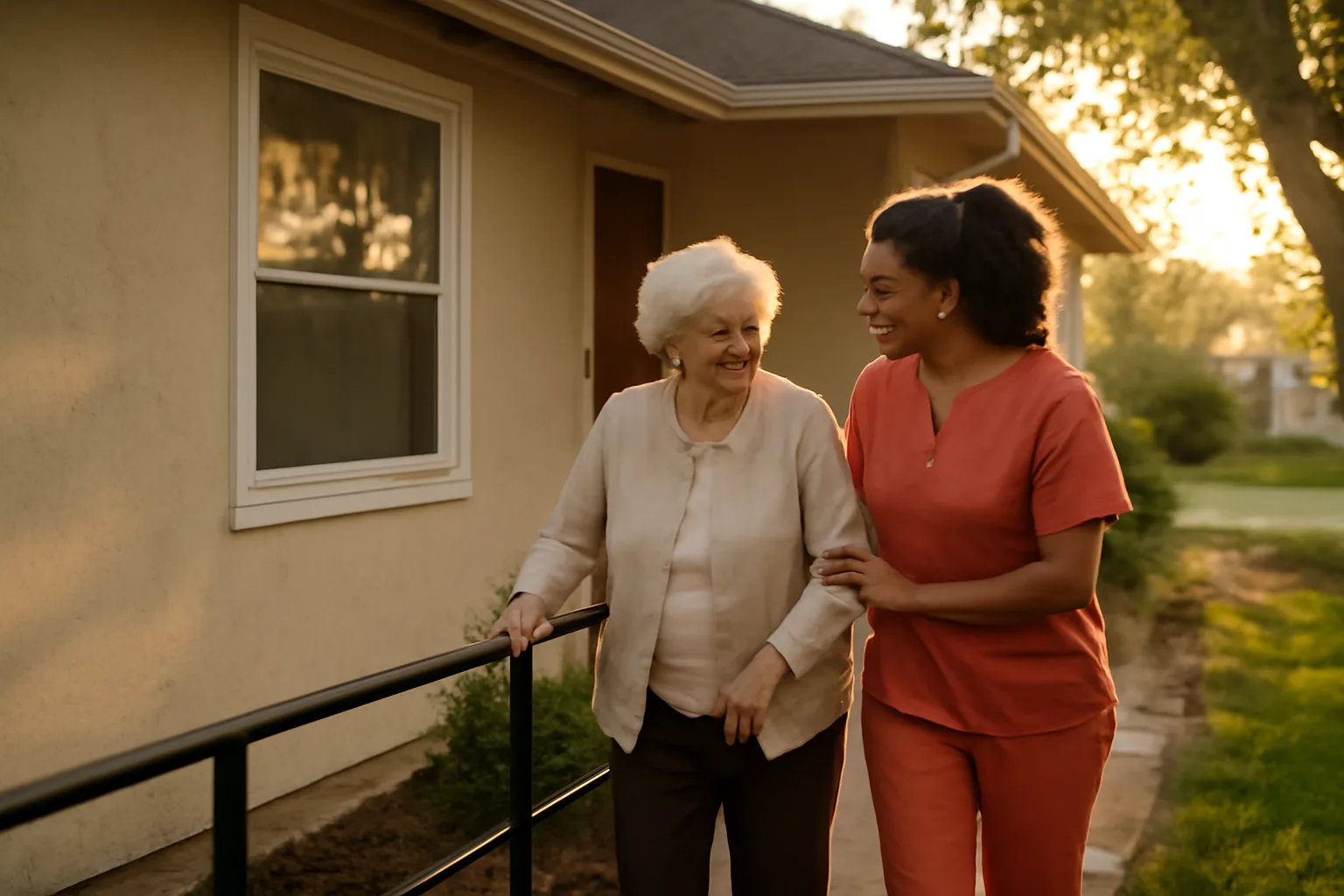
Assisted living is a licensed residential care setting for adults, usually seniors, who need help with daily activities like bathing, dressing, medication reminders, and meals but don't need the round-the-clock skilled nursing care of a nursing home. Residents typically live in private or semi-private rooms and get some level of supervision and personal care support, not medical treatment. In South Carolina, this level of care falls under the license category the state calls a Community Residential Care Facility (CRCF), which the South Carolina Department of Health and Environmental Control (DHEC) regulates. As of the state's 2024 agency restructuring, healthcare facility licensing functions moved to the newly created Department of Public Health (DPH), so operators should confirm current jurisdiction with the state licensing agency before filing anything. [1] Assisted living is not the same as a group home for people with intellectual or developmental disabilities (IDD), a mental health group home, or a child residential group care facility. Those population types run through different state agencies and different rule sets entirely, which is the single most common point of confusion for new operators searching for "how to start a group home in South Carolina."
What is a group home?
A group home is a licensed residential facility, usually a house in a regular neighborhood, where a small number of unrelated residents live together and receive supervision, support services, or care from paid staff. The term covers a lot of ground: adult foster care, IDD group homes, mental health and substance use recovery residences, and senior assisted living all get called "group homes" informally, even though each has its own state license, its own statute, and its own inspection checklist. South Carolina doesn't have one "group home license" that covers all of these. Instead: - Child residential group care facilities are licensed by the South Carolina Department of Social Services (DSS) under South Carolina Code Section 63-11-210 and related child care facility regulations.
- Community residential care facilities (adult assisted living / group homes for seniors) are licensed under DHEC/DPH regulations, historically Regulation 61-84. [2]
- IDD residential group homes are typically licensed and funded through the South Carolina Department of Disabilities and Special Needs (DDSN), often layered with a Medicaid Home and Community Based Services (HCBS) waiver. [3]
- Behavioral health and substance use residential programs run through the South Carolina Department of Mental Health or DAODAS-affiliated licensure pathways, depending on the service model. Because of this split, the very first step in starting any group home in South Carolina is identifying which population you intend to serve, because that decision determines your licensing agency, your application form, your staffing rules, and your inspection standard. There is no generic downloadable PDF that covers all four paths, no matter how the search engines phrase the question.
What is an assisted living facility (and what is an assisted living facility, exactly)?
An assisted living facility is a licensed residential setting, sized anywhere from a handful of beds to over a hundred, that provides housing plus personal care services, medication management, meals, and 24-hour staff supervision for adults who need help with daily living but not hospital-level medical care. In South Carolina, this is the Community Residential Care Facility (CRCF) license category. CRCFs in South Carolina are grouped by bed capacity, and the regulatory expectations (staffing ratios, physical plant, life safety) scale up with size. A six-bed home in a residential neighborhood faces a different practical inspection than a 60-bed purpose-built facility, even though both hold the same underlying license type. [2] South Carolina's assisted living regulation requires facilities to have a licensed administrator, written policies covering resident rights, medication administration procedures, emergency and disaster planning, and a minimum staff-to-resident ratio that the agency evaluates during licensing review and every routine inspection afterward. Exact current ratios and administrator licensure requirements should be confirmed directly with the state licensing agency, since these numbers get updated through regulation amendments.
What is assisted living vs nursing home?
| Care level | Personal care, supervision, medication reminders | Skilled nursing, wound care, IV therapy, rehab | |
|---|---|---|---|
| Staff on site | Direct care aides, administrator, may not require RN 24/7 | Licensed nurses required around the clock | |
| Typical resident | Needs help with ADLs, mostly independent otherwise | Needs ongoing medical/nursing care | |
| SC licensing agency | DHEC/DPH (CRCF regulation) | DHEC/DPH (separate nursing home licensure) | |
| Medicaid coverage | Limited, mostly through HCBS waivers | Covered as a Medicaid benefit in most states | A useful rule of thumb: if a resident needs a nurse managing their care around the clock, that's nursing home territory. If they mainly need someone to help them get dressed, take pills on schedule, and have meals prepared, that's assisted living. Many families get this wrong when comparing options, which is part of why state ombudsman and consumer guides spend so much time on the distinction. [2] |
Assisted living and nursing homes differ mainly in the level of medical care provided and the staffing that comes with it. Assisted living (CRCF in South Carolina) is personal care and supervision; nursing homes provide skilled nursing care, physician oversight, and rehabilitation services for people with more serious medical needs. | Feature | Assisted living (CRCF) | Nursing home (skilled nursing facility) |
What does assisted living provide?
Assisted living provides housing, meals, help with activities of daily living (bathing, dressing, toileting, mobility), medication management, housekeeping, laundry, social and recreational activities, and 24-hour staff supervision in case of falls or emergencies. It does not typically include skilled nursing care, ventilator management, or complex wound care unless the facility holds additional specialized licensure. Specific services a South Carolina CRCF must offer, at minimum, usually include: - Three meals a day plus snacks, meeting basic nutritional standards
- A written individualized care plan for each resident, updated periodically
- Medication assistance or administration by trained staff (rules differ based on whether staff are certified medication aides or licensed nurses)
- 24-hour awake staff supervision appropriate to resident needs
- Emergency response and evacuation procedures tested through fire drills
- Activities programming, though the required hours per week vary by facility size Exact service requirements, staffing hour minimums, and documentation standards are set in South Carolina's CRCF regulations and enforced during licensing inspections. Because these details get revised periodically, don't rely on a static PDF you found online. Pull the current regulation text or call the licensing division directly before you finalize a program description or care plan template.
How to start a group home in South Carolina
Starting a group home in South Carolina, regardless of population served, follows roughly the same skeleton: pick your population and license type, form your business entity, secure a compliant property, write your policy and procedure manual, hire and train staff, pass a licensing inspection, and get your Medicaid/DDSN provider agreements in place if you plan to bill Medicaid. Step 1: Decide who you're serving. Seniors needing personal care (CRCF/assisted living, DHEC/DPH), children in residential group care (DSS), adults with intellectual/developmental disabilities (DDSN), or behavioral health/substance use recovery residents (DMH/DAODAS pathway). This decision picks your licensing agency for you. Skipping this step and building a generic "group home" business plan is the single biggest reason applications stall. Step 2: Form your business entity and get your EIN. Most operators form an LLC or corporation through the South Carolina Secretary of State before applying for any license, since the licensing agency will ask for your legal business name and structure on the application. Step 3: Find or secure your property, and confirm zoning early. Group homes for people with disabilities are protected under the federal Fair Housing Act, which limits how local zoning ordinances can restrict them compared to an ordinary single-family residence, but you still need to confirm occupancy limits, fire code compliance, and any local business license or special-use permit requirements with your county or municipal planning office before signing a lease. [4] Step 4: Write your policy and procedure manual. Every licensing agency wants written policies: admission and discharge criteria, medication management, resident rights, emergency and disaster planning, staff training, incident reporting, grievance procedures, and infection control. This document is often the single largest paperwork lift in the whole process, and it's the piece most first-time operators underestimate. Step 5: Build your staffing plan. Include job descriptions, minimum qualifications, required background checks (South Carolina requires criminal background checks and checks against the state's abuse/neglect registries for direct care staff working with vulnerable populations), staff-to-resident ratios, and a training curriculum covering topics like CPR/first aid, medication administration, and abuse recognition and reporting. Step 6: Submit your license application with all required attachments. This typically includes your policy manual, staffing plan, floor plan, fire marshal approval, health department sign-off on food service (if you're preparing meals on site), and your business formation documents. Fees and required attachments vary by facility type and size, so confirm the current application packet and fee schedule directly with the state licensing agency handling your category. Step 7: Pass your pre-licensing inspection. An agency inspector or fire marshal will walk the physical property, check life safety features (smoke detectors, sprinklers where required, exits, evacuation signage), review resident files and staff files, and confirm your policies match what's actually happening on the ground. Step 8: Get any Medicaid or waiver provider enrollment sorted, if applicable. If you plan to accept Medicaid-funded residents through an HCBS waiver (common for IDD group homes through DDSN), you'll need a separate Medicaid provider enrollment process on top of your facility license. [5] A lot of operators try to build this whole package from scratch with a generic template pulled off a search results page. That's where a purpose-built State Group Home Licensing Kit can save real time, since it gives you a starting policy manual and staffing plan structure you tailor to South Carolina's actual current requirements rather than guessing at what an inspector wants to see.
What is the difference between assisted living and nursing home care, practically speaking?
Practically, the difference shows up in three places: staffing credentials, medical equipment on site, and who pays. Nursing homes are staffed with licensed nurses around the clock and are built to handle medical instability. Assisted living facilities are staffed with trained caregivers and, in South Carolina, don't always require a nurse on-site at all hours, depending on resident acuity and current CRCF rules. The payment picture differs sharply too. Nursing home stays are commonly covered by Medicaid as a mandatory benefit under federal Medicaid rules, and short-term stays can be covered by Medicare Part A under specific conditions (a qualifying hospital stay of at least three days followed by a doctor-certified need for skilled care). Assisted living is different, and that difference trips up a lot of families and new operators alike, which is why it gets its own section below.
Does Medicare cover assisted living facilities?
No. Medicare does not cover the cost of room and board or personal care services in an assisted living facility. Medicare.gov states plainly that "Medicare doesn't cover... long-term care (also called custodial care)" for help with daily activities like bathing, dressing, and using the bathroom when that's the only kind of care needed. Medicare will cover short-term skilled nursing facility stays under specific conditions, and it covers medically necessary doctor visits, physical therapy, and certain home health services delivered wherever a person lives, including inside an assisted living facility. But the facility's monthly room-and-board and personal care charges themselves are not a Medicare-covered expense. Medicaid coverage works differently and varies significantly by state. Some states, through Medicaid HCBS waivers, will cover certain services delivered inside an assisted living-type setting (personal care, case management) even though the room-and-board portion still isn't covered. CMS describes HCBS waivers as a mechanism allowing states to "furnish an array of home and community-based services that assist Medicaid beneficiaries to live in the community" instead of in an institution. For a South Carolina group home operator, this matters enormously for your business model: if you're counting on Medicaid to cover full assisted living costs for a private-pay resident, confirm the exact waiver rules with your state Medicaid agency before you build a financial plan around it, because the coverage gap surprises a lot of new operators.
How do I start a group home? (the short version)
The short version: identify your population (seniors, IDD, behavioral health, or child residential), find the state agency that licenses that population type, get their current application packet directly from the agency (not a third-party PDF), assemble your policy manual and staffing plan, secure a zoning-compliant property, pass your inspection, and enroll with Medicaid or your waiver program if you plan to accept publicly funded residents. Here's the reality nobody puts in the marketing copy: this process typically takes months, not weeks, and the timeline depends heavily on how complete your first submission is. Agencies send back incomplete applications rather than working through the gaps for you, so the operators who move fastest are the ones who submit a clean, complete package the first time. If you're comparing this against other states because you're weighing where to open, it helps to look at how South Carolina's structure compares to a state you already know. You can browse other state licensing paths in our assisted living facility guide and our broader assisted living facilities overview for side-by-side context.
Where do I find the actual South Carolina application forms and regulations?
You'll find current forms and regulation text directly on the state agency websites, not on a generic downloadable PDF from a third-party site. For community residential care facilities (assisted living/senior group homes), the relevant regulatory body is South Carolina's health facility licensing division, historically operating under DHEC and now under the state's restructured public health agency. [1] [2] For child residential group care, go directly to the South Carolina Department of Social Services licensing division. For IDD residential services, go to the South Carolina Department of Disabilities and Special Needs. [3] A word of caution: because South Carolina reorganized its health agencies in 2024, splitting environmental functions from public health functions, older PDFs and bookmarked pages may point to an outdated agency name or a broken link. Always verify you're looking at the current version of a regulation before you build your policy manual around it, and call the licensing division directly if a form or fee schedule looks stale.
What should my policy and procedure manual actually cover?
Your policy and procedure manual is the backbone document every inspector will read cover to cover, and it needs to match, word for word in practice, what your staff actually do. At minimum, South Carolina licensing reviewers expect to see written policies on: - Admission, transfer, and discharge criteria and procedures
- Resident rights and grievance procedures
- Medication storage, administration, and error reporting
- Emergency preparedness and evacuation, including fire drill frequency
- Staff qualifications, training curriculum, and supervision ratios
- Incident and injury reporting, including mandatory reporting of abuse or neglect
- Infection control and sanitation
- Food service and nutrition standards (if meals are prepared on site)
- Financial and admission agreement disclosures for residents and families Building this from a blank page takes most first-time operators weeks of drafting and revision, and a lot of applications get bounced back specifically because the policy manual is missing a required section or contradicts the staffing plan submitted alongside it. This is exactly the gap our $299 State Group Home Licensing Kit is built to close: a structured starting manual and staffing plan template you adapt to South Carolina's current regulation, rather than starting from a blinking cursor.
What staffing and background check requirements should I plan for?
Plan for criminal background checks on every direct care employee, checks against South Carolina's central abuse and neglect registries for staff working with vulnerable adults or children, a documented staff training curriculum, and a written staffing plan showing minimum staff-to-resident ratios around the clock, including overnight shifts. Exact ratio numbers differ by facility type, size, and resident acuity level, and they get revised through regulation updates, so treat any specific ratio number you see online as a starting point to confirm with your state licensing agency rather than a fixed rule. Build in extra staffing margin during your first year anyway. Inspectors look hard at whether your actual staffing schedule (time sheets, sign-in logs) matches your written plan, and a gap here is one of the fastest ways to get cited during a routine inspection.
What zoning and property issues come up most often?
The most common zoning issue is a local ordinance trying to treat a group home for people with disabilities like a commercial use requiring special zoning approval, when federal fair housing law generally requires it be treated like an ordinary single-family residence. The Fair Housing Act, as HUD explains, makes it unlawful to discriminate in housing based on disability, and this has been used repeatedly to challenge municipal ordinances that single out group homes for extra permitting hurdles. [4] That said, you still need to clear ordinary practical hurdles: fire code compliance for the number of residents and stories in the building, adequate emergency egress, parking if required locally, and any state health department sign-off if you're preparing food on site. Get your local planning or zoning office on the phone before you sign a lease, and get their answer in writing. A verbal "that should be fine" from a zoning clerk is not something you want to discover was wrong after you've already invested in renovations.
Frequently asked questions
What is assisted living?
Assisted living is a licensed residential setting for adults who need help with daily activities like bathing, dressing, and medication reminders, but not full-time skilled nursing care. In South Carolina, this license category is called a Community Residential Care Facility (CRCF), regulated through the state's health facility licensing division.
What is a group home?
A group home is a licensed residential facility where a small number of unrelated residents live together with staff support. South Carolina licenses different group home types separately: child residential group care through DSS, IDD group homes through DDSN, and senior assisted living (CRCF) through the state health facility licensing division.
What is an assisted living facility?
An assisted living facility is a licensed residence providing housing, meals, personal care help, medication management, and supervision for adults who don't need hospital-level medical care. South Carolina calls this a Community Residential Care Facility (CRCF), licensed under state health facility regulations.
What is the difference between assisted living and nursing home?
Assisted living provides personal care and supervision; nursing homes provide skilled nursing care with licensed nurses on site around the clock for residents with serious medical needs. Nursing home stays are more commonly covered by Medicaid and short-term Medicare benefits than assisted living room-and-board costs.
Does Medicare cover assisted living facilities?
No. Medicare does not cover room, board, or personal care (custodial care) costs in an assisted living facility. Medicare.gov states Medicare doesn't cover long-term custodial care for help with daily activities. Medicare may cover short-term skilled nursing stays and certain medical services delivered wherever a person lives, separately from assisted living charges.
How do I start a group home in South Carolina?
Pick your population (seniors, IDD, behavioral health, or children), identify the matching state agency, get their current application packet, write your policy manual and staffing plan, secure a zoning-compliant property, pass your licensing inspection, and enroll with Medicaid or a waiver program if applicable. Expect the process to take months, not weeks.
Is there an official South Carolina group home licensing PDF I can download?
No single PDF covers every group home type in South Carolina. Application forms and regulation text live on the specific licensing agency's website depending on population served: DSS for child residential care, the state health facility licensing division for CRCF/assisted living, and DDSN for IDD residential services.
What license do I need for a South Carolina assisted living group home?
You need a Community Residential Care Facility (CRCF) license, issued through South Carolina's health facility licensing division. Requirements cover physical plant standards, staffing ratios, medication management policies, and resident rights, all reviewed during a pre-licensing inspection.
Do I need a special zoning permit to open a group home in South Carolina?
It depends on your local ordinance and the population served, but federal Fair Housing Act protections generally require municipalities to treat group homes for people with disabilities like an ordinary residential use rather than requiring special commercial zoning approval. Confirm specifics with your county or municipal planning office in writing before signing a lease.
How much does it cost to license a group home in South Carolina?
Fees vary by facility type, size, and licensing agency, and they change periodically through regulation updates. Confirm the current fee schedule directly with the specific agency handling your license category (DSS, the state health facility licensing division, or DDSN) rather than relying on an older published number.
Can a South Carolina assisted living facility accept Medicaid residents?
Some CRCF residents can have certain services covered through a Medicaid Home and Community Based Services (HCBS) waiver, but room-and-board costs typically remain the resident's responsibility. Confirm current waiver eligibility and covered services with South Carolina's Medicaid agency before building your financial model around Medicaid coverage.
What's the difference between adult foster care and assisted living in South Carolina?
Adult foster care typically involves a smaller, more home-like setting with a family-style caregiver model, while assisted living (CRCF) is a licensed facility model with formal staffing, administrator requirements, and larger resident capacity. The two fall under different licensing pathways with different rules; confirm which applies to your specific program design with the state agency.
Sources
- South Carolina Code of Laws, Section 63-11-210: Child residential group care facility licensing authority under South Carolina Code Title 63
- U.S. Department of Housing and Urban Development, Fair Housing Act overview: Fair Housing Act protections limit how municipalities can zone against group homes for people with disabilities
- Medicaid.gov, Home and Community Based Services: Medicaid HCBS waivers allow states to fund community-based services as an alternative to institutional care
- Medicare.gov, long-term care coverage: Medicare does not cover long-term custodial care, including assisted living room and board
- CMS, Home and Community Based Services 1915(c) waivers: CMS description of HCBS waivers funding community-based services for Medicaid beneficiaries instead of institutional care